What Is RWA Tokenization? Meaning, Working Process, and Use Cases 2026
RWA tokenization brings real-world assets like real estate, gold, and bonds onto blockchain networks through digital tokens. In 2026, this approach is gaining attention for making asset ownership more accessible, transparent, and efficient.
What Is RWA Tokenization?
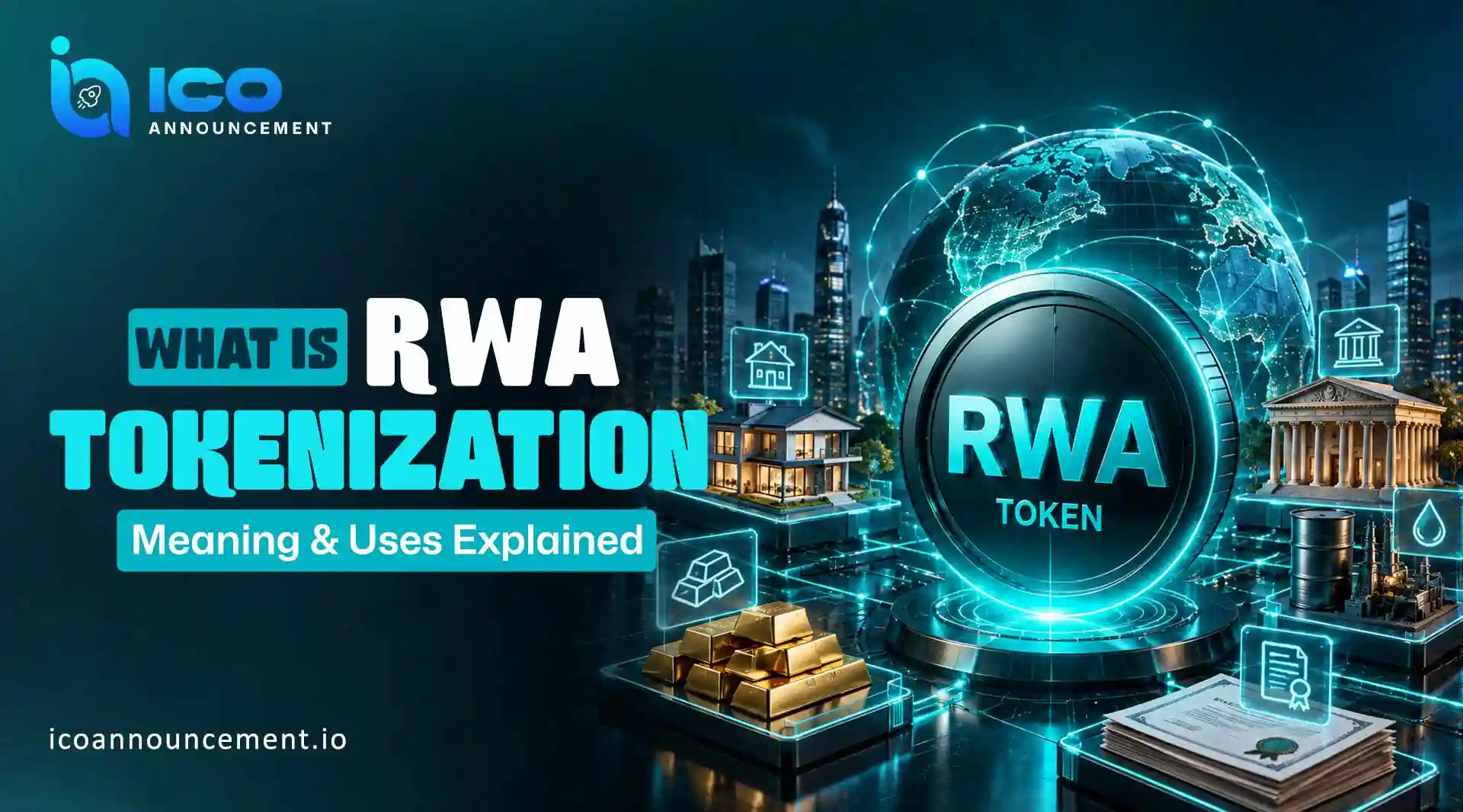
Real-world asset tokenization turns ownership of a real thing into a digital token. The real thing could be a bond, a building, gold, or even an unpaid invoice. The token lives on a blockchain.
What is RWA Tokenization? A trustee holds the real asset off-chain. The token on-chain acts as a mirror. It moves when the asset changes hands. This is the core idea behind real-world assets on the blockchain.
Think of it like a stock certificate. But instead of paper in a drawer, the record sits on a public ledger. Anyone can check it in seconds.
How Does RWA Tokenization Work?
The process starts with an issuer. They pick an asset and set up the legal side. This often means a trust or a special legal entity. Lawyers and auditors check that the asset is real and worth what it claims.
Next, the issuer creates tokens on a blockchain. This could be Ethereum, Polygon, or a private network like Canton. Each token is a small piece of the asset. A building worth 10 million dollars could become 10 million tokens. Each token would be worth 1 dollar.
Smart contracts handle the rest. They track who owns each token. They can block transfers if rules say so. They can even send rent or interest straight to token holders.
This is how RWA tokenization works in real life. It cuts settlement time from two days down to minutes. Sometimes it happens right away, any time of day.
Real-World RWA Tokenization Use Cases in 2026
Tokenized US Treasuries lead the market. These onchain products passed 10 billion dollars on February 11, 2026. That number comes from RWA.xyz. BlackRock's BUIDL fund alone holds close to 2.5 to 2.9 billion dollars.
Private credit comes next. Firms like Maple Finance and Centrifuge have pushed tokenized loans past 8 billion dollars. Small businesses can now borrow against tokenized collateral. This is often faster than a normal bank loan.
Real estate tokenization lets people buy a small slice of a building. They earn rent from that slice. Platforms like RealT and Lofty made this popular in the US and Europe.
Gold is catching on too. Tokenized gold lets people trade tiny amounts of gold like a crypto project. No vault of their own is needed.
Big institutions are testing this system too. The Depository Trust and Clearing Corporation ran a trial in May 2026. Over 50 financial firms joined the test. They may roll this out fully by October 2026.
These RWA use cases in 2026 share one pattern. Safe, steady assets move first. They are easier to price. They are easier to regulate too.
Why Is RWA Tokenization Growing in 2026?
Big investors want steady income. They also want to sell fast if needed. Tokenized Treasuries offer both. This is the main reason money keeps flowing into funds like BUIDL and USDY.
Rules are getting clearer too. The US held hearings on digital assets this year. Singapore and Dubai built clear rulebooks. This gives large firms the confidence to launch real products, not just tests.
The numbers show this trust. Tradable RWA value was near 12 billion dollars in mid 2025. By July 2026, it tripled to about 33.5 billion dollars. This data comes from RWA.xyz.
A much bigger pile of assets, worth close to 345 billion dollars, is still being prepared. If even a small part of this goes live, the market could grow fast.
RWA Tokenization vs Traditional Asset Ownership
Old-school ownership means paperwork and delays. Buying a house means banks, title firms, and weeks of waiting. Buying a bond means paying a broker. The trade can take days to settle.
Tokenized ownership skips most of this wait. A buyer and seller can trade an asset and payment at the same moment. This is called atomic settlement. It removes the usual two-day delay.
Fractional ownership is the other big change. A normal investor could never buy one floor of a tower before. Now, that same investor can own a 500 dollar slice of it.
What Are the Benefits of RWA Tokenization?
Small investors can now access assets once reserved for big institutions
Trades can settle within minutes, not days
Crypto Markets stay open all day, every day, unlike stock exchanges
Smart contracts can send rent or interest on their own
Every trade sits on a public record anyone can check
These points solve real problems that investors have faced for years. That is a big reason why big money keeps entering this space.
Is RWA Tokenization Growing in India?
India is showing more interest each year, though rules are still forming. In March 2024, SEBI updated its REIT rules. This created a Small and Medium REIT plan. Projects must be worth 50 to 500 crore rupees. They need at least 200 investors. And 95 percent of the assets must already earn rent.
The Reserve Bank of India has tested tokenized government bonds through sandbox programs. GIFT City in Gujarat has become a test zone for tokenized real estate. This zone allows more open rules than the rest of the country.
Tokenized gold already exists in India. Wallet apps hold real gold in a vault. They give users digital units tied to that gold. This lets buyers own gold without visiting a shop.
The biggest legal hurdle is India's Collective Investment Scheme rule. This falls under Section 11AA of the SEBI Act. Many token plans pool money from many people under one manager. That looks like a CIS. So issuers must register properly to stay legal.
RWA Tokenization vs DeFi: What Is the Difference?
Decentralized finance mostly uses crypto-only assets. Think ETH, stablecoins, or governance tokens. These only exist on a blockchain. Tokenization is different. It brings real-world assets onto that same chain.
The two worlds are mixing, but slowly. Only about $ 7.4 billion, close to 10 percent of all value, sits inside DeFi tools today. This data comes from CryptoRank.
This gap matters a lot. Most tokenized bonds and loans sit still. They are not yet used in lending pools or yield tools. This leaves plenty of room for DeFi to grow into this space.
Is RWA Tokenization the Future of Finance?
Boston Consulting Group believes tokenized assets could reach trillions of dollars by 2030. This growth would come from bonds, company debt, stocks, and raw goods moving onto blockchains.
Growth will not be smooth, though. Over half of large tokenized assets saw zero trades in a recent week. Some RWA-linked tokens lost more than 40 percent of their value between January 2025 and March 2026.
Even with these bumps, the path looks clear. Faster trades, smaller entry costs, and built-in rules fix real problems in old finance. That is often enough to keep big money coming back for more.
Disclaimer: This article is for educational purposes only and does not offer financial, legal, or investment advice. Real-world asset tokenization carries regulatory, market, and technology risk. Please do your own research or speak with a licensed financial advisor before making any investment decision.