Real-World-Asset Tokens: 5 RWA Presales Market Trends and Risks
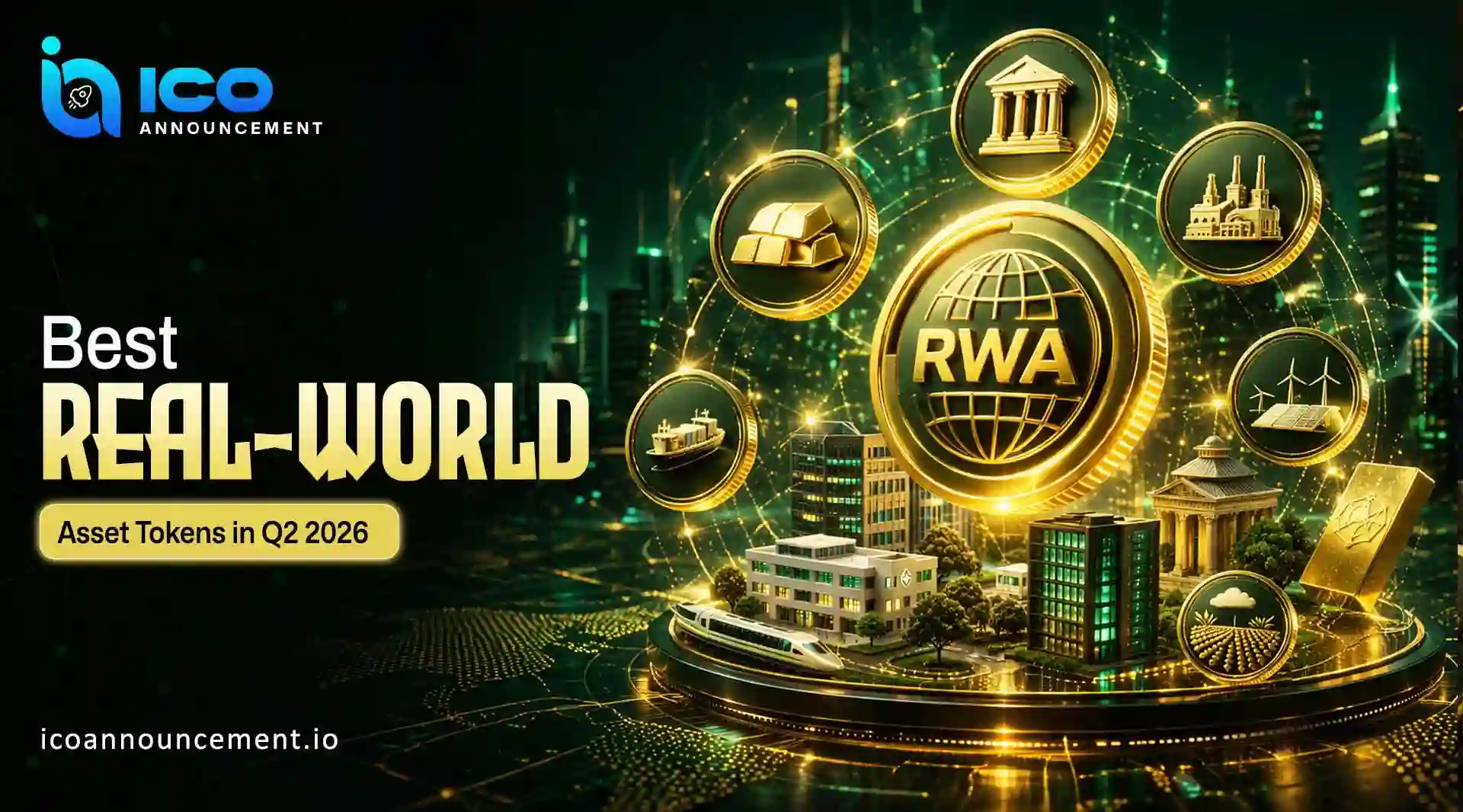
Real-world-asset (RWA) tokens are becoming a big trend in crypto. Instead of only digital value, these tokens connect to real things like property, income streams, or services. In simple words, they try to bring real value on-chain. In Q2 2026, many presales in this space are getting strong attention because users want more than hype; they want something genuine behind the token.
This guide explains what makes these projects strong and reviews five RWA presales that are getting interest right now.
What Makes an RWA Token Secure?
Not all RWA tokens are safe. Some look good on the surface but have weak structure. A good project usually shows three things clearly:
1. Clear asset link- The token should connect to a asset or service. For example, property, yield systems, or real usage. If this link is not clear, the project may only be marketing.
2. Smart contract safety- Audited contracts reduce risk. Blockchain systems work on code, so even a small error can cause loss. Studies show blockchain systems rely on transparent and secure design to build trust.
3. Transparent token data- Supply, distribution, and usage must be easy to check. Hidden numbers are a red flag.
4. Legal clarity- RWA tokens sit between crypto and real-world law. Projects must explain if users own assets or only get utility.
Project Snapshots: 5 RWA Presales
1. Avalon X (AVLX)
Avalon X is focused on real estate token access. It aims to make property investment easier for normal users.
The idea is simple. Instead of buying full property, users buy tokens linked to a real estate ecosystem.
Use case: Property access and rewards
Yield style: Staking + perks
Key feature: Tier system (Gold, Diamond, Platinum)
Extra benefit: Discounts on real-world stays
The project highlights that its smart contracts are audited and designed for transparency.
Important note: Tokens do not give direct ownership of property. They give access and benefits inside the system.
2. Eden RWA
Eden RWA focuses on structured real-world asset exposure. It aims to connect blockchain users with yield-based systems.
Use case: Asset-backed yield
Focus: Stable structure
Goal: Long-term value instead of short hype
Projects like Eden try to reduce volatility by linking token value to economic activity. This model is becoming popular because users want steady returns instead of quick pumps.
3. Blockhaus Token
Blockhaus is building a token model around digital infrastructure and real asset systems.
Use case: Infrastructure-linked token utility
Focus: Security and system design
Goal: Build long-term ecosystem value
The project focuses on combining blockchain with structured systems. This is important because RWA projects need strong backend support, not just front-end hype.
4. BitKucoin
BitKucoin is positioning itself as a hybrid token with utility and ecosystem growth focus.
Use case: Platform-based token model
Focus: User engagement and expansion
Goal: Build a scalable ecosystem
Projects like this often depend on growth strategy. If adoption increases, the token value may follow.
5. Smart Props Solution
Smart Props Solution is focused on property-based token systems.
Use case: Real estate tokenization
Focus: Simplifying property access
Goal: Make real estate easier to enter
Real estate tokenization is one of the biggest RWA trends. It helps reduce entry cost and allows fractional participation.
Legal and Custody Structures
This is one of the most important parts of RWA tokens.
Many users think buying a token means owning a real asset. But that is not always true.
There are usually three models:
1. Utility model
You get benefits, not ownership (like Avalon X).
2. Revenue model
You may get a share of income, depending on rules.
3. Asset-backed model
Tokens are linked to real assets, but legal ownership may still stay with the company.
Law around crypto assets is still evolving. Research shows digital tokens often act more like rights or access, not direct ownership.
So users must always read the whitepaper before investing.
Expected Listing Venues
After presale, most RWA tokens follow a common path:
Step 1: DEX listing
Platforms like Uniswap or PancakeSwap
Fast launch
Early price discovery
Step 2: Data listing
CoinGecko and CoinMarketCap
Builds visibility
Adds tracking
Step 3: CEX listing
Bigger exchanges like Binance or others
More liquidity
More users
Projects with strong structure and clear data usually move faster in this process.
Risks—Regulatory, Liquidity, Valuation
RWA tokens look strong, but they still have risks.
Regulatory risk- Rules for asset-backed tokens are not clear in many countries. A project may face legal limits later.
Liquidity risk- If buyers are low, price can drop quickly. Even good projects can face this issue.
Valuation risk- Just because it says it is linked to assets does not mean the price is fair.
Execution risk- Many projects fail after presale because they cannot deliver utility.
Trust risk- If audit, KYC, or data is missing, risk becomes very high.
Final Comparison
Final Thoughts
RWA presales are growing fast because they connect real value with crypto. 5 RWA Presales Projects like Avalon X, Eden, Blockhaus, BitKucoin, and Smart Props Solution show different ways this idea is used. Still, not every project will work well. You should always check real use, verify data, understand the legal side, and stay away from hype. Many presales also need KYC and may not be open in every region. Take time, stay careful, and make informed decisions instead of rushing.