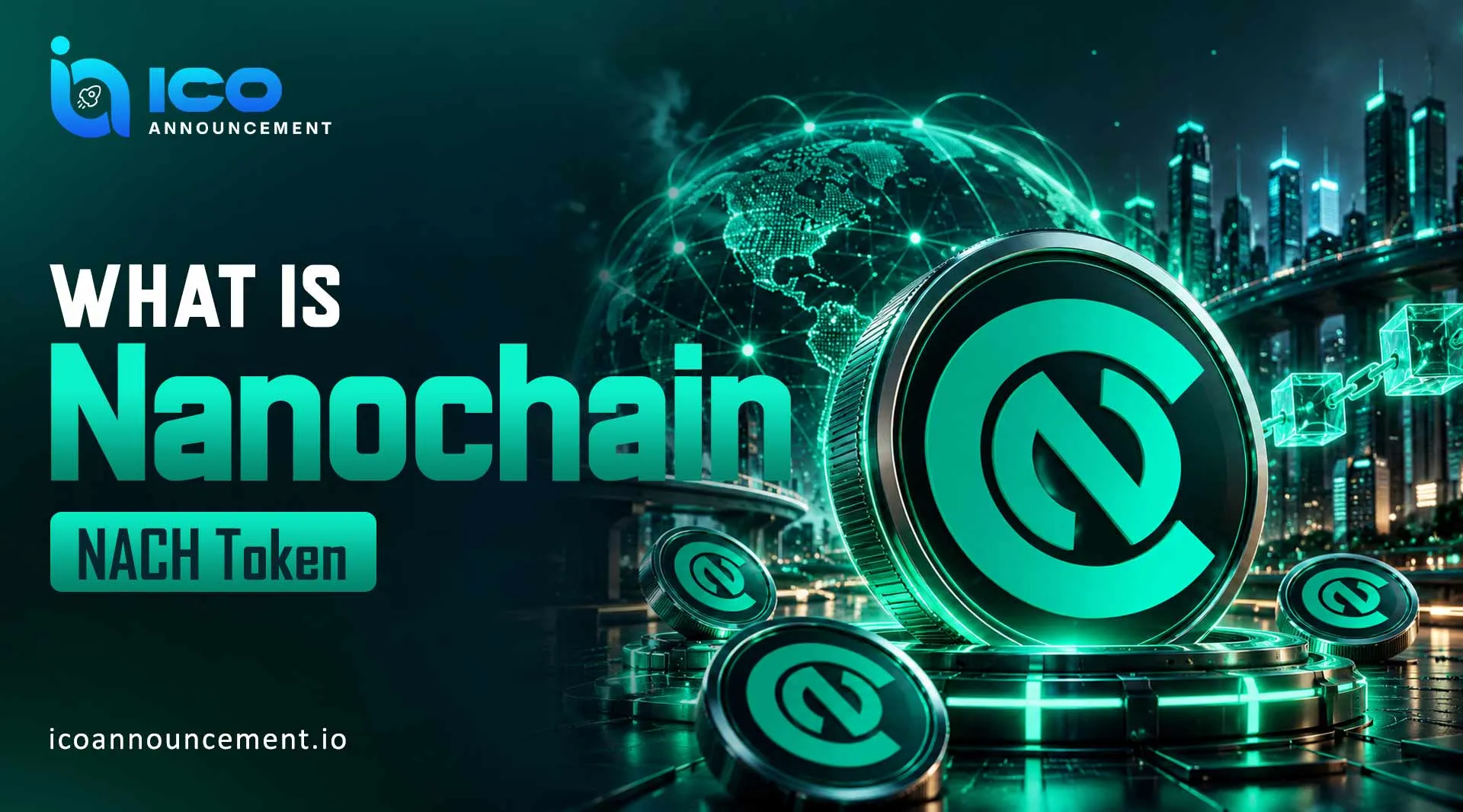
Nanochain is a dual-layer blockchain project, often called the Nanochain blockchain, built around two connected components: NARO, a gasless Web3 chain for social and peer-to-peer activity, and NANCH, an EVM-compatible economic layer that runs the network's smart contracts.
The two layers are tied together by NACH, the project's native token, and the system is marketed as a gasless blockchain with AI-native, built-in AI extensions and instant onboarding for new users.
For readers asking what this project is, the short answer is that it is not a single chain but a paired system.
One layer handles fast, feeless social interaction inside a browser, while the other layer settles value and runs applications through a standard Ethereum Virtual Machine environment.
This guide covers how the two layers fit together, what NACH does, and where to verify it officially.
Key Takeaways
Nanochain combines two layers: NARO (gasless, browser-native) and NANCH (EVM economic layer).
NACH is the native token that connects both layers of the network.
The project positions itself as an AI-native blockchain with built-in AI extensions.
NaroScan is the official block explorer for tracking Nanochain transactions and contracts.
New users can onboard directly from a browser without installing a separate wallet extension first.
What Is Nanochain's Dual-Layer Design?
The architecture splits work between two purpose-built layers instead of forcing every action through one chain.
NARO is designed as a gasless, browser-native chain, meaning it aims to let people transact and interact socially without paying network fees or leaving their browser tab.
NANCH is the EVM-compatible layer, giving developers a familiar smart contract environment for deploying decentralized applications and economic logic.
This separation targets a common blockchain tradeoff.
Social activity usually needs speed and low friction, while financial and contract activity needs the security of an established virtual machine.
By keeping NARO and NANCH distinct but connected, the project aims to serve both needs under one ecosystem.
The Role of the NACH Token
NACH is the native token of the ecosystem and the economic link between the NARO and NANCH layers.
Based on the project's own site, NACH powers the NANCH EVM mainnet, where it functions as the asset used for network activity on the economic layer.
The project's block explorer, NaroScan, also references a token labeled nUSD alongside NACH, suggesting the ecosystem is building out additional token-level infrastructure beyond the base network asset.
Because this is a relatively new project, NACH is not yet listed on major third-party trackers like CoinGecko or CoinMarketCap at the time of writing.
Readers who want current token details, supply figures, or contract addresses should treat the project's own official website and explorer as the primary reference points rather than relying on unofficial listings, screenshots, or secondhand social posts.
NaroScan: Nanochain's Official Block Explorer
Every functioning blockchain needs a way for users to verify activity independently, and the project addresses this with Naroscan, its official block explorer.
NaroScan is described as the analytics platform for the network, letting users look up transactions, blocks, tokens, and smart contract activity on the network in real time.
Using a project's own explorer, rather than a third-party aggregator, is generally the more reliable way to confirm on-chain activity for a young network, since it reflects the state of the NARO and NANCH layers directly rather than through a delayed outside data feed.
AI Extensions and Instant Onboarding
A distinguishing claim of the project is its focus on AI extensions built into the browser-native NARO layer.
Rather than treating artificial intelligence as a separate add-on product, the project frames AI tooling as part of the base chain experience, aimed at helping new users interact with the network without needing deep crypto literacy first.
Instant onboarding is the second piece of this pitch.
Because NARO runs gasless and browser-native, the stated goal is to remove the two biggest friction points for newcomers: installing a wallet extension and acquiring gas tokens before doing anything on-chain.
Whether this onboarding flow performs as described in daily use is something readers should verify directly through the official site rather than assuming from marketing copy alone.
Cryptographic Finality and Network Security
Nanochain's documentation references cryptographic finality as part of how the network confirms transactions across its layers.
Finality matters because it tells users and developers when a transaction can be treated as settled and irreversible, which is a basic requirement for anything handling value or contract state.
As with the token details above, readers evaluating the technical claims around consensus and finality should compare the project's own published material against independent, dated verification wherever it becomes available, since a new network's early claims typically get tested over time as usage grows.
How Nanochain Compares to a Single-Layer Chain
Most established blockchains use a single execution layer for both social-style interaction and financial contracts, which means every transaction competes for the same block space and fee market.
The pitch here is that separating NARO from NANCH avoids that competition, letting lightweight social activity move independently of contract-heavy economic activity.
This is a structural bet rather than a proven outcome, and its value depends on whether developers actually build distinct applications that use each layer for what it is designed to do, rather than defaulting everything to NANCH out of habit.
Getting Started with Nanochain
Readers who want to explore Nanochain directly can start at the official site, nanch.network, which hosts the full description of the NARO and NANCH layers, the NACH token, and links to the ecosystem's dashboards and explorers.
Starting from the official source is the safest first step for any new or lesser-known chain, since it avoids relying on unofficial summaries, outdated screenshots, or third-party listings that may not reflect the current state of the project.
From there, users can review the explorer, check available AI extensions, and follow the project's own official channels for updates on mainnet activity, token distribution, network upgrades, and roadmap changes as the ecosystem develops over time.
Expert Opinion
Industry observers tracking newer Layer 1 and dual-layer projects note that Nanochain's approach of pairing a gasless social chain with a standard EVM layer reflects a design pattern more early-stage networks are testing, since it lets teams target consumer-facing use cases without abandoning developer familiarity with Solidity-based tooling.
For a project at this stage, the more informative signals tend to be sustained on-chain activity visible through its own explorer, actual application deployments on the NANCH layer, and clarity on token supply and distribution, rather than early marketing language alone.
Readers are generally advised to track these indicators over several months before forming a strong view on the network's long-term traction.
Disclaimer
This article is for informational purposes only and does not constitute financial, investment, or trading advice. Nanochain and the NACH token are referenced here based on information published by the project itself, and details such as token supply, pricing, and feature availability can change. Cryptocurrency projects, especially newer ones, carry risk, including limited track records and low liquidity