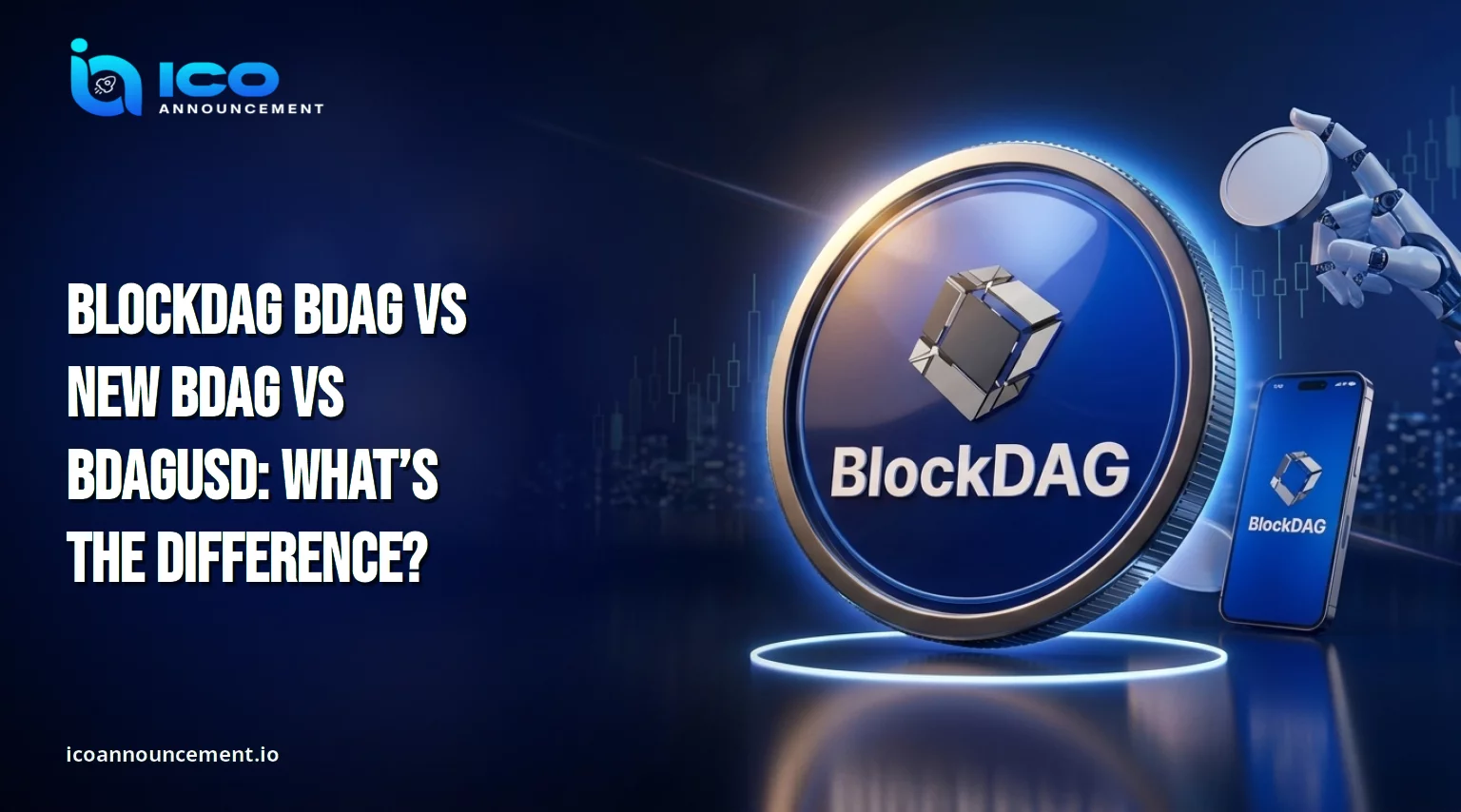
NEW BDAG vs BDAGUSD: Which BlockDAG Token Can You Trade Today?
BlockDAG holders now see three similar labels: Legacy BDAG, NEW BDAG, and BDAGUSD.
They are not the same asset. Mixing them up leads to wrong wallet checks and risky transfers.
This guide explains each label in plain terms. It separates project statements from what outside sources confirm.
It is an explainer and a verification guide. It makes no price call.
Key Takeaways
- The original coin already trades. The project's mainnet page lists exchange trading from March 5, 2026.
- The newer token is separate and still planned. BlockDAG says the older coin is not replaced.
- BDAGUSD is the buyback asset. The project says it minted 500,000,000 units on October 13.
- A dashboard figure or tracker price is not a wallet receipt. Neither one proves trading.
- As of October 26, 2026, the sources reviewed show no exchange notice that names the new coin or the buyback asset.
BDAG vs. NEW BDAG vs. BDAGUSD: What Actually Changes for Holders?
The BDAG vs. NEW BDAG difference starts with date and purpose. The original coin is tied to the first presale and the February 2026 mainnet launch.
It already has exchange markets. Those markets cover the older asset only.
The newer coin came from the August 2026 Fresh Start keynote. Coverage of that event describes a separate asset for network gas and mining rewards.
It reports a 150 billion maximum supply. BDAGUSD is a third asset linked to the buyback program. Each one needs its own proof.
The BlockDAG Mainnet page shows the original timeline, including the February 11 token generation event.
How to Check Which BDAG Token You Hold in Your Wallet Right Now
Start with the asset name and the network. The older coin on the mainnet is a native coin, so it has no contract address.
A token that shows one is either a wrapped copy or a different asset.
Next, open your BlockDAG wallet and read the balance itself. Match the symbol and decimals with the project's verified channels.
Only a wallet balance counts. A number on a dashboard does not. Copycat tokens often reuse a name and symbol. They rarely match the sender or the supply.
If anything looks odd, stop and compare again.
Keep your recovery phrase offline, as the wallet storage guide explains.
NEW BDAG Distribution: What Wallet Holders Should Verify First
BlockDAG token distribution explained simply: the project sends coins to eligible wallets in queues. It said priority queues would start October 22.
General holders would follow a week later. Coverage dated October 24 says the project moved priority delivery to October 25 and exchange trading to October 29.
These are project dates, not exchange notices.
Timing matters. An empty wallet today proves no failure.
It may only mean your turn has not come yet. Verify four things. First, confirm the coins sit in your own wallet. Second, match the details with the project's posts.
Third, find the matching transfer on the blockchain explorer. Fourth, save the transaction hash. A wallet receipt beats any dashboard claim.
If a step failed, follow the token claim guide before you act.
BDAGUSD Buyback Token: What Is Confirmed and What Is Not Yet?
BlockDAG posted on October 13 that 500,000,000 BDAGUSD were minted. The post listed an address that starts with 0x28Ae and ends with 7C18.
It also cited $151,700,709.03 in recorded buyback balances across 3,273 eligible wallets. It gave a reference of $0.03 per eligible coin, subject to program terms.
Those figures are project statements. Confirmed means visible on the explorer.
No issuer papers or redemption terms appeared in the sources reviewed for this guide. Minted supply alone proves little.
What matters is who issued it, what it can be redeemed for, and under which terms. Treat the buyback claim as unverified until those answers appear.
Compare any token contract with the contract address guide first.
Can You Trade NEW BDAG Yet? What Exchange Proof You Should Check
Not on the proof found so far. The older coin already trades, so a tracker price says nothing about the new coin or BDAGUSD.
BDAG trading data on those sites covers the original asset. The mainnet page names LBank, BitMart, and Coinstore for those assets. A tracker price can also swing on thin volume.
Real proof has four parts. A notice must name the asset. It must name a trading pair.
It must give deposit and withdrawal times. It must show a matching contract address. Without these, an exchange listing claim is only a claim.
Thin liquidity can also widen spreads once a market opens.
The BlockDAG FAQ says exchange partnerships are announced only once fully confirmed.
Contract Address, Transfers, and Explorer Checks to Run Before You Act
The explorer is bdagscan.com, as listed on the project site. Search your public address only. Never paste a recovery phrase into any page.
Skip screenshots shared by strangers and open the page yourself. Check the sender, the amount, the token name, and the transaction hash.
Then compare the contract with the one the project published. This on-chain verification takes minutes.
A token transfer from an official address shows a distribution reached you. It does not show the asset trades. A pending status can still complete.
Wait, refresh and compare again.
The explorer guide walks through each lookup step.
What BlockDAG Holders Should Do Before Moving Their Tokens Anywhere
Pause before any move. Confirm which asset you hold. Confirm the network. Send a small test amount first. Use only links from official channels.
Ignore anyone who offers early access or asks for a recovery phrase. Wait for an exchange notice before you deposit anything.
Keep a written record of each step. Save the transaction hash, the time, and the address. Support teams need those facts to help.
Verified updates appear on the project website, verified social accounts, and Telegram channels. Nothing else is proof.
Once a market is confirmed, the trading guide covers pairs, fees, and order steps.
Final Thoughts: Verify First, Then Move Any of Your BlockDAG Funds
NEW BDAG, the older coin, and BDAGUSD are three separate assets.
Treat every date and figure as a project statement until the explorer or an exchange notice backs it.
Wait for proof, not promises. Verify first, then act.
Disclaimer
This article is for educational and informational purposes only. It is not financial, investment, legal, or tax advice. Crypto assets are volatile and can lose all value. Dates, prices, codes, and distribution plans cited here are project statements and may change without notice. Some items could not be confirmed by independent sources. Verify every detail on official BlockDAG channels. Do your own research and consult a licensed advisor before you make any decision.