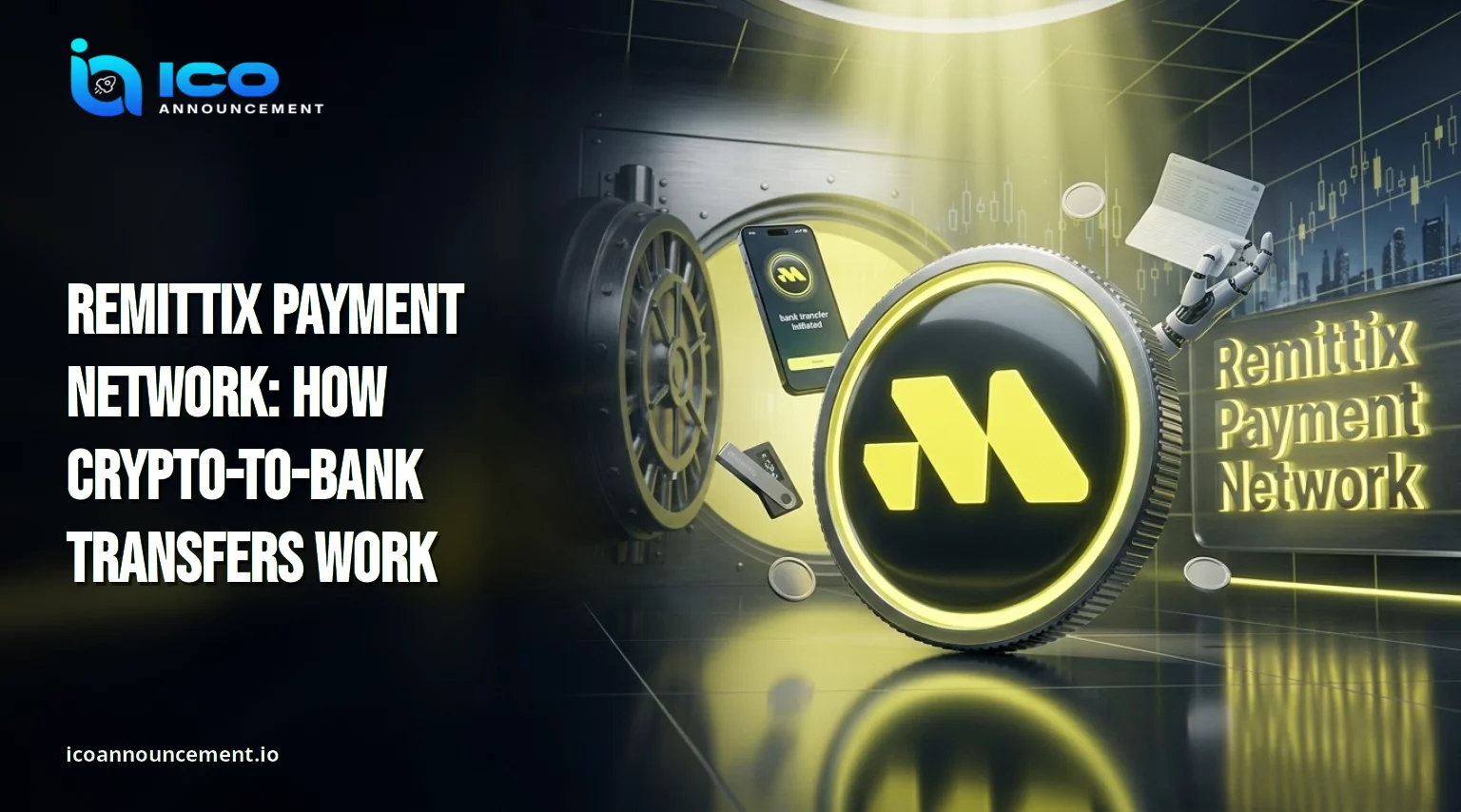
Remittix Payment Flow: From Wallet to Bank Account, Step by Step
A Remittix payment turns assets in a wallet into local currency in someone's account.
The sender sees a wallet screen, the recipient sees an ordinary deposit, and several steps run in between.
This guide explains that flow, the conversion step, likely costs, safety checks, and where the RTX token fits, using what the project publishes and marking what still needs confirming in the app.
How Does the RTX Crypto-to-Bank Transfer Work in Practice Today?
The platform describes its product as a way to pay fiat into any account around the world by connecting a wallet.
The sender chooses the amount, picks the payout country and currency, and enters the recipient's details.
The platform then handles conversion and routing, so the recipient never has to hold or sell tokens.
That matters because many people who receive money abroad have no exchange login and no wish to learn one.
For the wider picture of how blockchain transfers compare with older routes, read the crypto remittance guide first.
Remittix Payment Flow: From Wallet to Bank Account, Step by Step
The flow follows five stages:
Connect a supported wallet inside the app.
Enter the amount, destination country, and recipient details.
Check the quoted fiat amount and any listed fees before you confirm.
Send the on-chain transaction from your wallet.
The platform converts the funds and pays out, with settlement time set by the local payout rail.
Our Remittix payment guide follows a full example, while the official Remittix website is the place to confirm supported countries and current app features before you send anything.
Can You Send Crypto Directly to a Bank Account Without Selling?
Not literally. A current account can only hold fiat, so the digital assets must be converted before the money lands.
What feels like a direct transfer is a conversion and payout handled by the platform.
Each transfer therefore ends as local currency for the recipient, while the sender pays in tokens.
That is the main difference from sending coins to a friend, where the receiver still needs an exchange to cash out.
It also explains why account details, not addresses, are the critical input in this kind of transfer, and why a single typo can delay a payout or send it to the wrong person.
Remittix Fees vs. Banks: What Could Users Pay on Each Transfer?
Total cost has several parts: the network fee for the on-chain send, the spread between the market rate and the quoted rate, any platform fee, and charges applied by the receiving institution.
Traditional providers bundle similar items. often inside a weak exchange rate.
Compare the final amount the recipient receives, not the headline fee.
Run the same test on both routes with the same amount, at the same time of day, because rates and network fees move.
The Remittix fee guide sets out a full cost comparison and is worth reading before a large transfer.
Is Remittix Safe for Bank Payments? Key Checks Before You Send Money
Safety has two layers. Contract risk is the code behind the token, and payment risk is everything a sender can get wrong.
For the first layer, the CertiK Skynet page lists audit history and findings for the project, so read the findings instead of relying on a score. An audit does not cover the second layer.
Before sending, check the website address, confirm the recipient details twice, test with a small amount, and keep screenshots of the quote.
Never approve prompts from links sent in chat groups. Our guide on how to use Remittix safely covers these habits in more detail.
RTX Utility in Payments: Where Does the Token Fit in the System?
RTX is the native token of the ecosystem, and the project positions it as its payments token.
Earlier project announcements also said the app would support swaps from major assets such as BTC, ETH, SOL, and XRP into local fiat, so a sender may not need RTX to start a transfer.
Check the official documentation for where RTX is required, such as staking, rewards, or fee settlement, because token roles can change over time.
Before buying or approving anything, verify RTX contract details against official sources, since fake tokens copy popular names.
Disclaimer: This article is for informational purposes only and is not financial advice. Digital assets are volatile and carry a risk of loss. Verify every detail on official channels and do your own research before sending funds