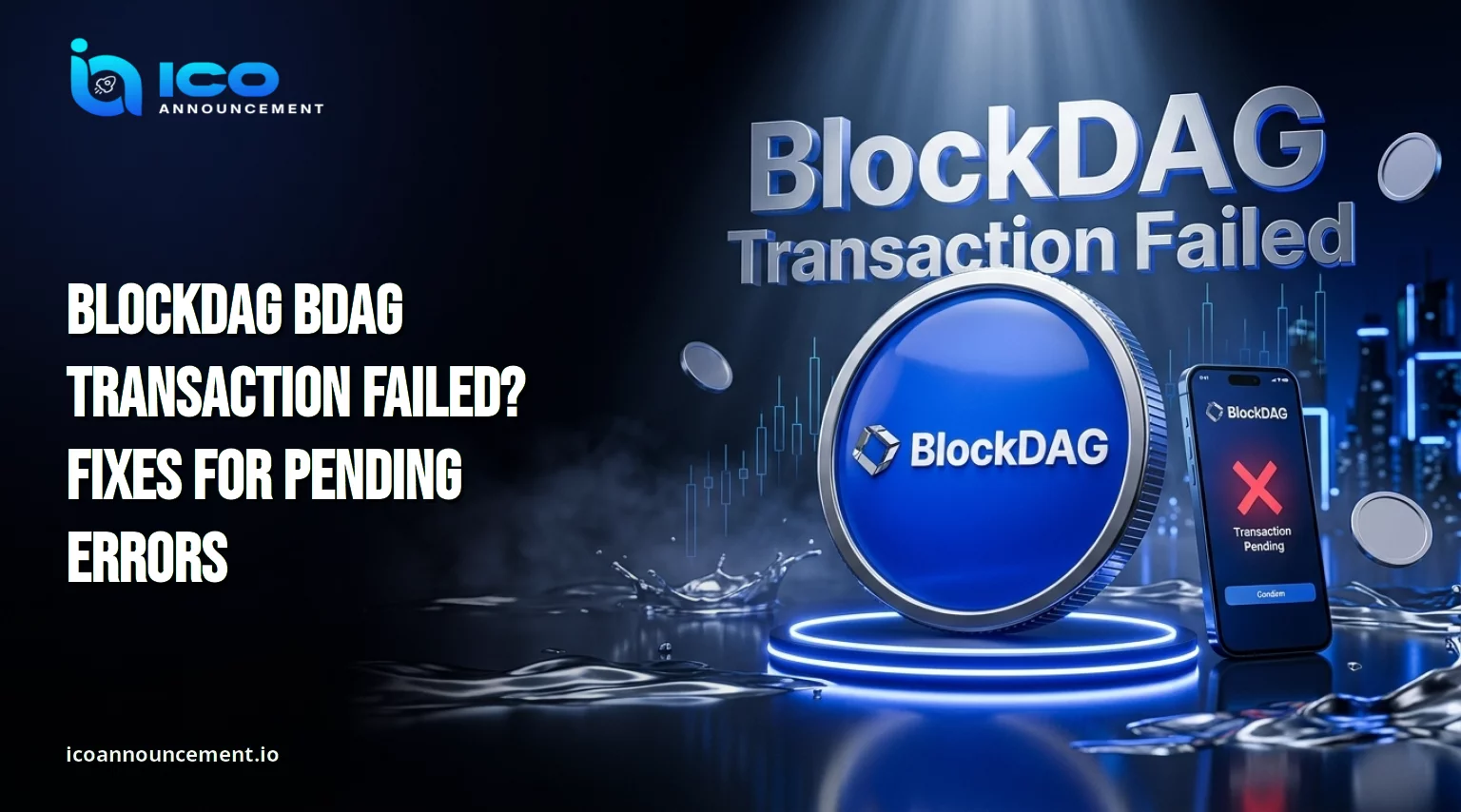
BlockDAG BDAG Transaction Failed? How to Check Status and Fix It
A BlockDAG BDAG transaction failed message does not always mean your funds are gone.
Often the transfer was rejected before reaching the chain, is still waiting for confirmation, or went through on a network your app is not displaying.
This guide lists the common causes and the safest order of checks, using details from the project’s own documentation.
If an error looks network-related, read about BlockDAG technology first, because it explains how blocks are added in parallel.
Why Did Your Transfer Fail? 7 Common Reasons Explained
Most BDAG transaction errors trace back to a short list of causes:
Wrong network: the app is set to another chain instead of the mainnet.
Address typo: one wrong character sends the request to a different address or fails validation.
Low fee balance: the account lacks enough BDAG to cover the network fee.
Wrong asset: the setup page says the receiver must use BDAG too.
Outdated RPC details: a custom network entry has a wrong URL or chain ID.
Wallet sync issue: the app shows stale data or has lost its connection.
Exchange limits: a platform may pause withdrawals.
When a BlockDAG BDAG transaction failed alert appears, the cause is usually one of these, so check them in order before you try anything else.
Transfer Pending? How to Check Its Status and Fix Delays
Open the app, copy the transaction hash, and paste it into the BlockDAG Explorer.
The result tells you what to do next.
If the hash is found and confirmed, the transfer is complete, and the problem is how your app displays it. If the hash is found but not confirmed, wait and refresh.
If the explorer finds nothing, the request may never have been broadcast, so the issue is usually the setting or a local app error.
Avoid sending the same payment again until you know which case applies. A second request can create a duplicate that you cannot cancel.
Screenshot the hash and the Explorer result as a record.
Wallet Not Working? Check These Settings Before You Retry
Compare your saved settings with the official wallet setup page.
That page lists the network name BlockDAG Mainnet, the RPC address https://rpc.bdagscan.com, chain ID 1404, the symbol BDAG, and an EVM-compatible chain type.
Two details matter. A cold device is described as showing the chain automatically in its integrated list, so you do not add it by hand.
In Trust Wallet, the page says to use the web extension on desktop Chrome if the custom network option is missing on iOS.
After fixing any setting, restart the app, reconnect, and check the balance again.
If the app still shows stale data, close it fully, reopen it, and compare the address with the one on the explorer before doing anything else.
Tokens Missing From Your Wallet? What to Check First
Coins live on the chain, so an empty screen does not prove they are gone.
The setup page explains that an app must be connected to the BlockDAG mainnet to show balances, so confirm the right network is active before anything else.
Next, paste your address into the explorer. If the balance appears there, the chain holds it, and your app just needs the correct settings.
Also ask where the coins were bought. Exchange purchases stay on the platform until withdrawn, and the BDAG buying guide explains that handoff.
Some balances also sit inside products such as staking, which the BDAG ecosystem guide describes.
How to Fix Transfer Errors Without Losing Your Funds
Work through these steps in order:
Stop and do not resend.
Copy the hash and check it in the explorer.
Confirm the network, chain ID, and symbol match the official page.
Check the destination address on screen, comparing the first and last characters.
Keep a small fee balance and update the app.
Retry with a small test amount, then send the rest once it arrives.
Blockchain transfers are usually final, so a payment to a wrong address is often permanent.
That is why a test amount beats speed. If a BlockDAG BDAG transaction failed twice in a row, stop and review the settings instead of retrying a third time.
If you moved coins to an exchange, read the BDAG trading guide for deposit and withdrawal checks.
Is It the Chain? Checking for Wider Problems Before You Retry
Sometimes the fault is not on your side.
If several transfers fail at once, or the explorer stops showing recent activity, the cause may be a wider outage rather than your settings.
Compare your result with what the explorer displays for other addresses, and check the project’s official channels for status notices.
Do not assume an outage without evidence, and do not follow advice from strangers in chats who claim to know the cause.
Wait for a confirmed notice, then retry with a small amount first. Patience costs nothing, while a rushed retry on a faulty setting can cost real funds.
Avoid Wallet Mistakes and Fake Support Scams
Scammers watch social media for people complaining about failed transfers and reply with fake help. Treat any private message offering a “recovery service” as a trap.
Genuine support never needs your seed phrase or private key.
Never enter it on a website to “sync” or “validate” an account, and bookmark official pages instead of following links from ads or chats.
For safe storage habits, read our BDAG wallet security article before you rebuild a wallet.
Final Thoughts
When a BlockDAG BDAG transaction fails, a notice appears on your screen; slow down.
Check the network details, find the hash on the explorer, and avoid resending until the status is clear.
Most cases come down to a wrong network, a wrong address, or a missing fee balance.
Keep the hash, use only official settings, and verify each step before you move a larger amount.
Disclaimer: This article is for informational purposes only and is not financial advice. Crypto assets carry risk, and transfers are usually irreversible. Verify details through official BlockDAG channels and do your own research before acting.