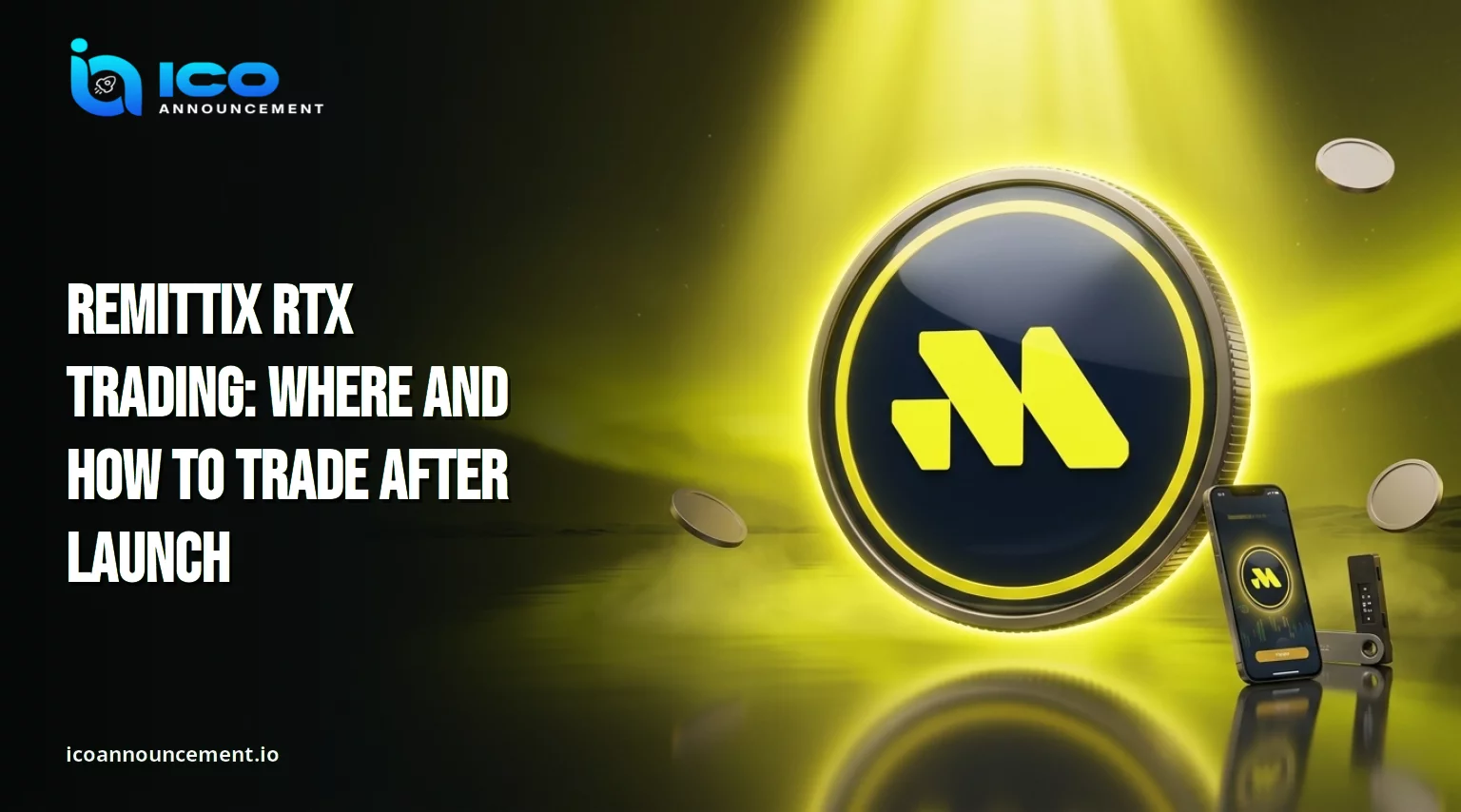
Remittix RTX Trading: Where and How to Trade After Launch Guide
Remittix RTX trading is expected to begin after the token debut on November 24, 2026, when the PayFi project moves from its presale into open markets.
Traders want to know where the token will appear, which pairs may carry volume, and how to place a first order without falling for a copycat.
This guide covers venues, pairs, wallet steps, liquidity, fees, and safety checks, using only details the project has confirmed so far.
Key Takeaways
The debut date is November 24, 2026, but the exact time has not been shared.
Uniswap is the stated first venue, while centralized exchange names remain unconfirmed.
Check pairs, liquidity, and fees before you place any order.
Verify the Ethereum contract address before every swap or transfer.
This guide does not predict price or promise returns.
Remittix RTX Trading: What Happens After the Official Token Launch?
Remittix confirmed that the token goes live on November 24, 2026, after presale contributions passed $32 million from more than 40,000 participants, against a $36 million hard cap.
The team says the exact time will be posted on its official channels that day, so any claim about a specific opening hour is unverified.
For the dated timeline and presale figures, see our RTX launch coverage.
Project documentation states that presale tokens can be claimed from the dashboard five days after the debut, with no vesting period for presale holders.
That gap between the debut and the claim window may shape how early activity looks.
Where Can You Trade the Token After Launch? Exchange and DEX Options
Readers asking where to trade RTX after launch should start with the roadmap.
Remittix lists a Uniswap launch with locked initial liquidity as a next step, which makes a decentralized exchange the stated first venue.
The same roadmap mentions centralized exchange listings, but no exchange names appear in the announcements reviewed for this article.
Treat any list of centralized venues as unverified until the team names them on its official website or verified X account.
A decentralized exchange needs an Ethereum wallet and ETH for network gas, while a centralized platform needs an account and identity checks.
RTX Trading Pairs: What Should Traders Check Before They Buy?
A trading pair shows which asset you spend and which you receive.
New ERC-20 tokens often pair with ETH or a dollar stablecoin on a decentralized exchange, but the project has not published its planned pairs.
Before buying, confirm the pool address, the pool size, and that the token contract matches the official listing.
Buyers who follow the payment side can also study how the RTX remittance model settles crypto into bank accounts, because product usage is part of the pitch.
How to Trade RTX: Wallet, Exchange, and Order Steps for Beginners
Follow this order on any venue confirmed by official channels:
Set up an Ethereum-compatible wallet and store the recovery phrase offline.
Fund the wallet with ETH for gas and with the asset used in the pair.
Open the venue from the official website, not from a search ad.
Paste the verified contract address instead of searching by ticker.
Choose a market order or a limit order, review the price impact, then confirm.
For the wallet and payment features around the token, the guide on How to Use Remittix covers transfers and product basics.
Liquidity and Trading Volume: Why They Matter for New Token Traders
Liquidity describes how easily a token can be bought or sold without moving its price.
Thin pools widen the spread and raise slippage, so a large market order can fill far from the quoted price.
Trading volume shows how much changed hands, but volume alone can be inflated by wash activity.
Compare pool depth, holder counts, and full-day volume on neutral data pages such as CoinGecko or DEX Screener rather than relying on project figures.
The team says initial Uniswap liquidity will be locked, which limits one type of pool withdrawal risk, though it does not guarantee depth or price stability.
Remittix Trading Fees: What Traders Should Check Before an Order
Every swap carries more than one cost.
On a decentralized exchange you pay a pool fee, network gas, and the price impact of your order size.
On a centralized exchange, maker and taker fees apply, and moving tokens to a private wallet can add a withdrawal charge.
No spot fee schedule has been published for the token, so compare quotes on each venue before you confirm.
A limit order caps the price you accept, while a market order fills at whatever the pool or order book offers.
Remittix Markets, the project's perpetual futures platform, uses separate fee and margin rules.
RTX Trading Safety: How to Avoid Fake Exchanges and Fake Tokens
Launch weeks attract copycats, so here is how to avoid fake RTX tokens: the official Remittix site lists an Ethereum ERC-20 asset with 18 decimals, a fixed supply of 1.5 billion, and the contract address 0xe7654694ec16F3163084eC559193e10c7ABA17CB.
Compare the full string, not only the first and last characters.
Our RTX contract guide shows how to check it on a blockchain explorer.
Never share a seed phrase, ignore direct messages offering early access, and skip links posted in social replies.
Fake exchanges often copy a real interface, so open venues only from official links.
What Could Affect Early Trading After Launch? Key Factors to Watch
Several factors can shape early activity: the claim window, listing news, wider crypto market conditions, and product delivery.
Remittix Earn is in final testing, and Remittix Markets is already live, according to the project, but both claims are self-reported.
Details on yield features remain limited, and our RTX staking guide sets out what is known and what is unconfirmed.
Claimed tokens can also reach the market quickly, so supply may matter as much as demand in the first days.
Expert Opinion
The ICO Announcement editorial desk views Remittix RTX trading as a test of execution rather than hype.
The project has a dated launch, a stated first venue, and live products such as its wallet and Markets platform, yet independent data on volume, fees, and payout speed is still missing.
Until verified figures appear, the desk treats project claims as targets.
Disclaimer
This article is for informational purposes only and is not financial, legal, or investment advice. Crypto assets carry a high risk of total loss, and project figures cited here are self-reported. Verify all details on official Remittix channels before trading.