What Is Pepeto AI Token Screening, and How Does It Work in a Swap?
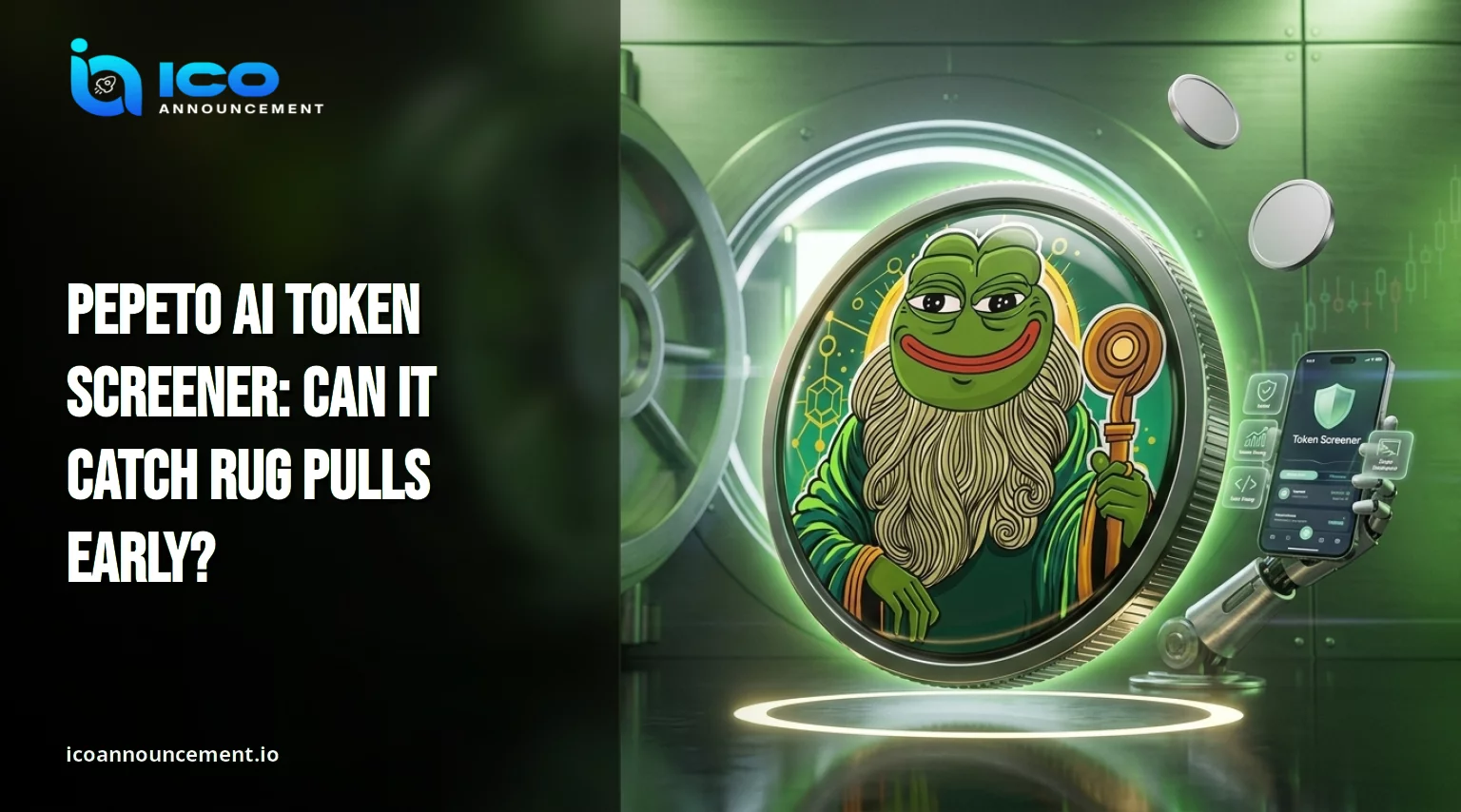
The Pepeto AI token screener is described as a built-in check that reads a coin’s contract before a swap and returns a safety score.
The short answer to the headline is that it may flag known warning signs, but its real detection accuracy has not been independently verified. Treat it as a first filter, not proof of safety.
This guide separates what the project claims, what remains unproven, and what you should check yourself before trusting any smart contract risk score.
What Is Pepeto AI Token Screening, and How Does It Work in a Swap?
The official Pepeto AI screening details say the platform uses an AI engine that checks contracts for rug-pull code, hidden mint functions, and other malicious functions before a swap goes through, then shows traders a safety score.
The project’s own updates describe the screening as part of the swap flow, so the check is meant to run at the moment you trade, not afterward.
In practice, a token contract scanner reads a contract’s code and permissions and compares them with patterns from past scams.
That makes the Pepeto AI token screener a pattern checker.
It can only report what the code exposes, which is why the score works as an early warning and not as a verdict.
The project positions this as a way to reduce risky swaps for meme coin traders, which is a real problem, since new contracts launch in large numbers and few buyers read the code.
Can the PEPETO AI Scanner Detect Rug Pulls and Honeypot Traps?
A rug pull happens when insiders drain liquidity or dump hidden supply, leaving holders with a worthless coin. A honeypot lets you buy but blocks or heavily taxes selling.
Both usually leave traces in code, such as owner-only controls, blacklist functions, or sell restrictions, and that is where rug pull detection and honeypot detection tools focus.
The project says its scanner looks for this kind of code. What it has not shown is how often it catches real scams, how often it raises false alarms, and how it treats newly deployed contracts.
A scanner can also create false comfort. A clean result only means no known pattern matched, which is not the same as the absence of risk. If a link or coin looks suspicious, start with Pepeto scam verification.
What Does Pepeto’s Token Safety Score Actually Check Before a Swap?
A useful score maps to checks you could repeat yourself. For a token safety assessment, the usual items are:
- Owner privileges and whether ownership is renounced
- Token minting permissions and any hidden mint function
- Buy and sell tax checks, including whether tax can be raised
- Liquidity lock verification
- Proxy contract risks, since upgradeable code can change after launch
Public descriptions of the score stay high level, so it is unclear which of these checks carries the most weight.
A single number also hides detail. Ask whether the screen shows the reasons behind a result, because a score with no explanation is hard to audit.
You can confirm the basics on a block explorer with the PEPETO contract checks guide.
Is the Pepeto AI Screener Live or Still Only a Project Feature Today?
Status matters because a safety feature is only as real as the product around it.
The project’s updates describe the exchange and bridge as being in final testing, with scanning built into the swap flow.
That places the feature in a pre-launch setting, without a long public track record.
Until that record exists, the Pepeto AI token screener should be judged as a stated feature, not a proven one.
A tool that works in a test environment has not yet faced live volume or hostile attempts to fool it.
Check the current status on the official site, and read the PepetoSwap features overview to see which parts are described as ready.
Which Smart Contract Risks Can an AI Scanner Miss Even When Clean?
Scanners are strongest on known patterns and weakest on context.
They can miss a contract that looks clean on launch day and later changes through a proxy upgrade, a team holding most of the supply, or an economic design that fails under stress.
Access control vulnerabilities and logic flaws are especially hard to judge from code patterns alone. Social risks sit outside code altogether, including coordinated selling, paid promotion, and fake websites that copy a real project.
Audits help, but scope matters. Some independent reviewers report that the SolidProof audit covers a single ERC-20 contract, not the exchange, bridge, or staking contracts.
Read the SolidProof audit findings to see exactly what was reviewed.
How to Verify a Coin Yourself Before Trusting an AI Safety Score?
The OWASP smart contract vulnerabilities ranking for 2026 places access control first and business logic second, and it also covers proxy and upgradeability flaws. These are the issues a clean score can hide. Use the score as one input, then add your own checks:
- Confirm the contract address from the official site, not a social post.
- Open it on a block explorer and see whether the code is verified.
- Look for mint, blacklist, and pause functions and who can call them.
- Check liquidity locks and the largest holder wallets.
- Try a very small buy and sell before committing real money.
Can PepetoSwap Make Meme Coin Trading Safer for Everyday Users?
Built-in screening can reduce one kind of mistake: buying a contract with obvious red flags.
It cannot remove price swings, thin liquidity, high slippage, or a team’s decision to sell. Meme coins stay volatile even when the code is clean.
If PepetoSwap launches with the Pepeto AI token screener working as described, it could save time on first-pass checks, but it would not replace your own review.
Fake pages are a separate danger, so reach any swap tool only through the official site.
Learn how PEPETO trading risks such as liquidity and slippage affect your exit before you trade.
Final Verdict: Treat the Pepeto Scanner as a Filter, Not a Guarantee
The Pepeto AI token screener puts a contract check inside the swap flow, and that is a sensible idea.
The claims are specific, but performance has not been independently verified.
Use it to catch obvious problems, then verify contracts, liquidity, and ownership yourself.
Readers who want a stricter standard can ask the project for published detection tests, false-positive rates, and a clear scoring method.
Disclaimer: This article is for information only and is not financial advice. Crypto assets are volatile and carry a high risk of loss. Product claims come from the project and have not been independently verified. Do your own research before you buy, swap, or invest.