Who Audited the Pepeto Smart Contract, and How the Review Worked
Most people checking a presale token's safety stop at "Is it audited?" and move on.
That question isn't enough.
The Pepeto audit exists, it's public, and it found no critical issues, but it only covers part of what Project has built, and knowing exactly which part matters more than knowing the audit happened at all.
Key Takeaways
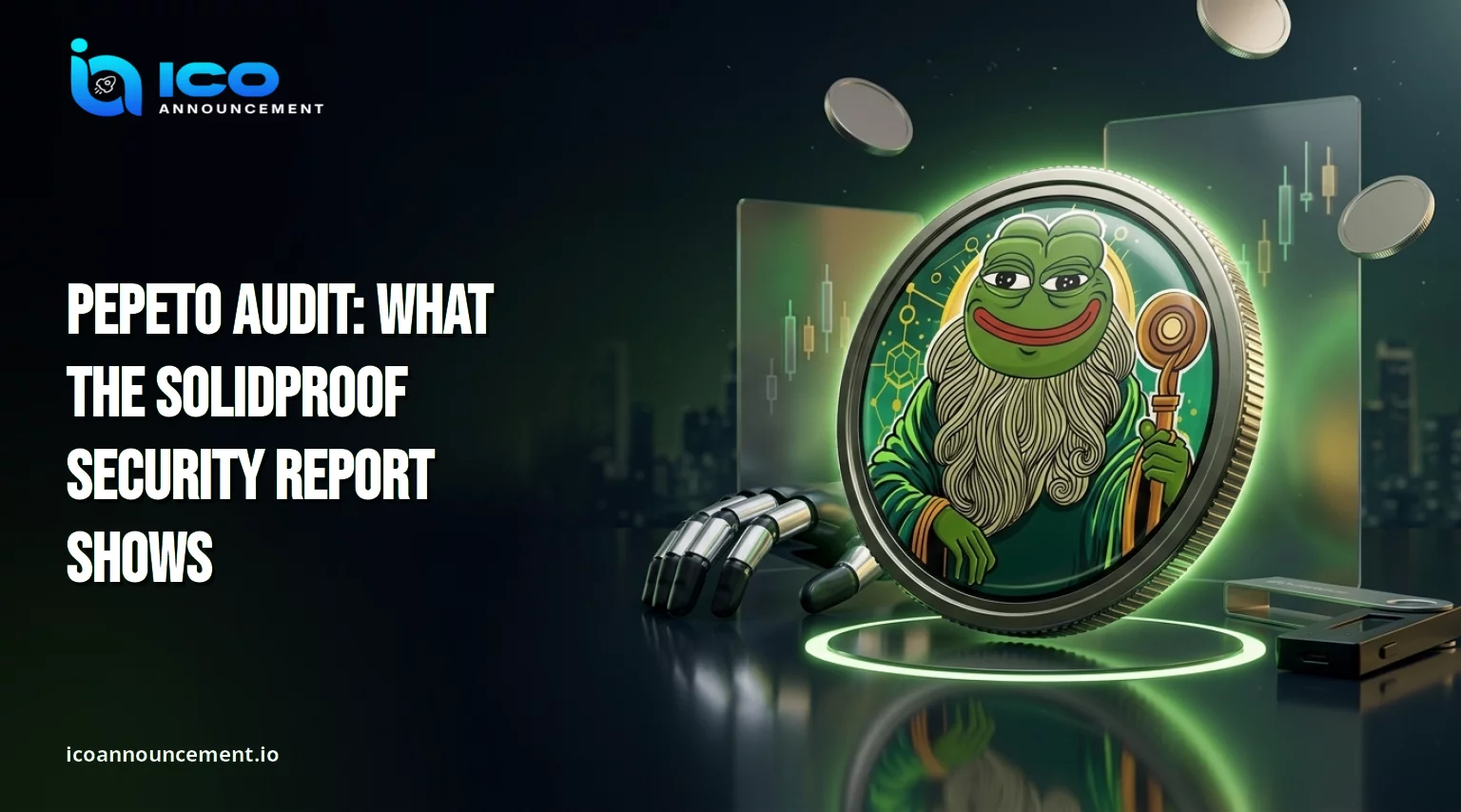
SolidProof published its Pepeto-audit on October 30, 2024, covering the core PEPETO ERC-20 token contract on Ethereum.
The report found zero critical, high, medium, or low severity issues; the only note was informational, about unused functions.
The audit scope was limited to one Solidity file and did not include functional or unit testing of the contract's logic.
Project also holds a second audit from Coinsult, giving the token two independent reviews rather than one.
The exchange, bridge, staking, and AI-screening components sit outside the audited token contract.
Who audited the Pepeto Smart Contract?
SolidProof, a Germany-based blockchain security firm operated by FutureVisions Deutschland, carried out the primary inspection.
Its process followed a standard sequence: a specification review to understand the contract's scope, a manual line-by-line code examination, and a comparison against stated functionality to confirm the code does what the documentation claims.
SolidProof publishes the full PDF report on Pepeto's own site, the most reliable way to check the findings firsthand rather than relying on a summary.
What the SolidProof Audit Actually Found
The report, dated October 30, 2024, reviewed the PEPETO token contract deployed on Ethereum.
It found no critical, high, medium, or low-severity vulnerabilities.
The single finding was an informational note about unused functions, carrying no security risk on its own.
SolidProof also confirmed the contract has no owner privileges beyond renouncing or transferring ownership, meaning there's no built-in function to mint extra supply or freeze wallets after deployment.
That's a clean result, worth taking at face value for what it covers, but it isn't, on its own, a statement about the project's broader ecosystem.
What the Audit Did Not Cover
This is the part most coverage leaves out.
SolidProof's own report states the firm "cannot guarantee 100% logical correctness of the contract" since no functional or unit testing was performed, and that the review covered a single token contract.
That scope excludes several components Project actively promotes: the PepetoSwap exchange blockchain program, the cross-chain bridge, the staking mechanism, and the AI-based screener referenced in its marketing.
Readers who want the full picture of what's been built should also see the roadmap and tokenomics breakdown, which lays out how these pieces fit into the development timeline.
Pepeto's Second Audit: Coinconsult
Beyond SolidProof.
The project has also been reviewed by Coinsult, a separate blockchain security auditor.
Two independent audits on the base token Blockchain Program is more coverage than many presale crypto coins carry at this stage.
Still, the same scope limit applies; a second review of the token Blockchain Program doesn't extend to the exchange, bridge, or staking layers either.
How to Verify the Pepeto Audit Yourself
Don't take a third-party summary's word for it.
A few minutes of direct verification beats any press release:
Open the SolidProof report on Pepeto's own site and read the findings, not just the score.
Check the contract hash in the report against the deployed Blockchain Program on Etherscan.
Find the word "scope" in the document and note exactly which file was reviewed.
Search for any inspection specifically covering the swap, bridge, or staking blockchain program.
Cross-check the inspection date against any blockchain program updates announced afterward.
This matters most right before funding a wallet, which is also where the Pepeto presale purchase guide becomes relevant.
Why Audit Scope Matters Before You Buy
A clean audit on the token Blockchain Program reduces one specific risk: a hidden mint function, an owner backdoor, or a transfer restriction.
It does not reduce risks tied to presale mechanics or the blockchain program behind the Pepeto bridge.
Anyone following the step-by-step presale guide before buying should treat the inspection as one input among several.
Bottom Line:
The Pepeto-audit is real, public, and clean for what it covers.
The core token Blockchain Program has no critical flaws and no owner backdoor.
The gap is scope, not honesty.
Verify the source document directly and weigh the unaudited parts of the ecosystem separately before committing funds.