Comparing Security Models of Layer 1 and Layer 2 Blockchain Systems
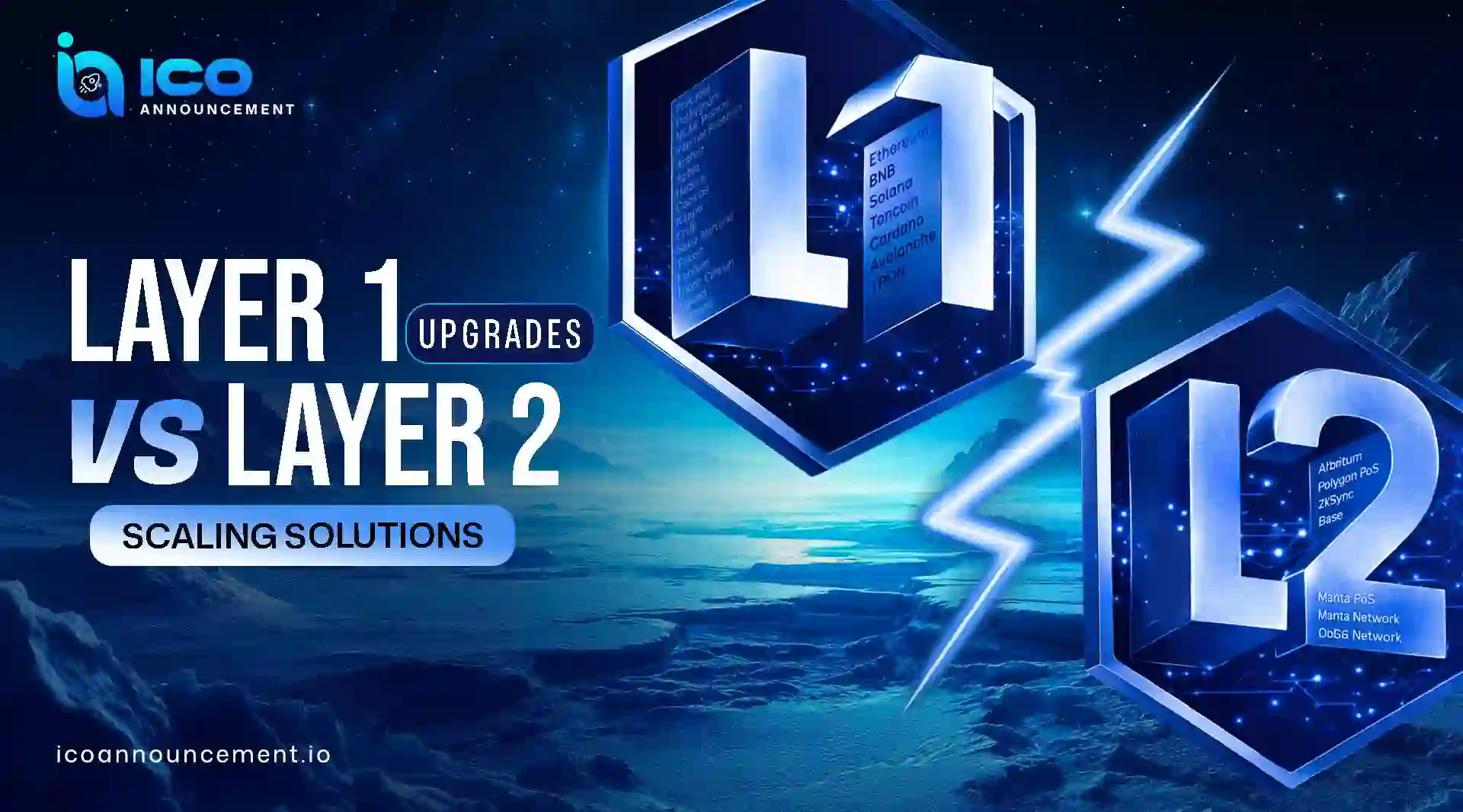
Layer 1 upgrades vs Layer 2 scaling solutions is one of the most discussed topics in crypto today. As blockchain networks grow, they face one big problem. They slow down when too many people use them. Fees rise. Transactions take longer. Users get frustrated.
If you are new to this topic, you can explore our beginner guide to Layer 1 vs Layer 2 blockchains to understand the basics before going deeper. They improve the base blockchain. Or they build systems on top of it. These are known as Layer 1 upgrades and Layer 2 scaling solutions.
This guide explains both in simple terms. It Financial guidance is not given. Crypto markets are risky. Prices change fast. Technology can fail. Always research before making decisions.
Why Scaling Matters in Blockchain
A blockchain must handle three things well:
Speed
Cost
Security
When a network grows, it often struggles with at least one of these.
For example, during busy market periods, networks like Ethereum have seen higher transaction fees. This happens because many users compete for limited space in each block.
Scaling aims to solve this problem.
What Are Layer 1 Upgrades?
phase 1 means the main blockchain itself. It is the base network. Examples include:
Bitcoin
Ethereum
Solana
A phase 1 upgrade changes how the core system works.
Common its Upgrade Methods
Block size increase- Larger blocks can process more transactions.
Consensus changes- Some networks move from energy-heavy systems to faster ones. Ethereum shifted from Proof of Work to Proof of Stake in 2022.
Sharding- The blockchain splits into smaller parts. Each part handles its own data.
These upgrades try to improve speed and reduce fees without adding extra it .
Benefits
Improve the base network directly
No need for extra tools.
Strong security if done correctly.
Clear structure for developers.
For example, Ethereum’s move to Proof of Stake reduced energy use and improve efficiency. Public reports show that energy use dropped sharply after the upgrade.
its improvements often aim for long-term sustainability.
Limits
Layers 1 upgrades are not easy.
They require:
Community agreement.
Technical testing.
Security audits.
Network-wide updates
If changes fail, the entire blockchain is affected.
Hard forks can divide communities. Technical mistakes can lead to bugs.
Scaling only at Level 1 can also take years.
What Are Layer 2 Scaling Solutions?
Layers 2 scaling solutions work on top of the main blockchain. They process transactions off the main chain, then report results back.
Think of Layer 1 as a highway. Layers 2 is like an express lane built beside it.
Popular examples include:
Polygon
Arbitrum
Optimism
These platforms help Ethereum handle more transactions.
How Its Works
Layer 2 systems group many transactions together. They send one summary back to the main chain.
This reduces load on phase 1.
There are different types:
Rollups.
State channel.
Sidechains.
Rollups are widely used todays. They bundle many transactions into one.
Public block-chain tracking platforms show steady growth in Layers 2 adoption over the past two years.
Benefits
Lower transaction fees.
Faster confirmation times.
Lower pressure on phase 1.
Flexible develop
phase 2 network often attract gaming apps, NFT platforms, and DeFi project.
This allows the main block-chain to remain secure while phase 2 handle traffic.
Risks of its Solutions
Smart Contract Vulnerability- platforms depend on smart contracts. If the contract has a flaw, funds can be at risk.
Bridge Exploit Risk- networks use bridges to connect with phase 1. Bridges have been targets of hacks in past years. This remains a major concern.
Liquidity Cracking- Funds can be spreade across a lot of phase 2 network. This can reduce liquidity and create uneven pricing.
Centralized Control in Early Stages- Some phase 2 systems still based on central operators. This reduces division until governance improves.
Layer 1 Upgrades vs Layer 2 Scaling Solutions: Direct Comparison
Both approaches aim to improve blockchain performance.
They solve similar problems in different ways.
Real World Use Cases
DeFi platforms often use Layers 2 for lower fees.
NFT marketplaces move to it to avoid traffic.
Meanwhile, phase 1 upgrades focus on long-term network health.
For example, Ethereum continues to work on scalability improvements while supporting Layers 2 growth.
This shows that both strategies can work together.
Global Trends in 2024–2026
Industry research shows: If you are exploring early stage presale projects, our complete crypto presale guide explains how token launches work and what risks users should understand.
Growing use of Layers 2 rollups
More focus on modular blockchain design.
Institutional interest in scalable networks.
Continued development of sharding concepts.
At the same time:
Regulatory clarity remains limited in some regions.
Market cycles impact development funding.
Security remains a major concern.
Adoption depends on trust and usability.
Which Is Better?
There is no single winner in Layer 1 upgrades vs Layers 2 scaling solutions.
phase 1 improves the foundation.
phase 2 increases capacity quickly.
Many experts believe the future will includes both.
Some blockchains focus heavily on strong Layers 1 performance. Others based on Layers 2 ecosystems. The balance based on use case.
Future Outlook
The future of blockchain scaling will likely involves both phase 1 upgrades and Layers 2 scaling solutions. Rather than of competing, these two approaches can growth together.
Layers 1 Will Focus on Strong Foundations
Layer 1 networks like Ethereum and Bitcoin are expected to keep improving security and efficiency. Developer continue to work on upgrade that reduce energy use, improve transaction handling, and support long-term stability.
Many researchers believe the base part should remain simple and secure. Major changes will likely move slowly. This helps reduce system-wide risk.
In the coming years, Layer 1 upgrades may focus on:
Better validator performance.
Improved decentralization.
Stable long-term scalability models
Stronger security audits
The goal is to keep the foundation reliable.
Layer 2 Will Drive Faster User Growth
phase 2 networks such as Polygon, Arbitrum, and Optimism are likely to continue expanding.
Public blockchain dashboard show increasing transaction activity on it networks over recent years. This trend suggests that users prefer lower fees and faster confirmations.
Future development may include:
Faster withdrawal systems
Improved bridge security.
More decentralized governance.
Better integration with wallets and exchanges.
Conclusion
Layer 1 upgrades vs Layer 2 scaling solutions is not a battle. It is a design choice.
phase 1 strengthens the core system. phase 2 expands capacity. Both aim to improves user experience. As blockchain adoption grows, networks may combine both method. The goal is simple. Make systems faster. Keep them secure. Lower costs without harming trust.
Disclaimer
Crypto assets are volatile. Blockchain technology is still evolving. Security risks exist. This article is for educational purposes only. It is not financial advice. Always your own research (DYOR).