Limits Inside YES Protocol That May Affect Long Term Community use
Crypto space is full of names. Some stay for years. Some disappear fast. YES Protocol is one of the quieter ones. It does not push itself too hard. It does not promise big changes. Many people may not even know about it yet. That is fine. This article is only to explain what the is trying to do, using what is publicly known so far. No hype. No advice. Just simple understanding.
YES Protocol uses a token called $YES. The token exists on blockchain, but the whole system around it is still forming. Because of that, many things are still unclear. This is common for early projects. Nothing here is final.
About YES Protocol ($YES)
YES Protocol is a blockchain-based that focuses on participation and agreement inside digital systems. The main idea is simple. Users hold the token and use it to take part in actions within the protocols. These actions may include approvals, signals, or basic governance-style activity. The project does not clearly limit itself to one single use.
The is not a full app or platform right now. It is more like a base idea or structure that can be used later. The team talks about community input and shared control, but detailed working examples are still limited.
The token is meant to stay inside the system. It is not built as a payment coin for shops or daily spending. Its role is more internal. It acts as a tool to interact with the protocols. Outside usage is not the main focus at this stage.
Why It Stands Out
Focus on Simple Agreement- It does not try to solve too many problems at once. Its core idea is agreement or approval within a system. That is why the name feels very direct. Instead of complex rules, the talks about simple yes or no style participation. This makes the idea easy to understand, even if the system itself is not fully live yet.
Community-Centered Thinking- The puts users at the center, at least in theory. Token holders are expected to take part in decisions or signals. Control is not meant to sit with one authority. This approach is common in crypto, but keeps it less technical in how it talks about it.
Narrow Scope Approach- It does not claim to be everything at once. It does not talk about DeFi, NFTs, gaming, or AI all together. It keeps its scope narrow. This can help the stay focused if development continues.
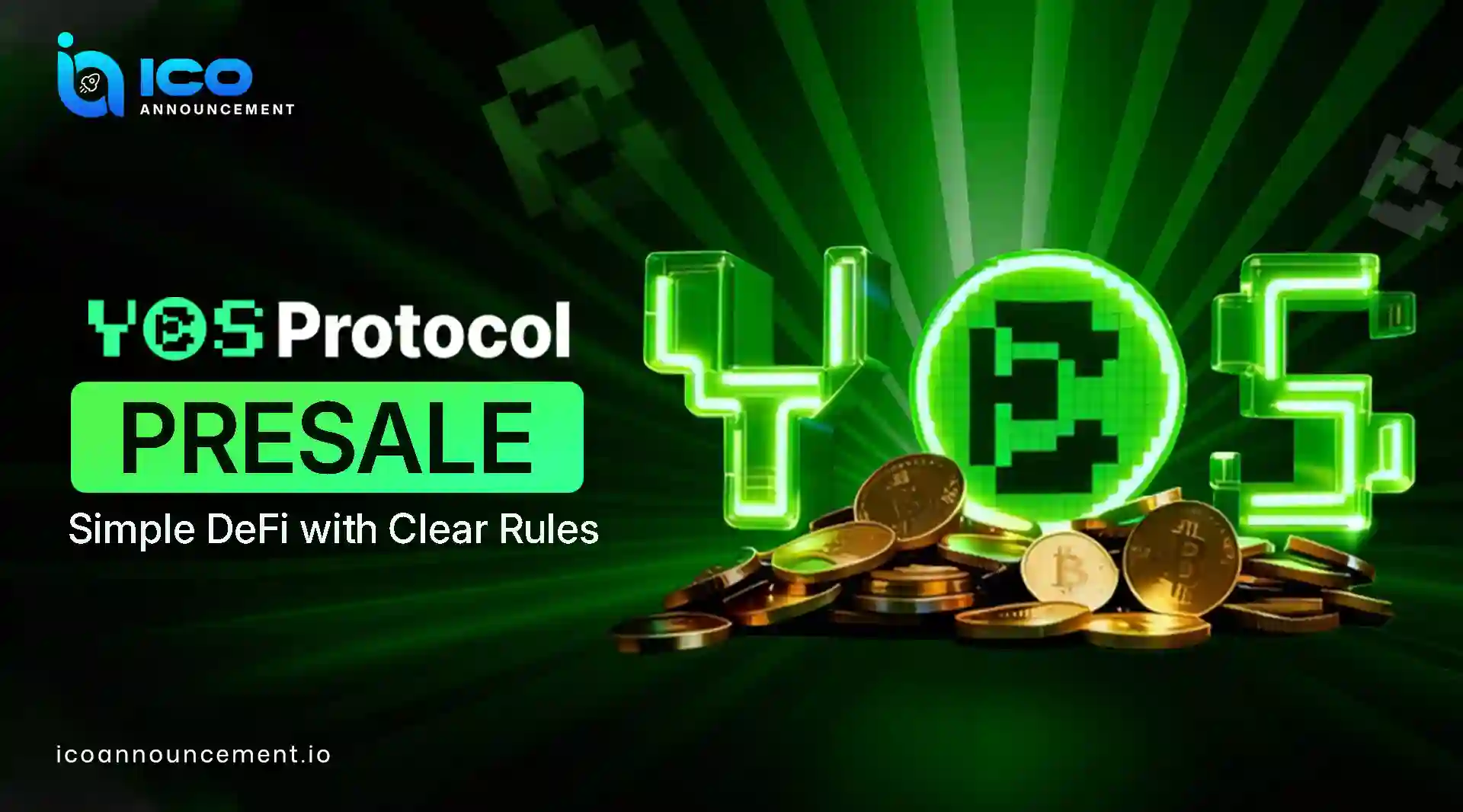
Presale launched
Presale is the chance to buy a token early before they get listed on public exchanges. YES Protocol offers its token early at a discounted rate. Early buyers get extra rewards as the project gets success and also become part of the journey from the beginning.
Presale detail
Start Date- August 12 2025
End Date- January 31 2026
Total Supply- 100,000,000,000
% of Supply- 30.00%
Accepted Currency- USDT
Presale Price- 0.01 (USDT)
Tokenomics
Token Name- YES Protocol
Token Symbol- $YES
Total Supply- 100,000,000,000
Token allocation
TGE (LP Launch) 30%
Earn / DAO 30%
POL (Protocol Owned Liquidity) 10%
Ecosystem Treasury 10%
Channel Incentive Pool 10%
User Incentive Pool 10%
Roadmap
Step 1
Project idea
Website launch
YES Protocol Presale
Step 2
Platform testing
Governance tools
Community development
Step 3
Feature updates
User feedback
Long-term improvements
Plans may change as thegrows.
Whitepaper in Plain English
Risks and Considerations
Early Development Stage- It is still early. Many parts are not live. Some features are only ideas. This means there is uncertainty. Early-stage projects often change direction. Some never finish what they start.
Limited Transparency- There is not a lot of deep documentation available publicly. This makes it harder to judge progress. Without regular updates, users may feel not sure about what is happening behind the scenes.
Adoption Risk- A focus on participation needs users. If people do not use it, the token has little purpose. Right now, adoption looks small. This is not unusual for new projects, but it is still a risk.
Market Conditions- Crypto markets change often. Trends come and go. A that feels relevant today may not feel the same later. The will need to adjust if the market moves in a different direction.
Future Vision
The future of the YES Protocol depends mostly on execution. If the team builds real tools where $YES has clear use, the may slowly grow. Growth may not be fast. It may stay small for a long time.
If partnerships happen, visibility could improve. If no partnerships happen, growth may stay limited. Both outcomes are possible. The project could also shift focus as the result comes in. Many early do this. Whether that helps or harms depends on how changes are handled. There is also a chance that It stays as a niche tool. Not every needs mass adoption. Some systems are built for small groups. That may be the case here.
Conclusion
YES Protocol is a small, early-stage crypto focused on participation and agreement. It does not promise big revolutions. It does not show a fully built system yet. Most of what exists today is an idea supported by a token.
There are strengths in its simplicity. There are also risks due to limited information and adoption. This is normal for early crypto projects. This article is written only to explain what is visible today. It is not meant to encourage or discourage anything. It is just information, shared in simple words.
Disclaimer
This content is for general information only. It is not financial advice. Crypto projects involve risk and uncertainty. Always (DYOR) do your own research before making any decision.