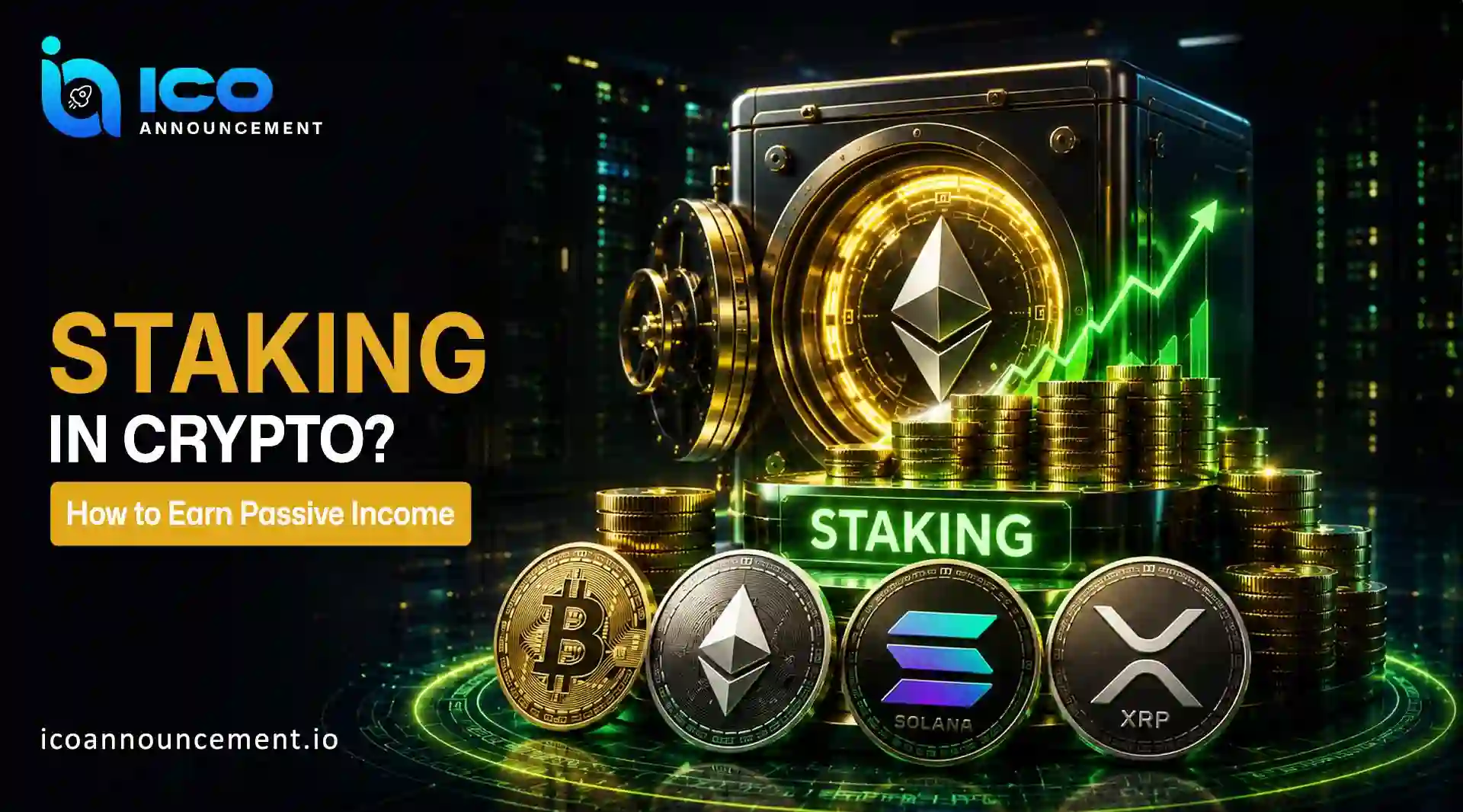
What Is Crypto Staking and How Beginners Earn Passive Income Online
People talk a lot about making money with cryptocurrency. You might hear about trading coins or buying tokens and holding them, hoping the price goes up. But there is another way that is different. It is called staking.
Many people say staking is like getting free money or earning interest at a bank. It sounds easy. But the crypto project is not a regular bank. There are specific rules, real tech things happening behind the screen, and risks that can make you lose money.
If you want to understand how it works without all the hype, this guide breaks it down simply.
What Exactly Is Crypto Staking?
To understand staking, you have to look at how a blockchain works. A blockchain is just a digital ledger. It is a big list of transactions that everyone agrees on. Old blockchains like Bitcoin use computers to solve hard math puzzles to check transactions. That is called Proof of Work or mining. It uses a lot of electricity.
It is a different system that you have probably seen with newer blockchains. They use Proof of Stake. Instead of bulky computers, they use the tokens themselves to secure the network. Like putting money into a bank is like getting interest on an eventual savings. The money is not a loan from a bank using the cash you deposited to lend it to someone else. These new tokens are generated by the very blockchain network to reward you for your contribution.
How Does the Network Use Your Staked Crypto?
When you lock your tokens, you do not just leave them there. They do a job. The blockchain needs people to check if transactions are real. The entities that do this checking are called validators. Think of them like digital security guards.
To become a validator, a person or group has to put up a huge amount of crypto as a deposit. The network looks at how many tokens a validator has. The more tokens locked up, the more the network trusts them to check the next batch of transactions.
If a validator does a good job, the network creates new coins and gives some to that validator. If you put your coins into that validator’s pile, they share a piece of those new coins with you. This is how you earn your passive income.
Three Ways to Start Staking
You do not need to be a tech genius to stake crypto. There are different ways to do it depending on how much time you have and how much you want to control your funds.
1. Staking on a Centralized Exchange
This is the easiest way for beginners. If you buy your crypto on a big platform like Coinbase, Kraken, or Binance, they usually have a button that says "Stake."
How it works- You click the button, and the decentralized exchange handles all the technical details. They take your coins, put them in their own validator pool, and give you your rewards.
The downside- The exchange takes a fee out of your rewards. Also, you do not truly control your coins while they are on an exchange. If the exchange has problems, your coins might get stuck.
2. Delegating with a Crypto Wallet
This is a middle ground. You keep your coins in your own crypto wallet, like Phantom for Solana or MetaMask for Ethereum.
How it works- Inside your wallet, you choose a validator from a list and click "Delegate." Your coins never leave your wallet, but their power is tied to that validator.
The downside- You have to pick a good validator yourself. You need to check their fees and make sure they stay online.
3. Joining a Staking Pool
Sometimes you do not have enough coins to stake on your own. For example, to stake Ethereum by yourself, you need 32 ETH, which is a lot of money.
How it works- A pool lets thousands of small investors put their coins together. Platforms like Lido or Rocket Pool do this. They even give you a "receipt token" (like stETH) that shows you own a piece of the pool. You can trade that receipt token even while your real tokens are locked.
Real Examples: What Can You Earn in 2026?
The amount of money you make from staking depends entirely on the token you choose. Every blockchain technology has its own math. Here is a look at what some real, popular tokens look like right now.
Is Staking Right for You?
Staking makes the most sense if you already plan to hold a specific cryptocurrency for a long time. If you love Ethereum or Solana and plan to keep your coins for years anyway, staking lets you grow the size of your pile while you wait.
But if you are someone who panics when prices drop, or if you think you might need your cash next week, locking your coins up is probably a bad idea.
Crypto staking is a real tool for passive income, but it requires patience and a willingness to accept that prices can go to zero. Do your research, start small, and never stake money that you need to pay your rent.
Conclusion
Staking crypto can earn you steady passive rewards, but staking is no miracle shortcut. It makes more sense if you were holding onto your coins for the long-term anyway. Keep in mind that market crashes, lock-up periods are frozen, and bad validators can still wipe out your profits. Do not bet with money you cannot afford to lose.