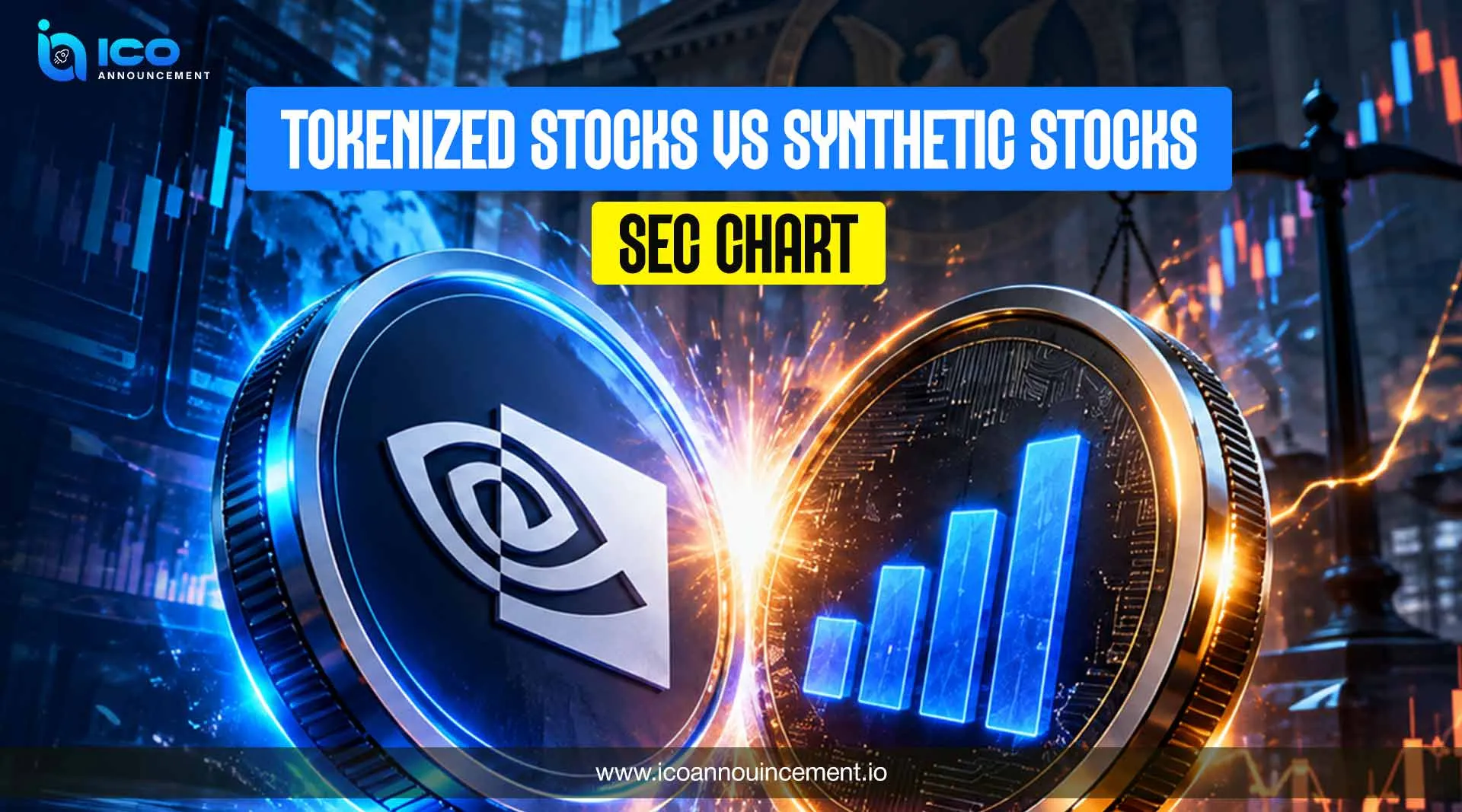
What the Tokenized Stocks vs. Synthetic Stocks Split Means
The U.S. Securities and Exchange Commission drew a hard line on tokenized stocks vs. synthetic stocks on September 17, 2026, when it issued its "Innovation Exemption.
"The order lets qualifying trading venues bring real, ownership-backed, digitally issued U.S. shares on-chain, while leaving price-tracking derivative tokens outside the rulebook entirely.
The distinction arrives just as onchain equity products have drawn growing retail interest worldwide.
For anyone weighing digitally issued equities against price-tracking derivatives, the distinction now carries real regulatory weight, not just technical nuance.
Key Takeaways
The SEC's Innovation Exemption, issued September 17, 2026, lets qualifying venues trade genuine Digitally Issued NMS Shares on-chain for up to five years.
Derivative stock tokens that only track price remain excluded from the exemption entirely.
Ownership rights, including dividends and voting, are the deciding factor in the tokenized shares vs. synthetic shares comparison.
Venues must meet six conditions, including issuer notice, auditable smart contracts, and trading halts matched to the underlying stock.
The exemption is temporary and open for public comment as the SEC weighs permanent rulemaking.
What the SEC's New Innovation Exemption Allows Onchain Today
The SEC's official order grants temporary, conditional relief to "Digitally Issued Securities Venues," or TSVs, freeing them from registering as national exchanges under the Securities Exchange Act of 1934.
A TSV can now operate permissioned automated market maker liquidity pools where Digitally Issued National Market System (NMS) Shares trade directly on-chain.
SEC Chairman Paul Atkins called it a step to "bring America's capital markets into the digital age," while Trading and Markets Director Jamie Selway called the relief a milestone.
The exemption also covers liquidity providers.
Firms supplying proprietary capital to an AMM pool no longer need to register as dealers, even when their activity, such as quoting prices to customers, would normally trigger that classification.
Both exemptions run for five years from publication, and the SEC has opened the order for public comment on further changes.
Tokenized Stocks vs Synthetic Stocks: The Key Legal Difference
The line between tokenized stocks vs. synthetic stocks comes down to ownership.
A genuine tokenized stock is a blockchain-based claim on an actual share, carrying the same dividends, voting rights, and liquidation claim a brokerage account would provide.
A synthetic stock token, by contrast, is a derivative that merely tracks a share's price without conferring any underlying ownership.
Coverage from Forbes noted the order explicitly excludes "a digitally issued linked security or a Digitally Issued security-based swap," the structure behind several offshore stock-token products marketed to retail traders outside the U.S. That framing matters for the tokenized stocks vs. synthetic tokens debate because it shows the SEC isn't rejecting on-chain equities broadly; it is drawing a narrow, ownership-based boundary around what qualifies for relief.
Why Synthetic Stock Tokens Remain Excluded From the SEC Order
Synthetic tokens have fueled much of crypto's recent "stock token" enthusiasm, particularly products offered through offshore venues.
According to Unchained, an SEC official said the agency sees "very little interest on the derivative side" domestically and suggested synthetic products can "remain out in the wilds" abroad rather than inside the new exemption.
That stance leaves synthetic stock tokens in the same regulatory gray zone they occupied before the order.
Platforms offering price tracking equity derivatives to U.S. persons still face the existing securities framework, without the relief now available to venues trading genuine digitally issued shares.
The split between the two effectively channels U.S. onchain activity toward ownership-backed products while leaving synthetics unaddressed.
The Six Conditions Every Tokenized Securities Venue Must Meet
Per the SEC's order, a TSV must satisfy several conditions to keep its exemption:
Tokenized NMS Shares are subject to limits on listed symbols and trading volume.
The venue must verify tokenized shares carry the same rights as traditional NMS stock.
Before listing a third-party-tokenized stock, the venue must notify the issuer and allow an objection window.
Smart contracts must be auditable, public, and deployed on a permissionless distributed ledger.
Trading must halt whenever the underlying stock halts on its primary listing exchange.
The venue must publicly disclose its operations, trading activity, and affiliate trading activity.
Reporting noted the exemption arrived days after the CLARITY Act stalled in the Senate, framing the order as the SEC using its existing statutory authority rather than waiting on Congress to pass separate digital-asset legislation.
Commissioner Mark Uyeda highlighted recordkeeping, transaction transparency, and technology safeguards among the venue-level requirements that TSVs must maintain on an ongoing basis.
What the Tokenized Stocks vs. Synthetic Stocks Split Means for You
For retail and institutional investors alike, the tokenized stocks vs. synthetic shares distinction now doubles as a compliance filter.
Tokenized shares traded on a registered TSV carry real shareholder rights and SEC-conditioned oversight.
Synthetic stock tokens, wherever they're offered, still sit outside that protective structure.
Nothing changes immediately for everyday investors.
As Forbes noted, no pool opens until a venue publishes notice, clears the 30-day objection window, and meets the SEC's operating conditions.
Robinhood's earlier synthetic-style stock tokens, launched via Robinhood Chain, remain a separate product distinct from anything the Innovation Exemption covers, underscoring why reading the fine print on any "stock token" matters before investing.
Expert Opinion
Market analysts following the order note that the SEC's approach in the tokenized stocks vs. synthetic stocks debate signals a preference for incremental, ownership-anchored innovation over broad derivative access.
By excluding synthetics while inviting registered venues to build compliant tokenized-equity infrastructure, the Commission appears to be testing on-chain market structure without extending relief to products it has flagged as higher-risk.
Whether the exemption evolves into permanent rulemaking within its five-year window will likely depend on how TSVs perform under the disclosure and audit conditions attached to the order.
Disclaimer
This article is for informational purposes only and does not constitute investment, legal, or financial advice. Regulatory frameworks around tokenized and synthetic stocks are evolving; readers should consult the SEC's official order and a licensed advisor before making investment decisions.