Token Allocation Explained: How Distribution Shapes Crypto Projects
Token Allocation matters because it affects how you find, judge, and manage crypto opportunities. This guide explains Token Allocation in plain English so you can move from curiosity to a more disciplined process.
If you're new, start simple. Focus on utility, supply, vesting, liquidity, and security before you look at hype. Why does Token Allocation matter so much in crypto? Because small structural details often decide risk, access, and long-term price behavior.
For live site navigation, begin with our crypto presale list to explore current and upcoming projects in one place.
You can also compare it with the crypto ICO list to see how ICO Announcement organizes related pages.
Token Allocation is easiest to understand when you break it into moving parts. Look at who controls access, when buyers receive tokens, and what happens after listing. Those three points usually tell you more than marketing claims.
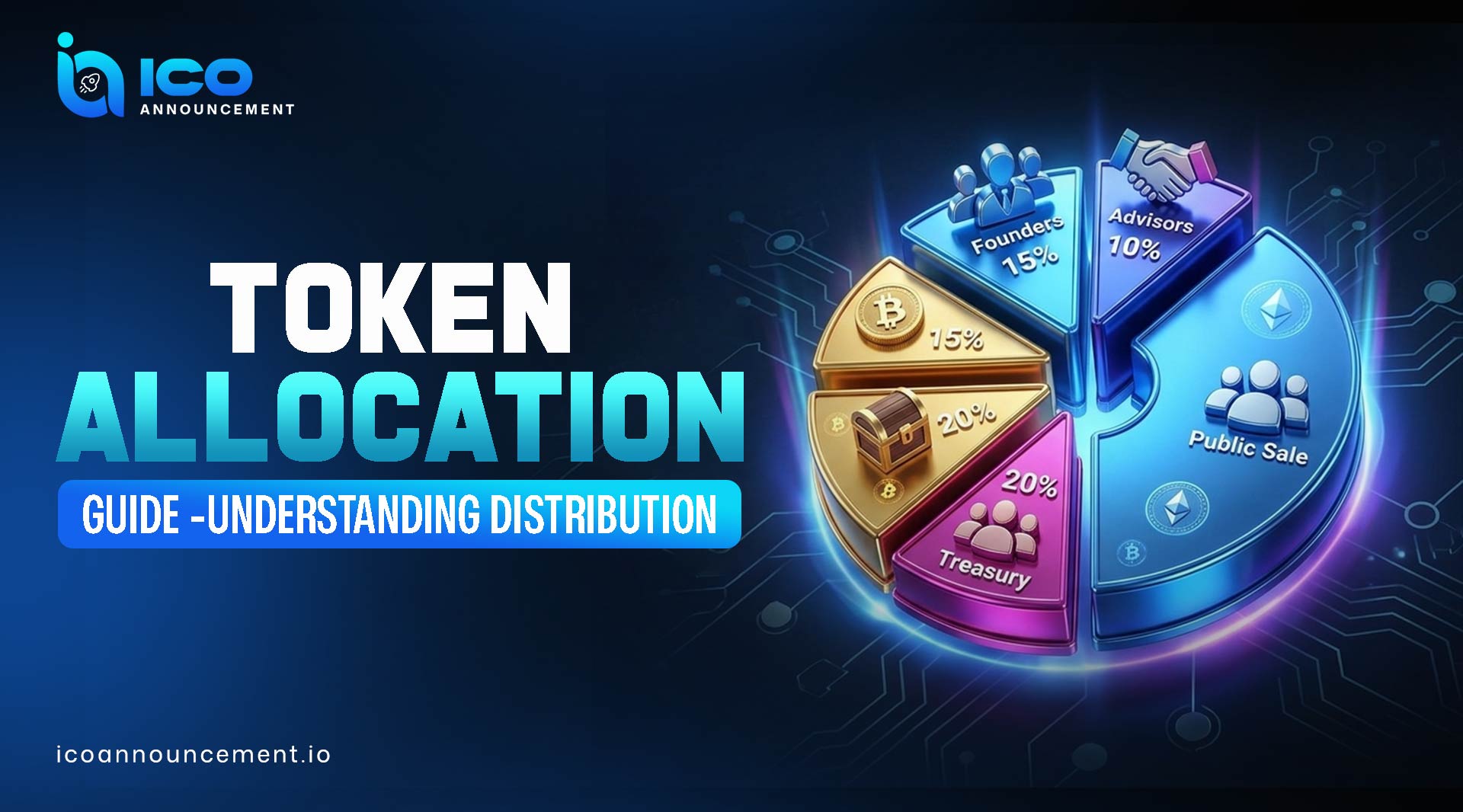
Token allocation means how a project divides its total supply among different groups. This is one of the most important parts of any crypto project because it affects price, supply, and long-term trust.
What Is Token Allocation?
Every project has a fixed or planned supply. This supply is split into parts like team, investors, community, and development. This split is called token allocation.
In simple terms, it shows who gets how many tokens and when.
Common Allocation Categories
1. Team Allocation
Tokens reserved for founders and core team. These are usually locked and released over time.
2. Presale / Public Sale
Tokens sold to early users and investors. This is where most users enter.
3. Liquidity
Tokens set aside to create trading pairs on exchanges. This helps users buy and sell easily.
4. Marketing and Growth
Used for promotions, partnerships, and user acquisition.
5. Ecosystem / Rewards
Tokens used for staking, incentives, and platform activity.
Why Distribution Matters
Allocation directly affects market behavior.
Too much for team- risk of selling pressure later
Too little liquidity- price becomes unstable
Strong community share- better long-term growth
A balanced distribution helps build trust and stability.
How it works in the real world
In practice, Token Allocation becomes clearer when you follow a repeatable workflow. Start with the primary document, move to mechanics, then test how distribution, listing plans, and community quality fit together.
That process helps you separate interesting stories from investable structures. It also shows whether timing, chain choice, and launch venue support the model or weaken it.
If you want more internal context, review ico presale tools. These pages help you compare how similar subjects are framed across the site.
Read the project overview or sale page first and note the core value proposition.
Match utility with actual product demand, not just future plans.
Map the unlock schedule to likely sell pressure after TGE or exchange listing.
Decide in advance what would make you pass on the opportunity.
What to check before you act
The final test is discipline. It only becomes useful when you turn it into a checklist you can apply under pressure. That matters because weak structure usually appears before the market spots it.
That means using position sizing, comparing alternatives, and accepting that no single article or community call can replace your own research. In crypto, bad entries often come from rushed decisions, not missing information.
Use official references when details matter. You can start with CoinMarketCap crypto glossary to understand basic crypto terms clearly.
CoinGecko Learn is also helpful, as it explains concepts in a simple and easy way.
Then compare those sources with project documents and on-chain evidence to verify the information properly.
Related ICO Announcement resources
Use the site hubs and related guides above as a fast path into deeper research. They help you compare structure, examples, and deal flow without jumping between unrelated pages.
Glossary
TGE: Token Generation Event, the moment a token is created or first distributed.
FDV: Fully diluted valuation, the value if all the supply were already circulating.
Vesting: A schedule that releases tokens over time instead of all at once.
Liquidity: How easily a token can be bought or sold without a sharp price move.
Risk note
Token Allocation can look simple on the surface, but structure, execution, and disclosure quality change the real risk. Treat this guide as a starting framework. Verify claims with official documents, on-chain data, and trusted third-party sources before making any decision.
Disclaimer
This content is for informational purposes only and does not constitute financial or investment advice. Cryptocurrency investments carry significant risk, including the potential loss of your entire investment. Always conduct your own research (DYOR) and consult a qualified financial advisor before making any investment decisions. icoannouncement.io does not endorse any specific project, or ICO.