When Is the Pi Network DEX Launch Date? Is Q1 2027 confirmed?
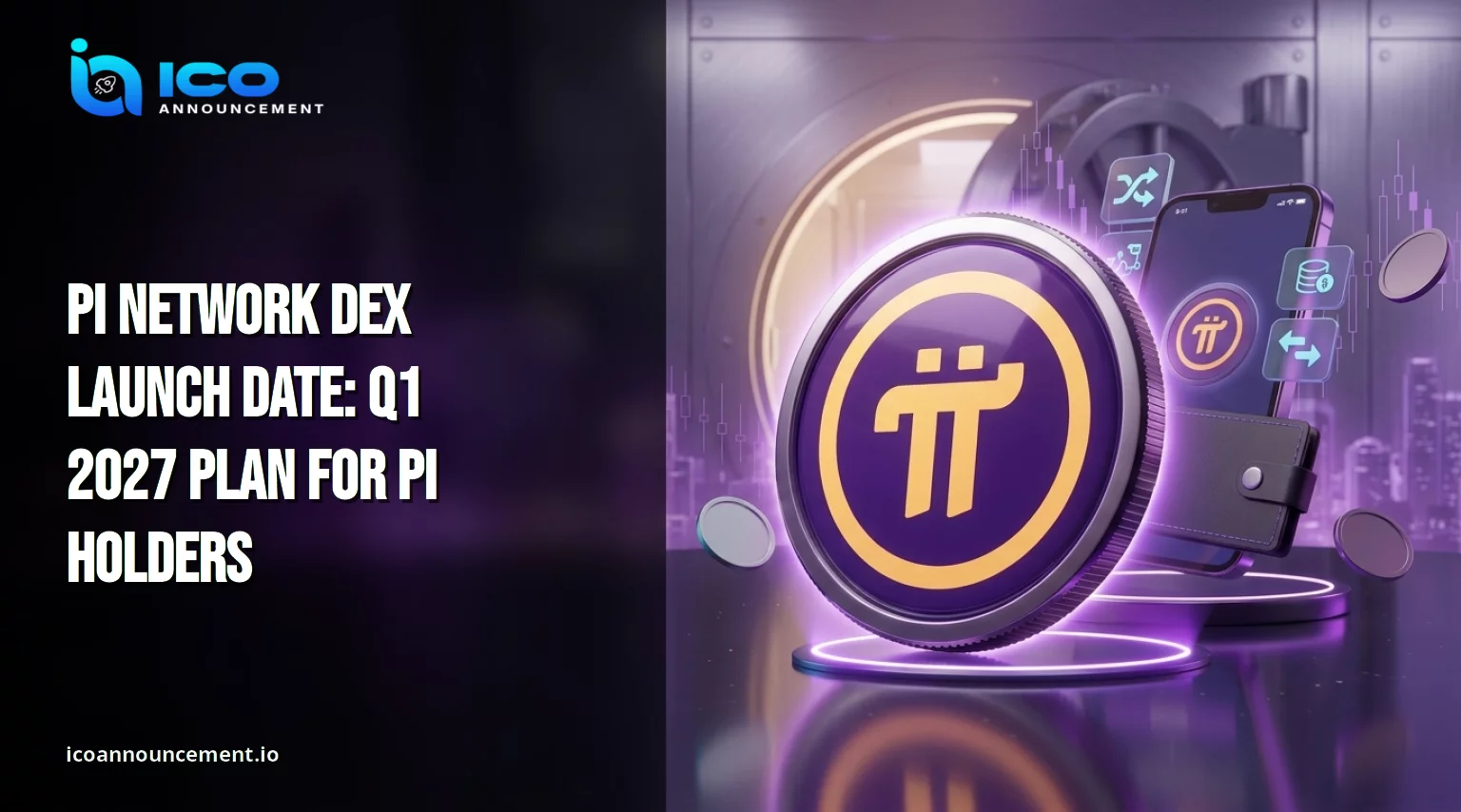
The Pi Network DEX launch date is still a quarter, not a day. On November 17, the Core Team said its Launchpad, decentralized exchange, and automated market maker will arrive on Mainnet in Q1 2027.
That moves beyond testnet experiments, yet fees, trading pairs, and eligibility remain unanswered.
This guide separates what is confirmed from what is unknown, explains how the three tools differ, and shows holders how to prepare without chasing rumors or fake listing pages.
When Is the Pi Network DEX Launch Date? Is Q1 2027 confirmed?
The team named Q1 2027, meaning January to March, in its official Q1 2027 Mainnet announcement. No exact day was published.
A confirmed quarter is a planning window, so any site quoting a precise date is guessing. Roadmap dates in crypto often slide, so treat the quarter as a target and watch the project’s own blog for changes.
Note too that the announcement commits to a window only, with no claim about the first listed asset or expected trading volume.
The announcement adds that these capabilities ran on Testnet trading cycles through multiple iterations.
Their stated purpose is extra infrastructure for ecosystem token launches, giving developers time to prepare, including hackathon projects that may become Launchpad candidates.
Pi DEX vs AMM vs Launchpad: How Will All Three Work Together?
A decentralized exchange lets users trade straight from their wallets, matching buyers and sellers through an order book or a pool.
An automated market maker swaps that matching for a formula so trades can happen without a waiting counterparty. The Launchpad is where ecosystem tokens are first distributed. Together they form a pipeline: launch, pool, then trade.
In the official model, proceeds from a token launch flow into a pool instead of to the project. That gives every new token a starting base of liquidity. The exchange and AMM then provide the place where those tokens trade. Our Launchpad and SLICE guide covers the Testnet rounds in detail.
Pi Network Liquidity Pools Explained: What Does SLICE Testnet Reveal?
A liquidity pool holds two assets, and the constant-product formula keeps their reserves multiplied to a fixed number. In the official example, a pool starts with 10 SLICES and 10 Test-Pi, so 10 x 10 = 100.
If a buyer removes five SLICES, the other side must rise to 20 to keep the product at 100, making the remaining SLICE pricier. Selling reverses the move.
That is price discovery inside a pool: swaps shift reserves, and reserves shift the displayed price. Liquidity providers supply those reserves, which is why pool depth matters for how far one trade moves the price.
The official liquidity pool explanation walks through the mechanics fully. One boundary matters here: SLICE exists only on the testnet and will never reach the mainnet.
What Do SLICE Price Charts Show About Token Swaps and Pricing?
The Launchpad app and the BlockExplorer display SLICE priced against the Testnet coin, so Testnet token swaps appear as a moving line.
It is the closest preview of AMM behavior available today, and it shows how a single large swap can nudge the price more than several small ones. Our SLICE price tracking breakdown explains how to read that chart.
Treat it as a learning tool. Test tokens carry no real value, so a rising line says nothing about future demand, a listing, or any return on Mainnet.
Will PI Holders Trade Ecosystem Tokens After the Mainnet Launch?
Not automatically, and not every token. The project frames these tools as Mainnet infrastructure for ecosystem tokens tied to app utility, such as access, payments, or rewards. The main coin is a separate asset from any app token, and a token that ran on Testnet should not be assumed to return.
Utility also differs by app. A game token may grant in-game access, while a service token may handle subscriptions, so each launch deserves its own review of purpose and supply rules.
What exists today is a timeline and a toolset. Still unannounced: which tokens qualify, when the first one launches, and which assets they pair with. Following Pi Mainnet app utility is the practical way to spot apps that could matter once tokens arrive.
Pi Network DEX Fees, Trading Pairs, and Token Listings: What Is Known?
The official post lists no fees, trading pairs, eligibility rules, or first token. Anyone quoting exact fee tiers or listing dates is filling gaps with guesses.
Testnet activity is not proof of a mainnet listing, and different tokens may follow different conditions.
Until details appear, avoid decisions based on rumor threads, screenshots, or unofficial calculators.
Smart contract work may shape how apps handle tokens later, though the announcement does not link the two. Reading the smart contract developments beside the exchange news gives a fuller picture without assuming a connection.
How Should PI Holders Prepare for the Pi Network DEX Launch?
Keep the checklist short:
Follow only official channels from the Core Team.
Understand liquidity and swap risks, since thin reserves can move prices sharply.
Avoid fake DEX websites and suspicious wallet approvals, and never share a passphrase.
Treat testnet results as practice, not a listing signal.
Bookmark the official blog and check it before trusting any social post.
Ignore anyone promising guaranteed gains from early access.
Our Pi wallet security checklist shows how to verify links before connecting anything. When a site rushes you, pause, confirm the address, and read every approval prompt before signing.
Conclusion: What the Q1 2027 DEX Rollout Means for Ecosystem Utility
The Pi Network DEX launch date remains a quarter, and the details that matter most, such as fees, pairs, and eligibility, are still unannounced. What is solid: the Launchpad, exchange, and AMM were tested, and a mainnet window is committed.
If the rollout lands as planned, apps could gain a native route for token utility. Until then, stay with official updates. This guide will be refreshed as details arrive.
Disclaimer: This article is for informational purposes only and is not financial advice. Cryptocurrency involves risk, and features may change. Verify details through official sources before acting.