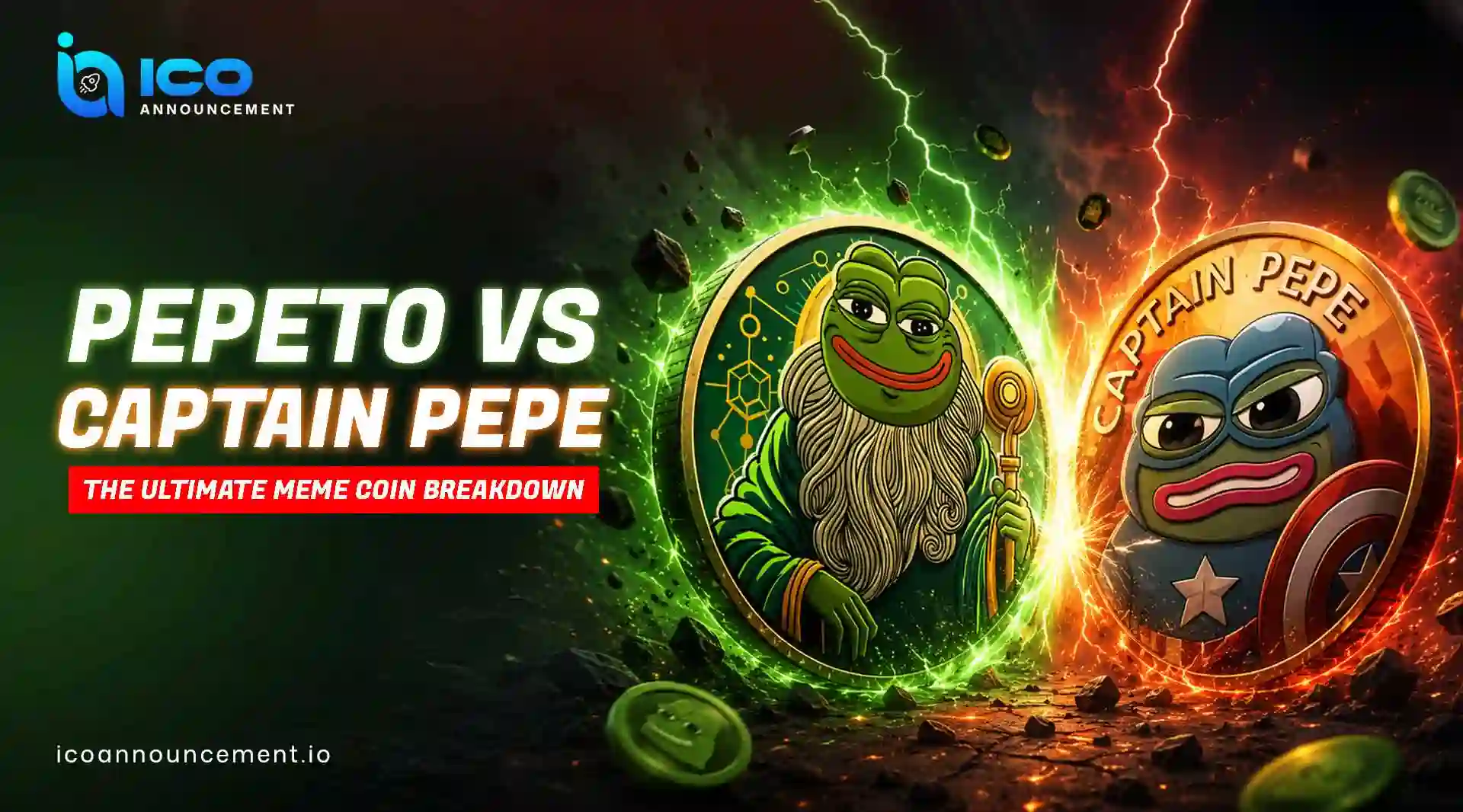
Breakdown Pepeto vs Captain Pepe: Which One Has Real Potential?
The meme coin space is heating up with new contenders, and the comparison between Pepeto vs Captain Pepe is gaining strong attention among crypto traders. Both projects sit in the Pepe-inspired narrative but try to stand out with different branding, community strategies, and early-stage momentum.
Pepeto is often discussed for its presale hype and aggressive marketing push, while Captain Pepe focuses more on themed storytelling and community-driven engagement. Investors are now trying to figure out which crypto project shows stronger long-term potential, better token utility, and higher upside in a volatile meme market.
This comparison helps break down their strengths, risks, and overall positioning in today’s competitive meme coin landscape.
What is Pepeto?
Pepeto launched on Ethereum as a meme coin that tried to do more than just ride hype. It runs a demo exchange, a zero-fee DEX called PepetoSwap, and a cross-chain bridge. Staking rewards hit up to 237% APY, with over 42 trillion tokens already locked by holders. That's not a small number. It shows some people are actually committing, not just flipping.
The contracts were audited by both Coinsult and SolidProof. Two separate audits are more than most meme coins bother with. The presale price stood at $0.000000149 and had already raised over $6.4 million before major exchange listings.
What is Captain Pepe?
Captain Pepe (CPEPE) is a different animal entirely. The contract lives on Binance Smart Chain. The team described the project as an experiment to understand how the crypto market reacts to assets with different characteristics compared to mainstream tokens.
That framing is honest, actually. They're not promising a DEX or NFT ecosystem. CPEPE currently ranks around #19805 by market cap. So the scale difference is real. Pepeto has millions in backing and audited contracts. Captain P epe is a small BSC project built more like a research experiment than a growth play.
Tokenomics: How Each Coin is Built
This is where things get interesting for anyone comparing both.
Pepeto tokenomics:
Fixed supply of 420 trillion tokens, mirroring the familiar meme number but adding utility from day one.
No trading tax, no team wallets structure built to protect investors.
5% of every transaction is burned, making remaining tokens more scarce over time.
Staking APY up to 237%
Audited by Coinsult and SolidProof
Captain Pepe tokenomics:
BEP-20 token on Binance Smart Chain
Small circulating supply with minimal market depth
No publicly stated burn mechanism or staking program
Positioned as an experiment, not a utility coin
The contrast is obvious. Pepeto built tokenomics to reward holding. Captain Pepe has no stated incentive for long-term holders beyond price speculation.
Ecosystem and Utility
Over 850 projects were reportedly preparing to apply for listing on PepetoSwap, which would make the fee token for all those trading pairs. More listings mean more demand for the token itself. That's basic economics.
It is also building a dedicated exchange hub where hundreds of meme coins will be listed and traded through the PEPETO token, creating ongoing demand.
Captain Pepe has none of this. No exchange, no bridge, no NFT system. The project's own team described it as an experiment in understanding crypto market behavior. That's an unusual thing to admit publicly but it does set clear expectations.
Exchange Listings and Availability
This is a practical question traders always ask first.
Pepeto was in the presale phase building toward major CEX listings. The level of participation showed strong demand at the early presale stage, a contrast to older meme coins already at their peak.
Captain Pepe trades on smaller platforms. No major CEX listing for Captain Pepe at this point. That limits liquidity and price discovery.
Risk and Red Flags
Both projects carry real risk. Neither should be treated as a safe bet.
Pepeto risks:
Still in presale / early stage project, promises not yet fully delivered
High APY staking often signals inflation risk if demand doesn't keep up
The meme coin sector broadly has a poor long-term track record
Captain Pepe risks:
A very low market cap means thin liquidity price can swing hard on small trades
Project openly called itself an "experiment" with no long-term roadmap mentioned
BSC has a history of rug pulls and low-quality clones in the meme coin space
Meme coins thrive on emotion, not fundamentals. Both coins rely heavily on community hype to move prices. That works until it doesn't.
What Analysts Are Saying
Analysts covering the frog coin space have been watching how Pepeto separates itself from pure meme plays. Some analysts pointed to 200x potential as adoption of PepetoSwap grows, with presale buyers positioned at the lowest price as the attractive entry in the cycle.
That kind of projection should be read carefully. 200x is possible in meme coins. It has happened before but most don't get there. Captain Pepe hasn't attracted notable analyst attention. Its position as a micro-cap BSC experiment puts it outside the usual coverage radius.
Pepeto vs Captain Pepe: Side-by-Side
Which One Should You Watch?
That depends entirely on what you're looking for. If you want a meme coin with working infrastructure, an active presale community, and tokenomics designed to reward holders, it is the more built-out option of the two.
If you're just exploring micro-cap BSC tokens with a very small investment and understand it's a high-risk experiment, Captain Pepe is exactly what its team says it is.
Most traders watching both of these will pick Pepeto based on activity, ecosystem, and audit track record. But neither is a guaranteed win. Meme coins are sentiment-driven. The market can flip fast. Watch the PepetoSwap listing count and CPEPE's BSC volume. Those two numbers will tell you more than any price chart.
Disclaimer
This article is for informational purposes only. Nothing here is financial advice. Meme coins are highly speculative and you can lose all your money. Always do your own research before investing.