Is MAXI Trading Safe Yet? 9 Launch Checks Every Buyer Needs First
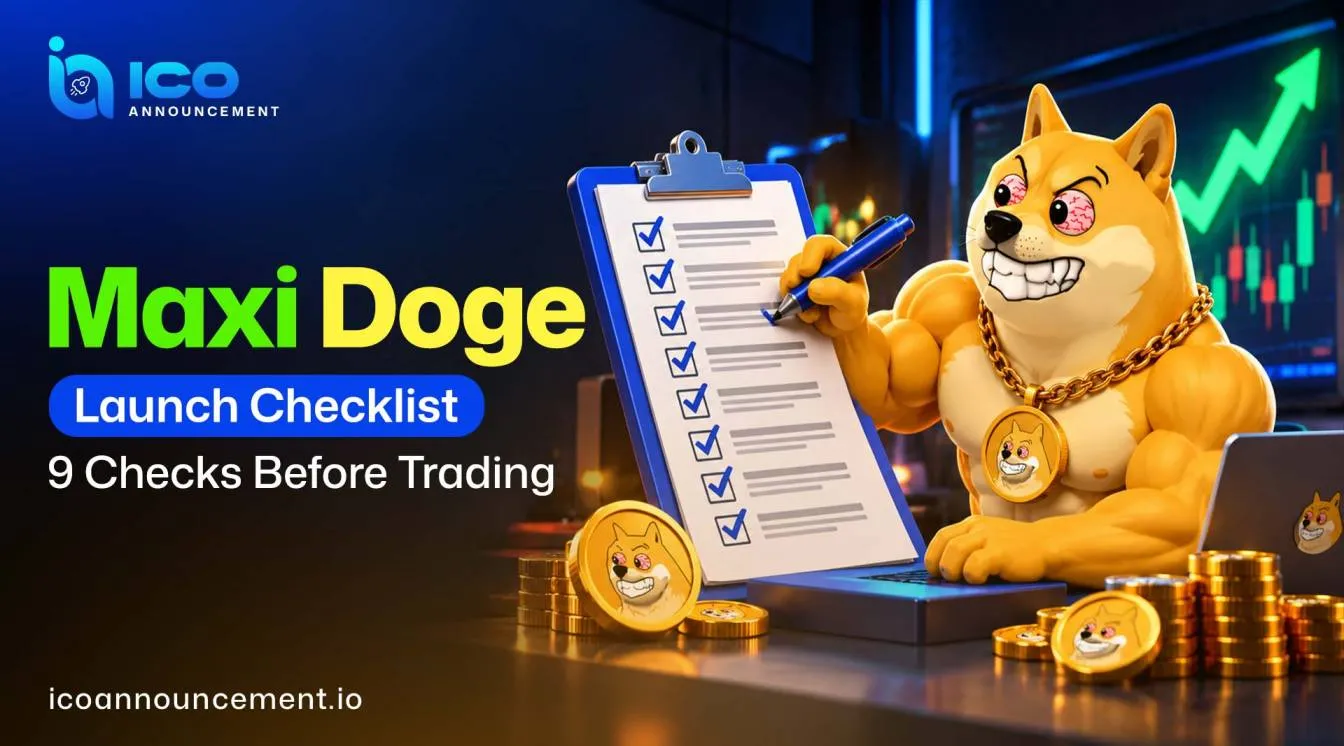
Trading has not started, but buyers already want to know what to check first. This Maxi Doge launch checklist gives you nine signals to verify before the first swap.
Each one targets a real risk, such as a wrong contract, thin liquidity, or a fake claim page. Use it as a launch readiness routine.
Nothing here forecasts a price or promises a date.
Key Takeaways
- No official trading date is published, so plan around signals, not rumours.
- Confirm the contract on the project's own channels before connecting a wallet.
- The official site shows no unlock table, so treat vesting details as unconfirmed.
- The SolidProof audit covers one token contract, not every contract in the project.
- Fake claim pages and fake listings are common launch-day traps.
- Work through this Maxi Doge launch checklist in order, from announcement to scam protection.
Is Maxi Doge Ready to Launch? Check These 9 Signals Before You Buy
The project's own site still calls the token sale live and shows no trading date. That gap is where rumours grow.
In this guide, "confirmed" means the project said it on its own channels. Everything else stays unconfirmed.
Start at the official Maxi Doge website and bookmark it.
Watch for lookalikes. The plain maxidoge.com domain currently appears on a domain broker's for-sale page, so do not treat it as the project's site.
1. Check the Official MAXI Launch Announcement Before Anything Else
The roadmap on the official site ends with closing the sale, a pre-launch push, and then DEX and CEX listings.
It gives no dates. The whitepaper describes an immediate Uniswap V3 listing once the sale reaches its hard cap, with centralised exchange talks on a separate track.
Treat any post that names an exact hour or exchange as speculation. This listing date timeline shows what is and is not confirmed.
2. Verify the Contract Address Before You Make Your First Trade
Copycat tokens appear within minutes of a popular debut. Get the address from the official site, then open it on Etherscan.
Confirm the network is Ethereum, the token is ERC-20, and the supply matches the whitepaper figure of 150.24 billion.
A name alone proves nothing. One tracker lists a token also called Maxi Doge at a different address with a 1 billion supply. That mismatch is what this check catches.
Here is how to check the MAXI contract before trading, step by step, in the contract address guide.
3. Does MAXI Have Enough Liquidity for Smooth Trading Launch Day?
Liquidity is the value sitting in a pool. It decides how far one order moves the price.
The project says its liquidity share is locked and funded, but no live pool exists to inspect yet.
Once one does, check the pool address, total depth, lock status, and how many separate wallets trade.
Thin pools mean high slippage, so a modest buy can move the price sharply. Volume alone can mislead, since a few wallets can swap back and forth.
Depth, lock status, and wallet spread tell you more than a headline volume figure.
Learn how to verify Maxi Doge liquidity in this trading pairs guide.
4. Check MAXI Token Unlocks and Circulating Supply Before Trading
The official site lists five allocation buckets: marketing 40%, the Maxi Fund 25%, development 15%, liquidity 15%, and staking 5%.
It publishes no cliff or release dates for any of them.
Marketing and the fund together hold 65% of the supply.
Missing dates are not a sell signal. They are missing information, and that is a risk of its own.
Some reviews say staked tokens unlock about a week after launch, but no project document confirms it.
Read the vesting schedule guide before you size a position.
5. Understand the Claim Process Before the Launch Day Rush Begins
The official steps end with claiming tokens after the sale closes.
No claim date is published. Use the same wallet that made the purchase, keep a little ETH for gas, and reach the claim page only from the official site.
A claim button that appears while the sale is still running is a warning sign.
Read the full token claim steps once, then stay away from any link sent by direct message.
6. Find Out Which MAXI Trading Pairs and Exchanges Are Confirmed
A DEX lets you swap from your own wallet through a liquidity pool. A CEX lists the token on an order book, with its own approval process.
The whitepaper names Uniswap V3 as the first venue, but the project has not published the first pair.
A Maxi Doge exchange listing on a centralised platform remains unconfirmed. Ignore any post naming a specific exchange until that exchange posts a notice itself.
Pairs matter too. Pools usually pair a new asset with ETH or a stablecoin, and copycat pools often appear within minutes.
Confirm the official pool through the project's channels, then compare its creation time and depth with every other pool you find.
7. Compare the Sale Price With Real Market Conditions Before You Buy
The sale price is your cost basis. It is not a forecast.
Once a pool opens, price discovery starts from the assets inside that pool, so the first trades can land far from any earlier figure.
Compare three things: how much supply is claimable, how deep the pool is, and how many wallets hold coins.
Early circulating supply can be small next to the full 150.24 billion total, which makes the first swings sharper.
Meme assets can move both ways within minutes. Set your slippage on purpose, start with a small test swap, and risk only money you can afford to lose.
8. Check the Security Reports Before You Connect Your Wallet
An audit shows that the code was reviewed. It does not remove market risk.
The SolidProof security assessment reports no high or medium issues, no mint or blacklist function, and renounced ownership.
Read the limits as well. The report says it covers one token contract only, with no functional testing.
Other contracts, such as sale or staking contracts, were not part of it. An audit also covers the exact deployment it reviewed, so match the address.
9. Watch for Fake Go-Live Links, Claim Pages, and Wallet Drainers
Scammers move first on launch day. Expect fake websites, fake announcements, fake contracts, fake exchange listings, and wallet drainers disguised as claim buttons.
Never enter a recovery phrase anywhere.
Be careful with approval prompts, because a signed approval can let a contract move your tokens.
Revoke unused approvals after each session, and keep one clean wallet for new tokens. Good wallet security costs minutes, and a drained wallet cannot be reversed.
Maxi Doge Launch Checklist: What Should Buyers Verify Before Trading?
Run this order before the first swap: launch, contract, liquidity, trading, claim, unlocks, security, wallet, and scam protection.
If any step lacks an official source, wait. A calm start beats a fast one.
Keep a short note with the official site, the verified address, and the claim steps.
Compare every new link against it. Small habits like this stop most mistakes before they cost money.
This Maxi Doge launch checklist works because it separates confirmed facts from rumours, so you act on verified information only.
Disclaimer: This article is for information only and is not financial advice. Crypto tokens are volatile, and you can lose your entire investment. Do your own research.