Fake Presale Website Detection Guide to Avoid Crypto Scams Online
Fake Presale Website Detection - URL and SSL matters because it affects how you find, judge, and manage crypto opportunities. This guide explains Fake Presale Website Detection - URL and SSL in plain English so you can move from curiosity to a more disciplined process.
If you're new, start simple. Focus on utility, token supply, vesting, liquidity, and security before you look at hype. Why does Fake Presale Website Detection - URL and SSL matter so much in crypto? Because small structural details often decide risk, access, and long-term price behavior.
For live site navigation, begin with our crypto presale list to explore current and upcoming projects in one place.
You can also compare it with the crypto ICO list to see how related pages are organized across the site.
Fake Presale Website Detection - URL and SSL should be treated like a screening problem, not a marketing problem. You want proof, not promises.
Fake Presale Website Detection
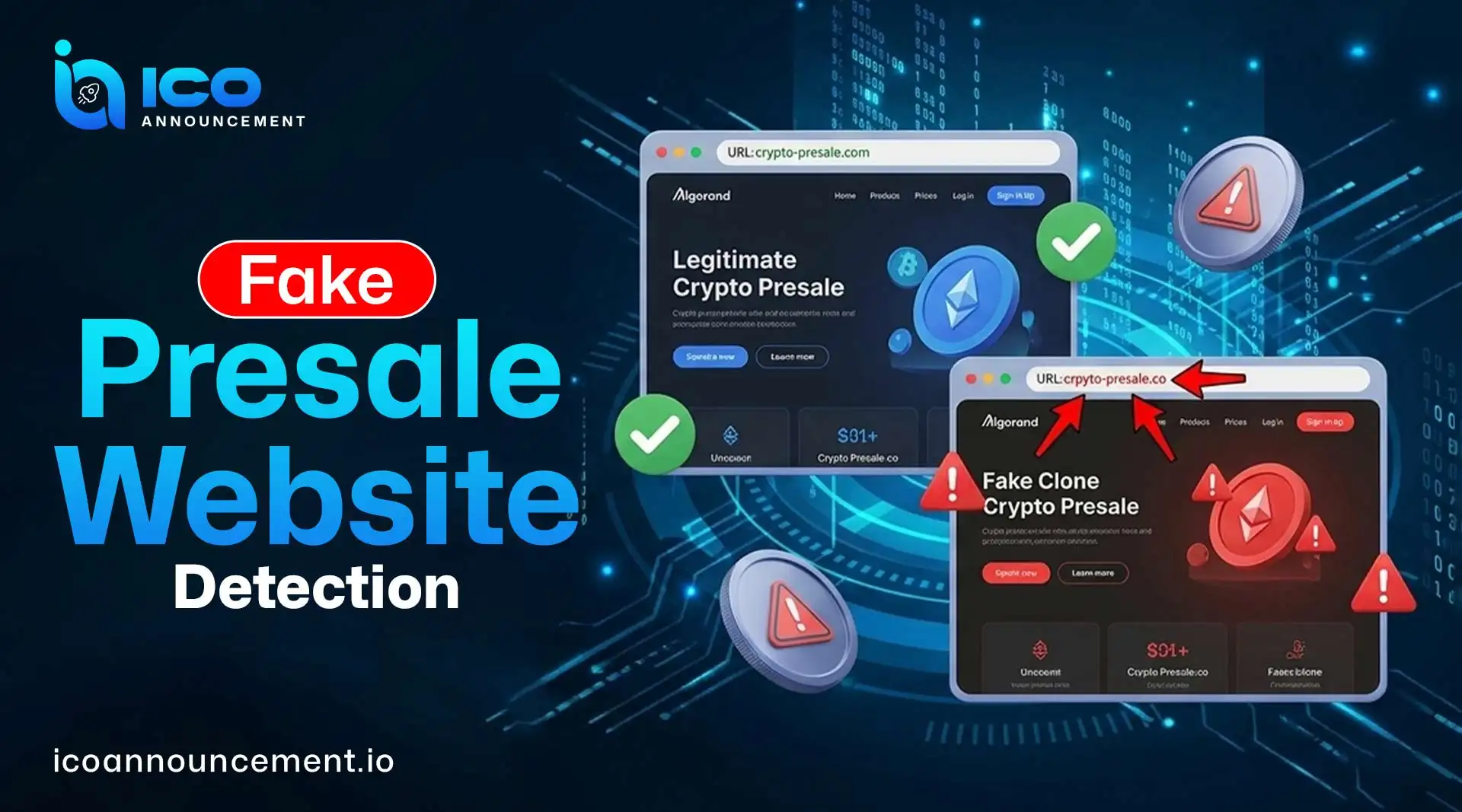
Fake presale websites are one of the most common ways users lose funds in crypto. These sites copy real projects and trick users into connecting wallets or sending funds. Knowing how to detect them can protect you from serious loss.
Check the Website URL
Always look at the exact domain name. Fake sites often use small changes like extra letters, wrong spelling, or different extensions. Bookmark official sites instead of searching every time.
Verify Official Sources
Go to the project’s official social pages or announcements and confirm the correct website link. Never trust links shared in random messages or comments.
Look for HTTPS and Basic Security
A secure site usually has HTTPS, but this alone is not enough. Combine it with other checks before trusting the page.
Review the Content Quality
Fake sites often have poor design, broken pages, or copied text. If the content feels rushed or unclear, treat it as a warning.
Check Wallet Prompts Carefully
If a site asks for unusual permissions or pushes you to connect quickly, stop. Real projects do not force urgent actions.
Watch for Unrealistic Promises
Guaranteed returns or “limited time only” pressure tactics are common scam signs. Real projects focus on utility, not quick profit claims.
Cross-Check Smart Contract
If possible, verify the contract address from official sources and compare it on blockchain explorers.
A smart reader also asks one blunt question. What could go wrong here? That question keeps you focused on execution instead of slogans.
Verify ownership of official channels, domains, and contract addresses.
Check whether founders, advisors, or legal entities can be validated independently.
Review vesting, treasury control, and liquidity plans before judging upside.
Watch for inflated APY claims, fake urgency, or missing risk language.
Which red flags matter most
Next, turn the evidence into a simple pass, watch, or avoid decision. You do not need perfect certainty. You need enough proof to filter obvious danger.
That process helps you separate interesting stories from investable structures. It also shows whether timing, chain choice, and launch venue support the model or weaken it.
Compare how similar subjects are framed across the site.
Read the project overview or sale page first and note the core value proposition.
Match token utility with actual product demand, not just future plans.
Map the unlock schedule to likely sell pressure after TGE or exchange listing.
Decide in advance what would make you pass on the opportunity.
How to turn checks into a decision
Great due diligence is boring by design. That is a good sign.
That means using position sizing, comparing alternatives, and accepting that no single article or community call can replace your own research. In crypto, bad entries often come from rushed decisions, not missing information.
Use official references when details matter. You can start with CoinMarketCap crypto glossary to understand basic crypto terms clearly.
CoinGecko Learn is also helpful, as it explains concepts in a simple and easy way.
Then compare those sources with project documents and on-chain evidence to verify the information properly.
Related ICO Announcement resources
Use the site hubs and related guides above as a fast path into deeper research. They help you compare structure, examples, and deal flow without jumping between unrelated pages.
Glossary
TGE: Token Generation Event, the moment a token is created or first distributed.
FDV: Fully diluted valuation, the token value if all supply were already circulating.
Vesting: A schedule that releases tokens over time instead of all at once.
Liquidity: How easily a token can be bought or sold without a sharp price move.
Risk note
Fake Presale Website Detection - URL and SSL can look simple on the surface, but structure, execution, and disclosure quality change the real risk. Treat this guide as a starting framework. Verify claims with official documents, on-chain data, and trusted third-party sources before making any decision.
Disclaimer
This content is for informational purposes only and does not constitute financial or investment advice. Cryptocurrency investments carry significant risk, including the potential loss of your entire investment. Always conduct your own research (DYOR) and consult a qualified financial advisor before making any investment decisions. icoannouncement.io does not endorse any specific project, token, or ICO.