How the BitFi DeFi Platform Delivers Bitcoin and Stablecoin Yield
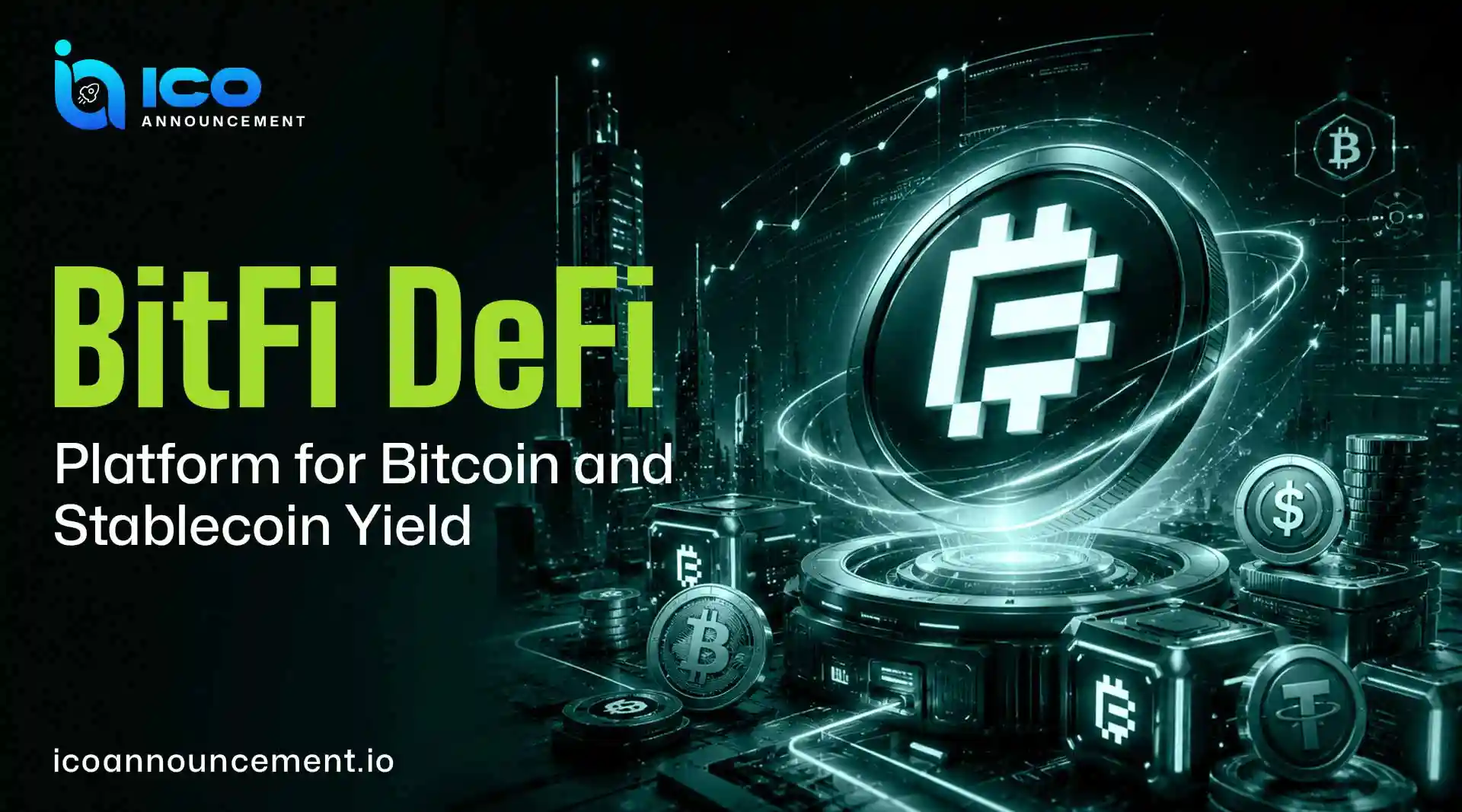
BitFi is a decentralized finance project built around its native token, $BFI. The project is designed to make crypto financial tools more accessible for everyday users, not just people with technical backgrounds. Think of it like a digital bank that nobody controls, runs on blockchain code, and lets anyone participate.
The core idea is simple. BitFi wants to give people a way to earn, trade, and manage digital assets without needing to go through traditional banks or middlemen. The $BFI token sits at the center of everything, used for fees, rewards, and governance votes.
Why Investors Are Paying Attention to BitFi
A few things stand out when you look at what early supporters are pointing to.
Low entry cost at ICO stage- Early-stage token prices tend to be lower than post-launch market prices. Investors who get in during an ICO often pay a fraction of what later buyers pay. With $BFI, the ICO pricing is set below projected exchange listing rates, which creates potential upside for early holders.
The deflationary token model- BitFi uses a burn mechanism, meaning a portion of $BFI is permanently removed from supply with each transaction. A shrinking supply against steady or growing demand historically puts upward pressure on price. This is one of the structural reasons people cite when explaining their interest.
Governance rights- $BFI holders get to vote on protocol changes. That includes fee adjustments, new feature rollouts, and treasury spending. Investors who want more than just price exposure are drawn to governance tokens because they come with a say in the project's direction.
Staking rewards- Users who lock up $BFI tokens in the protocol earn passive returns. Early staking APY rates are reportedly higher during launch phases to attract liquidity. The exact rates are tied to network activity and have not been officially locked in at the time of writing.
DeFi growth tailwinds- The broader DeFi sector continues to attract capital. BitFi is positioned in a space that analysts expect to expand significantly over the next several years as more users shift from centralized exchanges to self-custody platforms.
The ICO Launch
BitFi's ICO is set to open public participation in phases. Phase one targets early community members and whitelisted wallets. Phase two opens to the broader public.
The total supply of $BFI is capped. A fixed percentage is allocated to the Initial Coin Offering, with the rest split between ecosystem development, team vesting schedules, and a community treasury. The vesting structure means team tokens are released over time, not all at once, which is a design choice meant to reduce early sell pressure.
Specific dates for phase two have not been officially confirmed as of publication. Anyone tracking the ICO should rely only on BitFi's official channels and verify contract addresses before sending funds.
ICO details
Start- June 8, 2026
End- June 12, 2026
Total supply- 1,000,000,000.00
% of supply- 1.00%
Accepted currency- USDT
Price- 0.05
Tokenomics Deep Dive
Target Raise- $500,000
Token Price- $0.05 per BFI
Public Sale Allocation- 10,000,000 BFI
Implied Fully Diluted Valuation (FDV)- $50,000,000
Pricing Model- Fixed Price
Public Sale Unlock- 100% unlocked at TGE
Day-One Circulating Supply- 145,000,000 BFI
How to Evaluate a Crypto ICO
BitFi ICO should be judged with a simple framework before any action. Focus on whether the problem is clear, the team is visible, the sale terms are complete, the code is checked, and the token has a real job after launch.
Read the website and check whether the use case is easy to explain.
Verify team names, profiles, and past work.
Check sale dates, price, caps, and accepted payment methods.
Look for a vesting plan and supply release schedule.
Confirm whether an outside audit exists.
Review legal terms and any country limits.
For broader context, see this ICO listing guide.
What BitFi Is Actually Used For
Beyond holding and trading, $BFI has real use cases baked into the platform.
Decentralized lending and borrowing- Users can deposit $BFI or other accepted tokens as collateral and borrow against them. No credit checks, no paperwork. The protocol handles it through smart contracts. Borrowing rates adjust based on supply and demand in the lending pools.
Yield farming- Liquidity providers who deposit token pairs into BitFi's pools earn $BFI rewards over time. It works like putting money in a savings account, except the "bank" is code on a blockchain and the returns are variable.
Cross-chain transfers- BitFi is building bridge functionality that lets users move assets across different blockchains. Right now, many DeFi tokens users are stuck on one chain because moving funds between networks is expensive and complicated. BitFi's bridge aims to simplify that.
NFT and digital asset integration- The platform is developing support for NFT collateral, meaning users could potentially borrow funds against their digital collectibles. This feature is listed as in development and not yet live.
DAO treasury participation- Token holders can submit and vote on how the community treasury is spent. Grants, partnerships, audits, and new feature development all go through this process. It keeps decision-making decentralized and on-chain.
Future Outlook
The roadmap points toward a few key milestones. A mainnet upgrade is planned. Cross-chain functionality is listed as a priority for the second half of the year. A mobile app for easier access is reportedly in early development, though no confirmed release date has been announced.
Longer term, BitFi's team is focused on growing the number of supported assets and expanding into new markets. Southeast Asia and Latin America are mentioned as target regions based on the project's public communications, given high mobile usage and growing interest in DeFi alternatives to traditional banking in those areas.
The regulatory environment remains a real variable. DeFi protocols globally are watching how rules evolve across the US, EU, and Asia-Pacific regions. BitFi's team has acknowledged compliance as an area they are actively monitoring.
Closing Thought
BitFi is entering a competitive market. The fundamentals token burn, governance rights, staking, cross-chain ambitions line up with what investors have historically found attractive in early-stage DeFi projects. Whether $BFI executes on its roadmap is what separates projects that deliver from ones that don't. Right now, the structure is there. What to watch: ICO phase two details, mainnet upgrade timing, and whether staking APYs hold once initial liquidity pressure settles.
Disclaimer
This article is for informational purposes only and does not constitute financial advice. Cryptocurrency investments carry significant risk, including the potential loss of your entire investment. Always do your own research (DYOR) before participating in any ICO, token sale, or DeFi protocol.