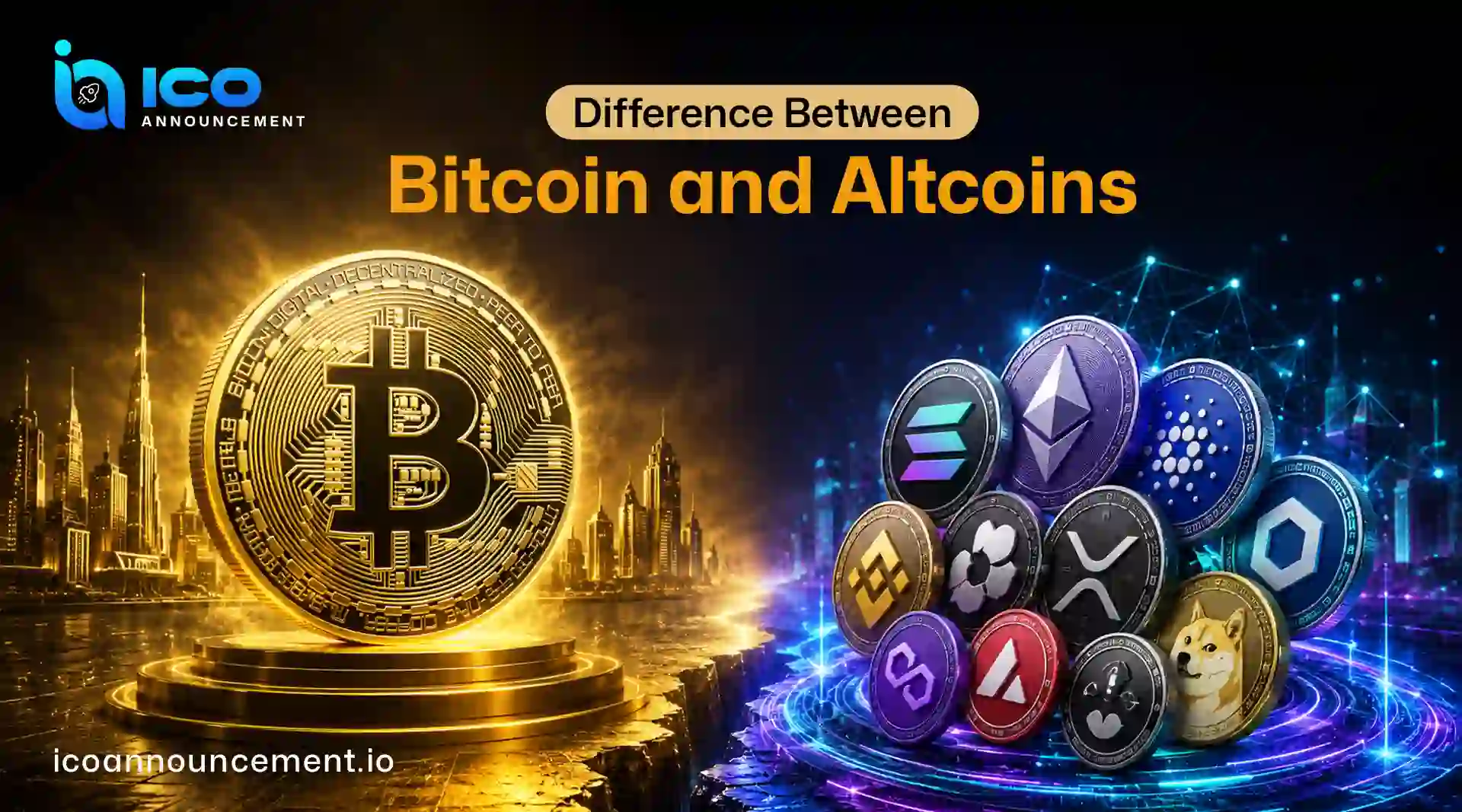
Bitcoin vs Altcoins: Key Differences Every Investor Should Know
Cryptocurrency is a new kind of digital money. You cannot touch it like a paper dollar or a metal quarter. It lives entirely inside computers. Today, thousands of these digital coins exist.
Understanding how Bitcoin or Altcoins work is very important if you want to know about the future of money. In this simple guide, we will break down what makes them different, how they work, and what the future holds for them between now and the year 2030.
What is Bitcoin?
Bitcoin was the very first cryptocurrency. It started in the year 2009. A person or a group of people using the fake name Satoshi Nakamoto created it. To this day, nobody knows who Satoshi Nakamoto really is. Satoshi wanted to make a new system for money. If you are new to cryptocurrency, you can also explore what Bitcoin is and why it matters for new crypto users to understand how Bitcoin changed digital finance forever.
What are Altcoins?
The word Altcoin is short for "alternative coin." This group includes every single cryptocurrency that is NOT Bitcoin. Think of Bitcoin as the very first smartphone, like the original iPhone. They are all the other phones that came out later, like Samsung, Google Pixel, or Motorola. Some copy the first phone, while others try to add cool new features. Many people are also exploring how altcoins offer new features that attract more crypto users because these projects bring faster payments, smart contracts, and new blockchain tools.
Blockchain Technology: Bitcoin or Altcoins
Both projects run on a special computer system called a blockchain. Think of a blockchain as a giant digital notebook. This notebook keeps a list of every single trade ever made. Instead of being saved on one computer, copies of this notebook are shared on thousands of computers all over the world at the same time. To learn more about security, transparency, and real-world use cases, you can explore blockchain technology benefits and future scope in detail.
Bitcoin's Blockchain- It focuses mostly on safety and staying local. It uses a system called "Proof of Work." To add a page to the notebook, massive computers must solve very hard math puzzles. This takes a lot of electricity. Because it is slow, it can only handle about 7 trades per second. But it is incredibly safe from hackers.
Altcoins' Blockchains- They use a newer system called "Proof of Stake" or other fast methods. Instead of using lots of electricity to solve math puzzles, people lock up some of their own coins to earn the right to check trades. This allows altcoins to be lightning-fast. For example, Solana can handle tens of thousands of trades per second, and the fees cost less than a penny!
Smart Contracts: Bitcoin vs Altcoins
This is where the biggest divide occurs. It was specifically designed to be one thing, and it does that well: a good, safe store of value like digital cash, or gold. It does not like running complicated computer programs because that might make it less secure.
Smart contracts, the base, totally changed the game. Ethereum became the first major altcoin to achieve this. A smart contract is a digital contract in the form of computer code, an executable program that runs itself once the pre-defined rules are met.
Comparison Table
How Bitcoin Price Affects Altcoins
It is the king of all cryptocurrencies. This holds the largest share of all-time markets. Whatever it does, the altcoins nearly always follow because it is the leader. This relationship is known as market correlation.
BTC price shoots up, and people are excited. Others become complacent and enter into altcoins with the dream of achieving larger gains. Fear spreads like wildfire when Bitcoin tanks, and they are the first bets that protection-less investors throw off of their balance sheets.
Which is Best for 2026?
Current year- 2026. The crypto space has matured a lot. Whether you want to buy BTC or altcoins at this time is purely a question of your personal goal and risk tolerance.
Best for 2026- If you want a stable, long-term asset to hedge your savings against inflation. As almost every regular financial system is now open, its place as the gold standard of any crypto portfolio makes ideal sense.
Best for 2026- If you want to be a part of innovation, decentralized apps, digital art, or fast-paced trading, it's best for 2026. If you do go into altcoins, the only 100% wise path is at least the very top real-world utility-based ones over all of the mystery vanity hype coins
Future Outlook: 2026–2030 Predictions
Looking ahead toward the end of the decade, experts see a clear path for how both groups will mature:
Bitcoin in the future (2026-2030)- More small nations and global funds using BTC as a reserve asset. With money printing regular rates remaining excessive, this tough 21-million restrict is anticipated to drive the fee of BTC continuously upward during the next four years, as it settles at an adult-level steady monetary asset.
Future of Altcoins (2026-2030)- The market will see a massive washout. There are so many coins that have no use right now. Thousands of weak it will vanish by 2030. The altcoins that have proven real-world utility will anchor the new internet, facilitating daily payment systems, supply chains, and online gaming networks.
Conclusion
Both projects play vital roles in the cryptocurrency market. BTC initiated the digital currency movement, and Bitcoin or Altcoins are still considered the most reliable cryptocurrency. Various types of coins came up with innovations such as smart contracts, AI tools, gaming, and decentralized finance by diversifying the overall Blockchain ecosystem. It is typically more secure and less volatile.
Disclaimer
This article is for informational purposes only, and it does not constitute investment advice. Before investing in any digital asset, please do your own research (DYOR).