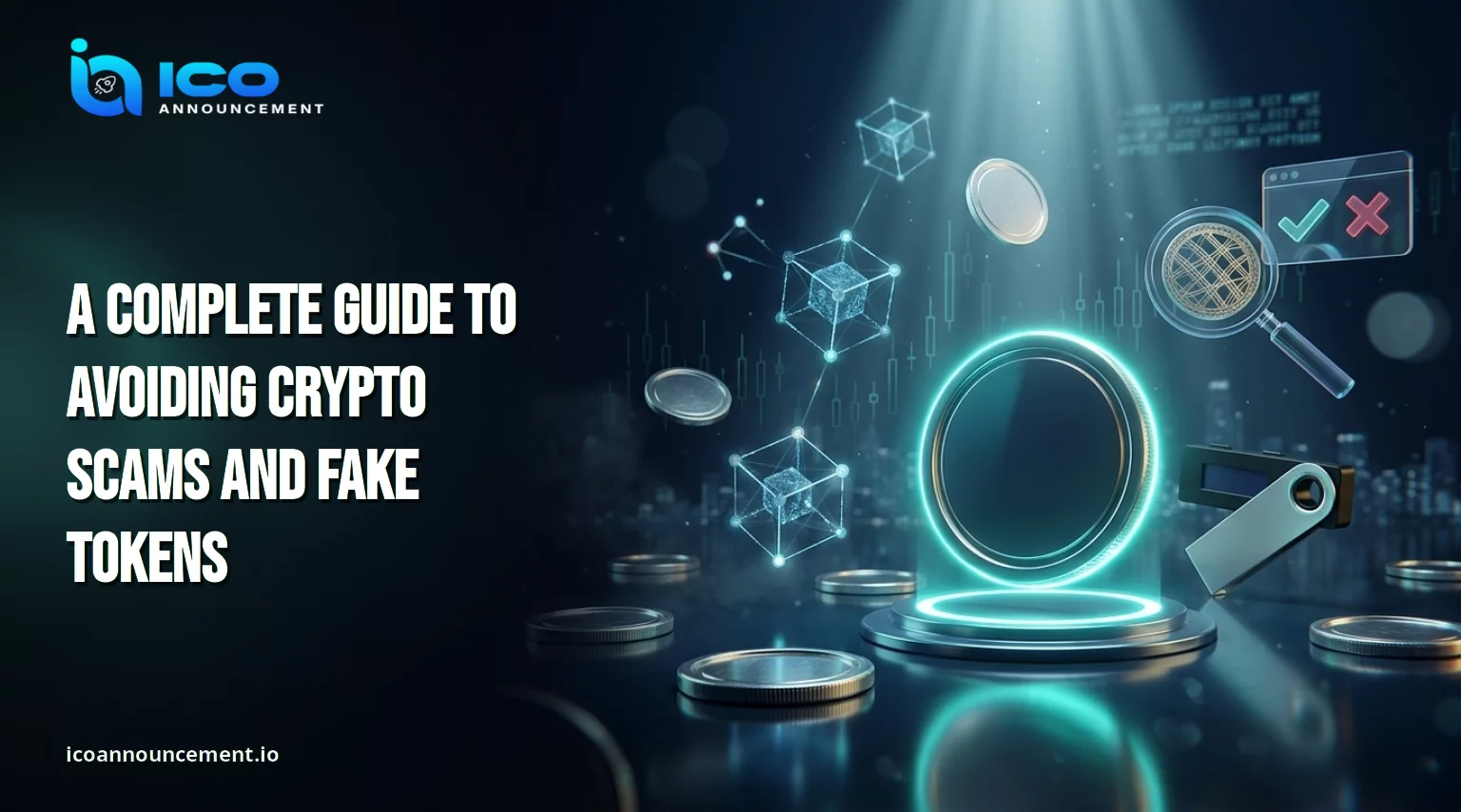
How to Verify a Crypto Token's Legitimacy Before You Invest Money
Crypto scams and fake tokens cost investors billions every year, and presale projects are the most common hunting ground.
A new token launches, a Telegram group fills up with bots hyping the price, and within weeks the liquidity is pulled and the chart goes to zero.
Avoiding crypto scams and fake tokens starts with knowing what to check before you connect a wallet, not after you have already sent funds.
Key takeaways:
Verify contract ownership and liquidity locks before buying, treat guaranteed-return promises as an automatic red flag, cross-check a project's team and audit claims against independent sources, store funds in a secure wallet rather than leaving them on an exchange, and never share a seed phrase with anyone claiming to offer support.
What Counts as a Crypto Scam or Fake Token in 2026 Explained
A crypto scam is any project built to separate buyers from their money rather than deliver a working product.
Fake tokens usually fall into a few patterns: rug pulls, where developers drain liquidity after a price pump; honeypots, where a contract allows buying but blocks selling; and cloned tokens that copy a popular project's name, ticker, or website to trick search traffic.
Presale-stage tokens are especially risky because there is no trading history to check, only marketing claims, and buyers often rely entirely on the team's own audit and roadmap statements.
Common Red Flags That Signal a Crypto Scam or Fake Token Project
Several warning signs repeat across most crypto scams.
An anonymous team with no verifiable background is one of the strongest signals, especially when paired with aggressive price targets or comparisons to unrelated successful projects.
Unlocked or unlimited minting rights in the smart contract let developers create new tokens at will, diluting existing holders without warning.
A liquidity pool that is not locked, or locked for only a few days, allows an early exit once buying volume peaks.
Fake or paid audits, often from unknown firms rather than recognized names such as CertiK, are common on scam projects; a genuine CertiK audit dashboard listing is verifiable directly, unlike a screenshot in a pitch deck.
Pressure tactics such as countdown timers, "limited allocation" messaging, and unsolicited direct messages from "support staff" are classic social-engineering signs rather than genuine urgency.
How to Verify a Crypto Token's Legitimacy Before You Invest Money
Start with the contract address, not the project's marketing site.
Paste it into a blockchain explorer and check ownership renouncement, holder distribution, and whether liquidity is locked and for how long.
Cross-check any audit claim directly on the auditor's own dashboard; the same approach is worth using for any presale, including reading a risk-based Ozak AI review-style breakdown before committing funds to a similar early-stage token.
Search the team's names separately from the project name to see if they are linked to earlier failed launches.
Compare the token's contract and liquidity data on CoinGecko or CoinMarketCap once it is listed, since scam tokens are frequently delisted or flagged within days of trading going live.
What to Do Immediately If You Suspect a Fake Token or Crypto Scam
If you have not sent funds yet, stop and verify independently before proceeding, even if the offer feels time-limited.
If you already interacted with a suspicious contract, revoke its token approvals using a wallet-permissions tool so it cannot move additional funds later; keeping funds split between hardware vs software wallets limits how much any single approval can expose.
Move remaining assets to a new wallet if you shared a seed phrase or private key with anyone.
Report the token address and site to the relevant exchange or wallet provider, and document transaction hashes in case recovery or law enforcement reporting becomes relevant later.
A Practical Safety Checklist Before Every New Crypto Presale
Before buying into any new project, confirm five things: the contract is verified and ownership is renounced or time-locked, liquidity is locked for a meaningful duration through a reputable locker, the audit is verifiable on the auditor's own site, the team is identifiable or has a consistent public track record, and no one associated with the project has asked for a seed phrase.
It also helps to keep the funds you plan to deploy in stable, liquid form until due diligence is complete; a guide on buying USDT safely covers on-ramp and custody basics that apply before any presale purchase.
None of these checks guarantee safety, but skipping all of them is how most fake token losses happen.
Crypto scams keep evolving, but the underlying pattern rarely changes: urgency, anonymity, and unverifiable claims.
Treating due diligence as mandatory, not optional, is still the most reliable way to avoid crypto scams and fake tokens before they cost you money.
Disclaimer
This article is for informational purposes only and does not constitute financial, investment, or legal advice. Cryptocurrency investments, including presales and newly launched tokens, carry high risk, including the risk of total loss due to scams, rug pulls, or market volatility. Always conduct independent research and consult a licensed financial advisor before investing.