What Native Bitcoin Support Means for MetaMask Wallet Users
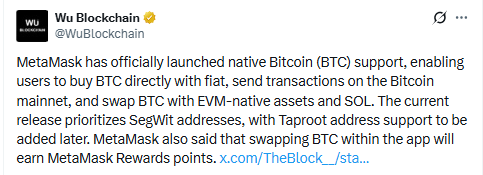
MetaMask has officially launched native Bitcoin (BTC) support, marking a major milestone in its journey to become a fully multi-chain crypto wallet. With this update, users can now buy Bitcoin directly using fiat, send BTC on the Bitcoin mainnet, and swap BTC with other digital assets, all inside the MetaMask app.
The move shows MetaMask’s growing focus on simplicity, accessibility, and cross-chain usability. Until now, MetaMask was mainly known as an Ethereum and EVM-focused wallet. Native support brings the world’s largest cryptocurrency directly into the ecosystem without relying on wrapped tokens or third-party tools.
What Native Bitcoin Support Means
It means users interact with real BTC on the Bitcoin blockchain, not a wrapped version of Bitcoin on Ethereum or other networks. This is an important change because it reduces risk and removes extra steps.
With this update, you can:
Buy BTC directly using fiat currency
Send and receive on the mainnet
Swap BTC with EVM-based assets and Solana (SOL)
Manage other crypto assets in one wallet
This makes MetaMask more useful for both beginners and experienced users who want a single place to manage multiple blockchains.
SegWit Support Comes First, Taproot Coming Later
MetaMask confirmed that the first version of Bitcoin prioritizes SegWit addresses. SegWit helps reduce transaction size and fees, making transfers faster and cheaper.
Support for Taproot addresses is planned for a future update. Taproot is an advanced upgrade that improves privacy and allows more complex smart contract-like features. Adding Taproot later shows that MetaMask is taking a step-by-step approach to ensure security and stability.
BTC Swaps and Rewards
One of the most interesting features is the ability to swap BTC directly within the ecosystem. You can swap with Ethereum-based tokens and Solana assets without leaving the app.
It has also announced that users who swap BTC inside the wallet will earn Rewards points. This adds an incentive for users to try the new features and stay active within the ecosystem.
Rewards programs are becoming more common in crypto, and it is using this strategy to increase engagement while offering real utility.
Why This Update Is Important
This launch is part of broader multi-chain expansion strategy. The wallet is no longer focused only on Ethereum. Instead, it aims to help major blockchains and make crypto easier for everyday users.
By adding native, it:
Reduces reliance on wrapped assets
Improves security and user trust
Attracts new users
Strengthens its position as a leading wallet
It remains the most widely recognized cryptocurrency, and native helps reach a much larger audience.
Impact on the Crypto Wallet Market
The crypto space is highly competitive. Trust Wallet, Phantom, and others are racing to offer multi-chain support. MetaMask’s integration puts pressure on competitors to improve their own features.
For users, this competition is positive. It leads to better tools, lower friction, and more choice. A single wallet that helps Ethereum, Solana, and EVM networks is especially useful for users who don’t want to manage multiple apps.
A Step Toward a Unified Experience
The launch reflects a larger trend in crypto: users want simple, all-in-one solutions. Managing different wallets for different blockchains can be confusing, especially for beginners.
By bringing it into its app, it is helping reduce that complexity. You can now explore Bitcoin, DeFi, NFTs, and cross-chain swaps from one interface.
Final Thoughts
MetaMask’s rollout of native support is a major step forward for the wallet and the broader ecosystem. It improves usability, reduces risk, and supports its vision of a truly multi-chain future.
With SegWit support live, Taproot coming later, and rewards for swaps, this update adds real value for people. As crypto adoption grows, features like this make it easier for people to enter and stay in the space.
It's expansion beyond Ethereum shows that the future of crypto wallets is not single-chain, but connected, simple, and user-focused.