Why TRD Network Presale Is Attracting Investors in the AI DePIN Space
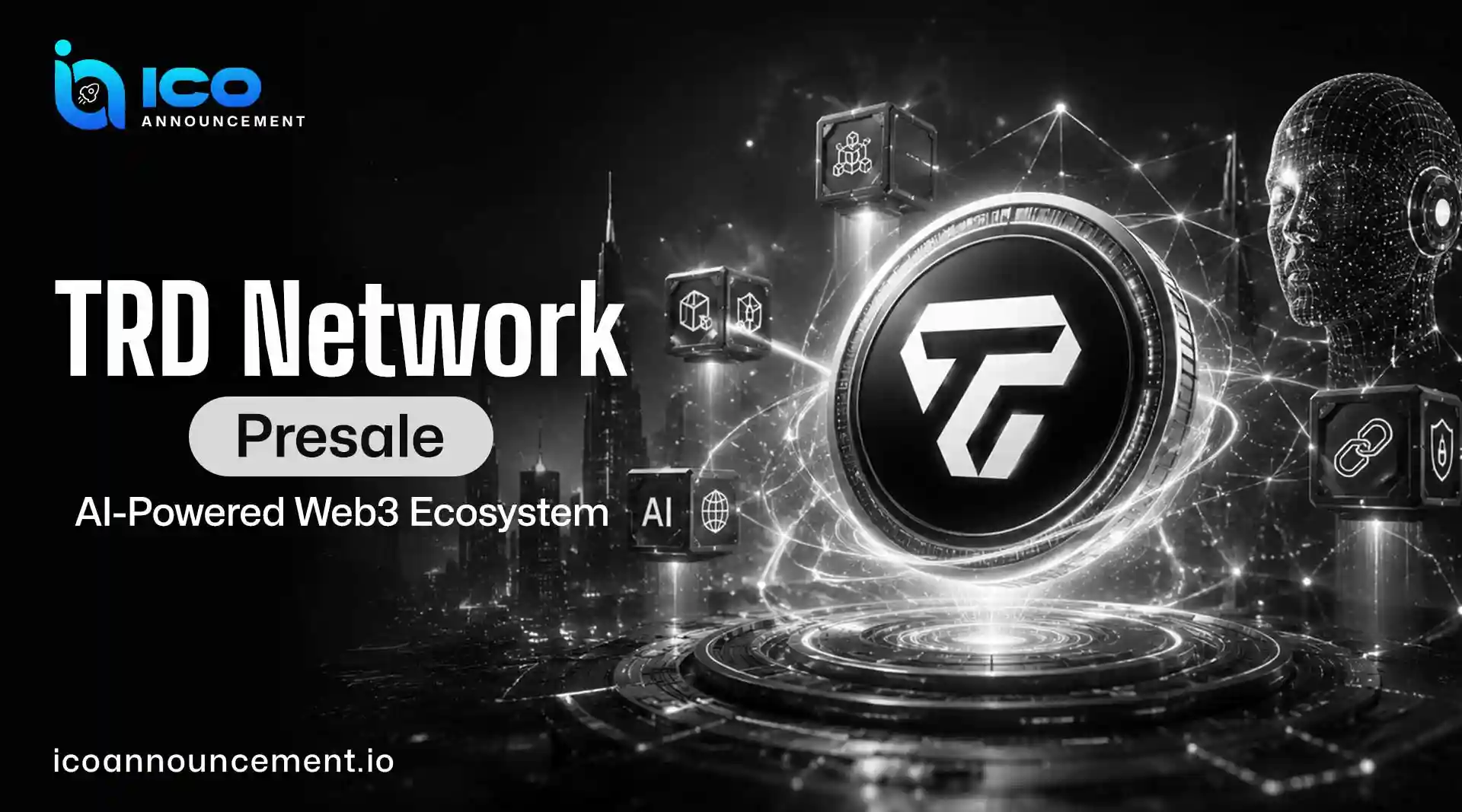
TRD Network is a blockchain infrastructure project that combines AI, DePIN (Decentralized Physical Infrastructure Network), Web3 payments, and governance tools into one ecosystem. It aims to improve blockchain efficiency and security through AI-powered features and uses an AI-Optimized Proof of Stake model for network operations.
The project’s native token is designed for staking, governance voting, transaction payments, and access to ecosystem services. Built on Ethereum, It also promotes tools such as wallets, token creation services, multisender functions, and payment solutions to support broader Web3 adoption.
What Actually Is TRD Network? Breaking It Down Simply
Think of TRD Network as two things working together. One is a decentralized infrastructure layer, like the roads and pipes that other crypto apps run on. The second is an AI engine that sits on top, watching for threats, cutting costs, and making everything run smoother without a human needing to intervene.
The team describes this as solving real Web3 problems: high fees, limited scalability, and increasing cyberattacks. Their answer is an AI-powered decentralized infrastructure that identifies and neutralizes threats while keeping costs low for developers and users.
The Core Tech: AI-Optimized Proof of Stake Explained
Most blockchains use Proof of Work or standard Proof of Stake. The project uses an AI-optimized Proof of Stake (A-PoS) mechanism, where the AI layer actively detects problems and helps validators operate more efficiently. This means fewer bad actors can slip through, and the chain doesn't rely on brute computing power to stay secure.
For a regular user, this matters because it translates to faster transactions and lower fees. For a developer building on TRD, it means they're working on a chain that's proactively hardening itself rather than waiting for attacks to happen and then patching.
The network also targets ultra-low costs and zero-feed dApp access, meaning partners and enterprises can build tools that everyday users can actually afford to use. That's a meaningful differentiator in 2026's overcrowded Layer 1 market.
DePIN: Why This Trend Is Exploding Right Now
DePIN stands for Decentralized Physical Infrastructure Network. The idea is simple. Instead of one company owning the servers, the storage, or the compute power, regular people can run nodes and get paid for it. Think of it like Airbnb, but for blockchain infrastructure.
This model has been picking up serious momentum in 2025-26. Projects that combine DePIN with real utility, not just speculation, are attracting a different kind of investor. One that wants long-term upside, not just a quick flip.
TRD positions itself squarely in this category, describing its system as combining AI-driven threat detection with decentralized physical infrastructure to create what the team calls a self-defending blockchain ecosystem.
When AI meets DePIN in one protocol, the ceiling for what the network can do grows considerably. That's the bet TRD is asking investors to make.
What Tools Are Already Live on the TRD Network?
Several tools are already deployed or confirmed for immediate release after the presale.
Token Creation Platform- A no-code, multi-chain tool allowing users to mint their own tokens on Ethereum, BNB Chain, Polygon, Avalanche, Base, and PulseChain within seconds. No developer needed. No five-figure launch budget. This alone is a product people pay for elsewhere.
Multisender- A multi-chain distribution dApp enabling batch transfers to thousands of addresses in one transaction designed for airdrops, payrolls, or community reward distributions. This cuts gas costs dramatically for projects that need to send tokens to large communities.
Web3 Wallet- A non-custodial, multi-chain gateway for asset management, swaps, staking, and fiat-to-crypto on-ramps. Non-custodial means you hold your own keys. That matters for users who've learned hard lessons from exchange collapses.
$TRD Token: Presale Price, Supply, and What's Locked
Numbers matter here. Let's look at what's actually happening with the token. Opened its presale at $0.02 per token with a total supply of 3.3 billion tokens. A significant portion, 50% of the total supply, equal to 1.65 billion tokens, is locked until 2030 via PinkSale, with unlocking beginning January 1, 2031, at 10% TGE.
That's an aggressive lock structure. In most presales, team tokens unlock in 6-12 months, and the crypto market gets hit hard with selling pressure. TRD's lock runs until 2031. That's not common.
An additional 69.5% of the token supply is locked on PinkSale to ensure long-term market stability, directly removing the risk of price manipulation that typically hurts early-stage token communities. For investors who've watched presale tokens dump 80% within weeks of listing, this structure is worth paying attention to.
The token powers four things inside the ecosystem: staking, governance, node operations, and access to premium services. That means demand has multiple sources, not just speculation.
CertiK Audit: What It Means and Why It Matters
TRD Network has been audited by CertiK, which is one of the most recognized smart contract security firms in the crypto space. This isn't a guarantee, no audit is. But it does mean the code was reviewed by a third party before real money went in.
For a presale project still in early stages, a CertiK audit signals that the team is serious enough to pay for an external review. That filters out a significant percentage of exit scams and rug pulls that never bother with security verification.
Roadmap Check: What's Coming in 2026
Q1 2026 was the delivery window for the TRD Multi-Signature Wallet, the TRD Virtual Card, and the advanced AI fraud detection module. Q2 through Q4 2026 covers Testnet and Mainnet rollout, centralized exchange and decentralized exchange listings, launch of the TRD Launchpad, AI Travel Booking integration, and the establishment of the TRD Foundation.
The AI Travel Booking feature is an interesting outlier. It signals the team isn't just building chain infrastructure, they're looking at real-world consumer use cases to drive token utility beyond crypto-native users.
Mainnet deployment by the end of 2026 would put TRD in the same conversation as other emerging L1s fighting for developer mindshare.
Disclaimer
This article is for informational purposes only and does not constitute financial advice. Crypto presales carry significant risk, including loss of capital. Always conduct your own research and consult a qualified financial advisor before investing. The author does not hold a position in $TRD at the time of writing.