
Crypto Thefts in 2025 Show Shift From Code Hacks to Human Error
Crypto crime reached a new peak in 2025. According to data shared by Chainalysis, hackers stole $3.4 billion worth of crypto thefts in 2025. This is the highest total ever recorded. The report shows a clear pattern: most losses did not come from broken code. They came from human mistakes.
Experts say this trend is a warning for everyday users. As crypto thefts in 2025 grow, attackers are changing how they strike. Instead of hacking systems, they trick people.
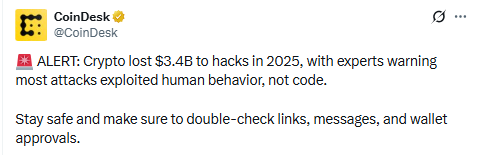
Source: Official CoinDesk X Account
What the 2025 Data Shows
The numbers behind Thefts in 2025 are serious and clear:
Total stolen: $3.4 billion
North Korean groups linked to thefts: $2.02 billion
Share of losses from personal wallet hacks: 44%
Losses tied to personal wallet mistakes in 2020: 16%
This jump shows how fast the risk has shifted. In the past, big attacks focused on exchanges. In 2025, individuals became the main target.
By mid-year, losses had already crossed $2.17 billion, driven by major events like the $1.5 billion breach at Bybit.
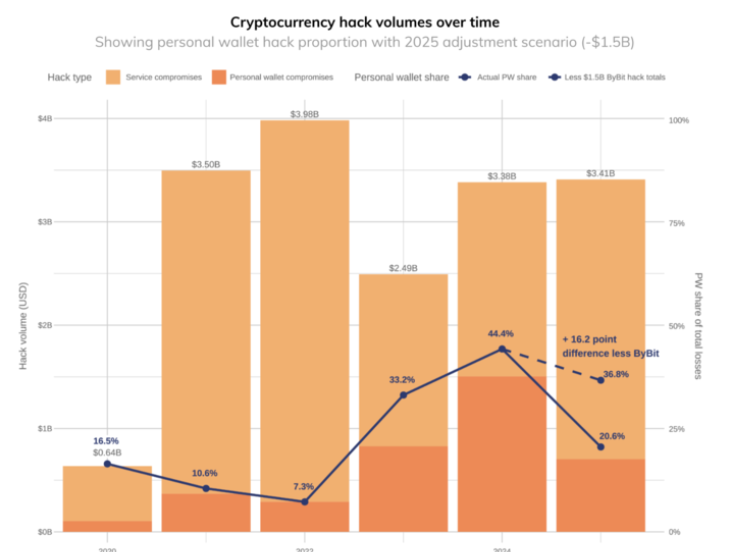
Source: X Account
Everyday Users Paid the Highest Price
While large hacks grab headlines, the real damage often hits regular users. Chainalysis reports:
158,000 total crypto Thefts in 2025
At least 80,000 unique victims
Most cases linked to phishing and fake approvals
Many victims lost funds in seconds. One wrong click or approval was enough.
In one major case, an investor lost 783 BTC, worth about $91 million, after falling for a phishing message. The attacker did not break any code. They simply gained trust.
Other scams worked slowly. Romance and “pig-butchering” scams built emotional ties over weeks or months. Victims included working professionals, retirees, and widows. Once trust was built, wallets were drained.
Why Human Error Is the Main Weak Point
The report highlights a clear shift:
Hackers now focus on social tricks, not tech flaws
Fake links, apps, and wallet pop-ups are common
Messages often look urgent or official
In August alone, phishing scams stole $12 million from more than 15,000 wallets. Some attacks even used fake browser tools. A recent issue linked to the Trust Wallet browser extension showed how trusted tools can also be abused.
Victims often watched their funds disappear live, with no way to stop it.
Recovery Is Rare for Individuals
When exchanges are hit, users sometimes get help. Bybit, for example, used reserves to protect many users. Personal wallet victims rarely have that option.
Transfers cannot be reversed. Once funds move, they are usually gone forever. Law agencies like the Federal Bureau of Investigation warn that recovery chances are low unless exchanges freeze assets early.
For most people, there is no second chance.
How Users Can Stay Safer Going Forward
Experts agree that simple habits matter more than ever. No method is perfect, but these steps lower risk:
Use hardware wallets for large holdings
Never share seed phrases or private keys
Double-check links and website addresses
Avoid urgent or unexpected messages
Revoke old wallet approvals you no longer use
Keep apps and extensions updated
Testing with small transfers before large ones can also prevent major losses.
A Clear Wake-Up Call for Users
The crypto thefts in 2025 and the data send one strong message: security is now about behavior. Tools can help, but user awareness matters most.
As crypto adoption grows, scams will keep evolving. The record losses of 2025 show that trust, not tech, is the main target. Staying calm, alert, and careful is now the best defense.
Disclaimer
This article is shared for information and awareness only. It does not give financial, legal, or investment advice. Crypto assets involve risk, and losses can happen due to market moves, scams, or security issues. Readers should always do their own research and take personal care before using any wallets, platforms, or services. Past events do not guarantee future safety or results.
FAQs
1. What caused rise in crypto thefts in 2025?
Most losses came from phishing and fake approvals, not from broken blockchain code.
2. Who was affected the most by crypto thefts in 2025?
Everyday users were hit hardest, especially those using personal wallets.
3. Are exchanges or personal wallets more at risk now?
Personal wallets faced higher risk, as attackers targeted users directly.
4. Can stolen tokens be recovered?
In most cases, no. Transfers cannot be reversed once confirmed.
5. How can users reduce the risk of crypto thefts in 2025 ?
By checking links carefully, using hardware wallets, and never sharing keys.