
Why Crypto Press Releases Matter More in the Institutional Era
This article is shared for educational use only. Crypto markets, regulations, and media practices change often. The information here is general and should not be taken as financial, or investment advice. Each project should speak with qualified professionals for its own needs. Nothing in this article should be seen as a recommendation to follow any specific approach.
Introduction: How Communication Is Changing in Crypto’s Institutional Phase
By 2026, crypto Press Release won't just be judged on their tech anymore. It's going to matter a lot more how they put out information, how easy it is to find, and whether it checks out, especially when it comes to looking legit to big companies, collaborators, and other platforms.
Things have really changed in the market over the last couple of years. With the introduction of spot ETFs, more companies getting involved with crypto in their treasuries, and a lot more mergers and acquisitions, crypto feels a lot more like the regular financial and business world now.
Reports from the industry in 2025 highlighted that mergers and acquisitions involving crypto Press Release hit an all-time high. Simultaneously, ETFs became a go-to method for institutions to invest in these assets.
Because of this shift, crypto press release distribution has taken on a new role. It is no longer only a promotional tool. For many teams, it now acts as part of the project’s credibility and information framework.
This guide explains everything about crypto press release distribution.
What Is Crypto Press Release Distribution?
Crypto press release distribution is the process of sharing official project updates through established crypto and financial news networks, instead of relying only on a project’s own platforms.
In practice, this usually includes:
Writing announcements in a standard media format
Publishing them through crypto and financial news channels
Making sure the information is indexed, stored, and easy to find later
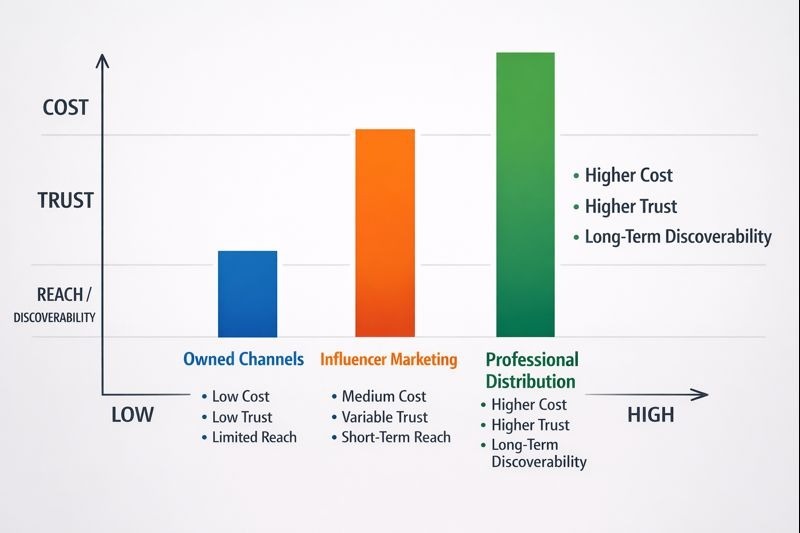
This approach Press Release differs from posting updates only on blogs, Medium pages, or social media. While owned channels are useful, they do not provide the same independent reference layer that outside researchers depend on.
Common terms linked to this process include:
Blockchain PR
Crypto announcements
Crypto news distribution
Press release SEO impact
Blockchain project publicity
All of these reflect the same core goal: making key information easy to find, verify, and reference outside a Press Release project’s own ecosystem.
How Communication Changed From 2021 to 2026
How projects communicated in 2021
During the 2020–2021 cycle, most projects depended on:
Twitter, Telegram, and Discord
Influencer-driven reach
Community-led momentum
What changed by 2025–2026
By 2025–2026:
Institutions entered through ETFs and structured products
Corporate teams began reviewing crypto Press Release projects like traditional vendors or partners
ETF flow data in early 2026 showed days with hundreds of millions of dollars in net inflows
This shift changed how credibility is built.
Key difference between cycles:
In 2021, attention helped create credibility
In 2026, credibility often needs to exist before attention arrives
Why Institutional Adoption Changes the Rules
Why institutions avoid social-first research
Institutional research rarely starts on Discord or Telegram. It usually begins with search engines and third-party sources.
From an institutional point of view, if a project cannot be researched independently through reliable references, it becomes difficult to justify further evaluation or engagement.
A simplified comparison looks like this:
This is one reason PR for institutional visibility has become a distinct and more formalized activity rather than just an extension of marketing.
How Crypto Press Release Distribution Works in Practice
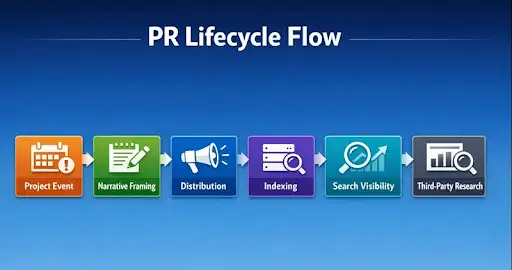
When big organizations put out a press release, it's usually a pretty thought-out process. They're not trying to be the fastest or create a buzz, but rather make sure everything is right, easy to grasp, and useful down the road.
First, teams figure out if a piece of news is actually important enough to share. Things like rolling out a new product, teaming up with someone, announcing changes to how things are run, sharing financial info, or hitting a major developmental goal are common reasons.
Then, they write it up using straightforward language that sticks to the facts. They skip the salesy talk so that anyone reading it can understand what's going on without any confusion.
The announcement is put together in a standard press release format, which makes it simple for news folks, academics, and other organizations to read and get the gist of it.
Before it goes out, teams pore over the words to avoid any legal trouble or things that could be misunderstood.
Next, they decide the best ways and places to share the news, considering what kind of content works best for each.
Once it's sent, the release enters news systems, making it available for everyone else to find and use.
Finally, the announcement becomes a lasting part of the project's public record, always easy to look up.
When Projects Commonly Use Professional Distribution
In practice, teams tend to use professional press release distribution for specific moments, including:
Presale or token launch announcements
Mainnet releases or major product updates
Strategic partnerships
Exchange listings
Fundraising or treasury disclosures
Governance or structural changes
These are moments when clear and verifiable communication matters most.
Presale Teams vs Growth-Stage Teams
Early-stage or presale teams
When teams are just starting out, their main aim is to get noticed by people outside their immediate circle. Typically, not many folks outside their own group know about these early projects. It's not really about pushing the product; it's more about making things clear. The team wants anyone reading about them to get a good grasp of who they are, what they're working on, and why any new developments are important.
For teams that are already up and running and growing in the market, the objective shifts. At this point, the key is to keep the story they're telling consistent. They might have lots of information out there, but it's often spread out all over the place – on blogs, in interviews, or in older documents. Putting out organized announcements helps make sure everything stays clear and in sync as time goes on.
Benefits and Limitations
Common Reasons Professional Distribution Underperforms
The announcement just isn't newsworthy.
It sounds too much like an advertisement, so editors pass on it.
The audience you're trying to reach is either too big or not specific enough.
You're missing important stuff, like reports or paperwork.
People are more focused on getting attention right now than building a lasting presence.
These are everyday hiccups related to how things are done, how clear they are, and having the right paperwork, not some complicated academic idea.
Two Examples
Case 1: The Invisible Presale
In 2025, a presale team had strong community engagement and a working product demo. During partnership talks, the other party could not find any third-party references about the project.
All updates existed only on Medium and social platforms. Outreach was paused while the team rebuilt its public narrative through structured distribution. Discussions resumed only after that process was complete.
Case 2: The Fragmented Growth Story
A protocol active since 2022 faced a different issue. By 2026, its public story was spread across outdated posts, interviews, and documents.
During due diligence for a partnership, inconsistencies were flagged. The team spent several months organizing and documenting key milestones through formal announcements.
Market, Regulatory, and Execution Realities
Several points need to be stated clearly:
Communication does not replace product execution
Distribution does not create demand on its own
Regulations and enforcement priorities continue to change
Poor communication can increase operational and reputational risk
Because of this, blockchain PR is increasingly viewed as closer to compliance than pure marketing.
Conclusion
Looking back at 2025 and 2026, it's obvious that cryptocurrency isn't just a test phase anymore. It's now a regular part of the bigger financial and business world.
In this setup, getting crypto project news out there mostly helps outside researchers, collaborators, and organizations get a handle on what the projects are about.
When it's done right, it makes things clearer and easier to look back on later. But, how well it works really depends on more than just how the news is shared.
The actual quality of the project, when it's launched, what the market is like, and the rules in place all make a big difference. Professional distribution is just one piece of the puzzle; it doesn't automatically ensure success.