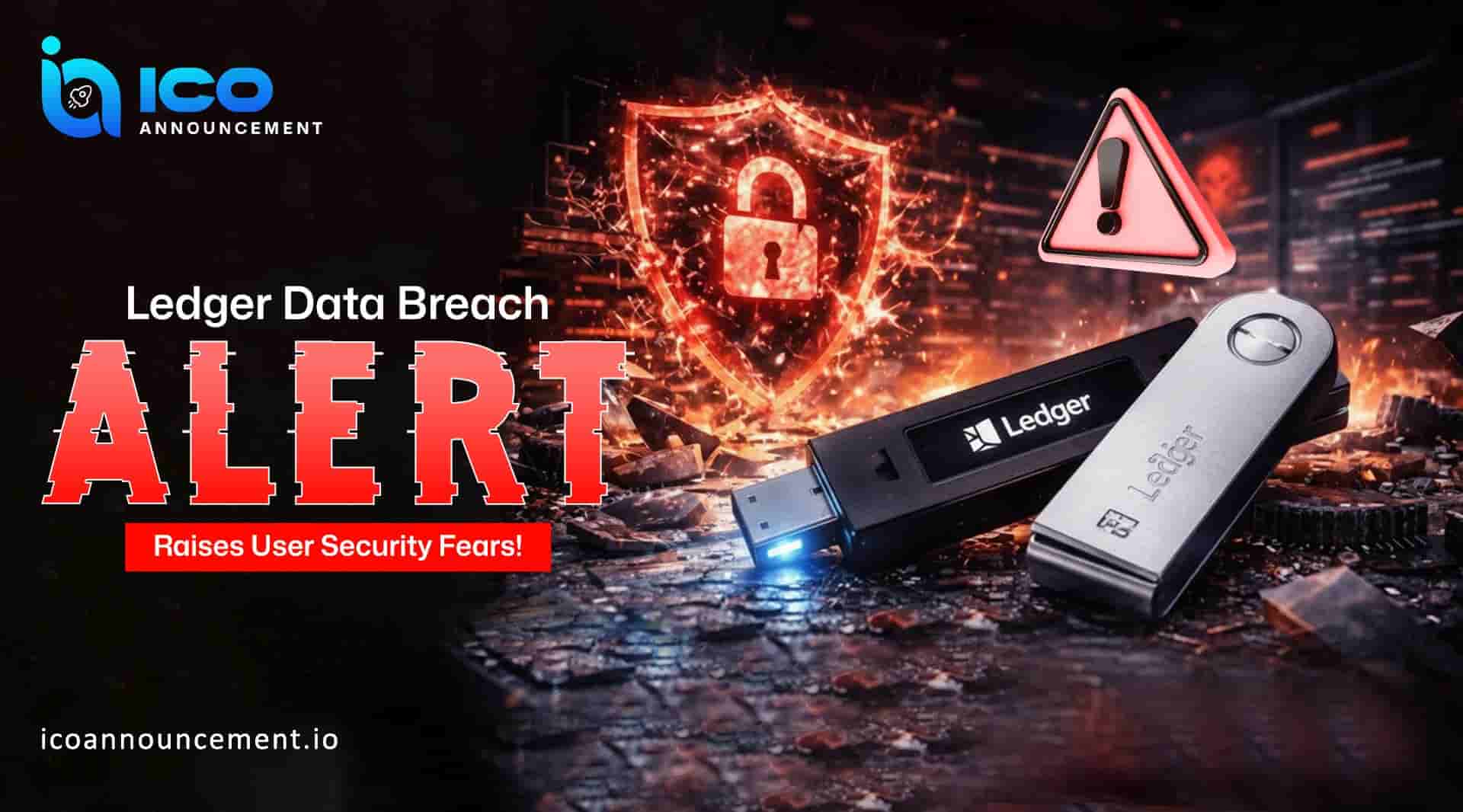
Ledger Data Breach Exposes Customer Contact and Order Details
A new data breach has raised fresh concern for users of Ledger, one of the world’s most popular hardware wallet brands. The incident was not caused by Ledger’s own systems but by a security issue at its third-party payment processor, Global-e.
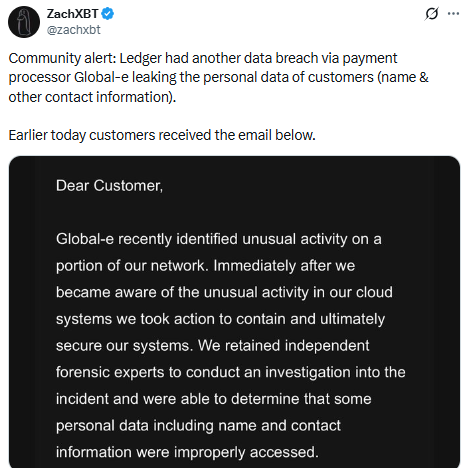
The breach came to public attention on January 5, 2026, after blockchain investigator ZachXBT shared a community alert on X. The post included a screenshot of an email sent directly to affected customers by Global-e, confirming unauthorized access to customer data.
Source: X Account
What Happened
According to Global-e, the company detected unusual activity within a part of its cloud-based network. After identifying the issue, Global-e said it acted quickly to contain the breach and secure its systems.
An outside party gained access and copied order-related data connected to several brands that use Global-e as their merchant and payment handler. Ledger was one of those brands.
Global-e stated that independent forensic experts were brought in to review the incident and confirm what data was accessed.
Source: Official X Account
What Data Was Exposed
The breach involved personal and order-related information. This includes:
Customer names
Email addresses
Phone numbers
Postal addresses
Order details, such as product type and order number
Some users’ purchase history, including device models and prices paid, may also have been exposed.
What Was NOT Compromised
Both Ledger and Global-e confirmed that no sensitive financial or crypto-related data was leaked. The following information remains safe:
Credit card or bank details
Passwords or login credentials
Recovery phrases or private keys
Crypto balances or wallet access
Ledger’s hardware wallets, apps, and core systems were not affected. User funds remain secure as long as proper self-custody rules are followed.
Who Is Affected
Only customers who purchased products through Ledger’s official website, where Global-e acted as the “Merchant of Record,” are impacted. This mainly applies to international or cross-border orders.
The exact number of affected users has not been shared. Global-e works with many large global brands, meaning the breach was not limited to Ledger alone.
Ledger’s Response
It has stressed that this was not a breach of its internal systems. In statements shared with media outlets such as CoinDesk, the company said its hardware, software, and platforms remain secure.
It is coordinating with Global-e on customer notifications and has advised users to stay alert for possible scams. A support notice explaining the situation has also been published.
A Pattern of Third-Party Risk
This is not the first time users have faced issues linked to outside partners.
In 2020, a major data leak through an e-commerce partner exposed emails and personal details of many customers.
In 2023, a supply-chain attack affected a Ledger-related software kit used by some apps.
Now in 2026, a third-party payment processor breach has exposed customer data again.
These incidents show how risks can exist even when a company’s core product remains secure.
Why This Matters Now
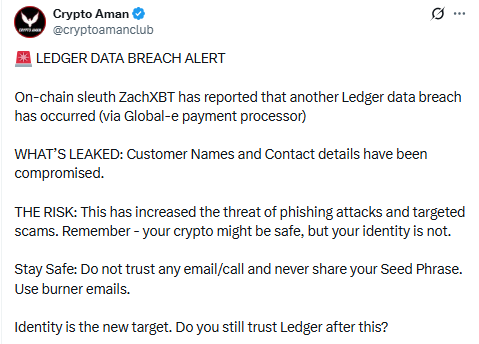
Leaked contact data is valuable to scammers. With real names and order details, attackers can send messages that look real and urgent.
Users may see:
- Fake emails claiming wallet problems
Calls pretending to be Ledger support
Messages asking users to “verify” wallets
It has repeated a key warning: it will never ask for recovery phrases or private keys.
What Users Should Do
Security experts recommend a few clear steps:
Ignore unexpected emails, calls, or messages
Never share recovery phrases
Check messages only through official channels
Use burner or separate emails for crypto purchases
Stay alert for identity misuse
Final Note
This incident highlights a growing issue in crypto security. Even when wallets stay safe, user identity can still be exposed through third-party services.
For crypto users, the lesson is clear: self-custody protects funds, but personal information still needs strong care.
Disclaimer
This article is for information only and does not provide financial or security advice. Always do your own research (DYOR) and follow best safety practices.
FAQs
1. Was Ledger itself hacked?
No. The issue happened at a third-party payment processor, not within Ledger’s own systems.
2. Is my crypto wallet or funds at risk?
No. Wallets, private keys, and recovery phrases were not affected. Funds remain safe if you follow normal security rules.
3. What kind of data was exposed?
Some personal and order details, like name, email, phone number, address, and order information, were exposed.
4. Who may be affected by this breach?
Only users who bought products through the official website, where the third-party processor handled payments.
5. What should users do now?
Stay alert for scam messages, ignore unknown contacts, and never share recovery phrases or private keys.